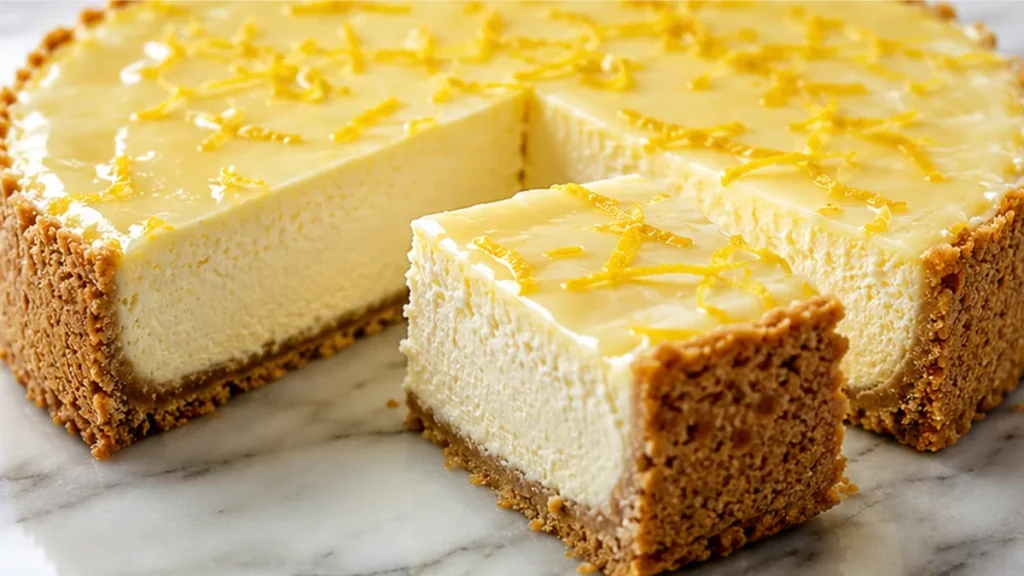
The secret to a truly delightful lemon cheesecake lies in balancing the tartness of fresh lemons with the rich creaminess of the filling. This lemon cheesecake recipe achieves just that, offering a refreshing yet indulgent dessert with a gluten-free crust. Preparing this lemon cheesecake is simpler than you might think, making it accessible even for novice bakers. The combination of a crisp base and a silky-smooth, tangy filling ensures every bite is a burst of sunshine. It’s a fantastic option for gatherings or a light, elegant finish to any meal.
Key takeaways
- Use room temperature ingredients for a smooth batter.
- Bake at a low temperature to prevent cracks.
- Avoid overmixing to maintain a creamy texture.
- Substitutions can be made without compromising flavor.
Zesty Lemon Cheesecake Recipe
Ingredients
- 1 cup crushed gluten-free graham crackers or gluten free shortbread cookies
- 2 tablespoons powdered sugar
- 2 tablespoons butter, melted
- 16 oz cream cheese
- ¾ cup powdered sugar
- 2 large eggs, room temperature
- ⅓ cup sour cream
- ⅓ cup lemon juice
- 2 teaspoons gluten-free vanilla extract
- 1 tablespoon lemon zest
Instructions
- Preheat oven to 350°F. Grease a 7-inch springform pan and line with parchment.
- Combine crushed gluten-free graham crackers, 2 tbsp powdered sugar, and melted butter. Press into the prepared pan.
- Bake crust for 10 minutes until lightly golden. Let cool.
- Beat cream cheese, lemon zest, and ¾ cup powdered sugar until fluffy. Add eggs one at a time, mixing well.
- Stir in sour cream, lemon juice, and gluten-free vanilla extract until smooth.
- Pour filling over cooled crust. Bake for 45-55 minutes, or until the edges are set and the center jiggles slightly.
- Cool in the pan for 1 hour, then chill in the refrigerator for at least 4 hours or overnight.
- Remove from pan, slice, and serve.
Video
Notes
– Do not overmix the batter once the eggs are added; mix just until combined to prevent cracks in your cheesecake.
– For a perfectly set cheesecake, bake until the edges are firm but the center still has a slight wobble. This indicates it will firm up beautifully as it cools.
– Store leftover cheesecake in an airtight container in the refrigerator for up to 3-4 days. Nutrition information is an estimate, calculated automatically. Values vary with brands, substitutions and portion sizes.
The technique that makes it
The key to a successful lemon cheesecake lies in the emulsion and temperature control of the ingredients. When combining cream cheese with eggs, it is crucial to ensure that both are at room temperature. This allows for a smooth, homogeneous mixture that prevents lumps and ensures even baking. The addition of sour cream contributes to the creaminess and tanginess while also helping to stabilize the filling. Lemon juice and zest not only provide the signature zesty flavor but also enhance the overall texture by balancing the richness of the cream cheese. Proper mixing is essential; overmixing can incorporate too much air, leading to cracks during baking. Baking at a low temperature helps to set the cheesecake gently, reducing the risk of overcooking, which can lead to a dry texture.
Troubleshooting
- Cracked Surface: If your cheesecake has cracks, it may have been overbaked or mixed too vigorously. To prevent this, bake at a lower temperature and avoid overmixing.
- Too Dense: A dense cheesecake might result from overmixing or using cold ingredients. Ensure all ingredients are at room temperature and mix just until combined.
- Not Set in the Center: If the center remains jiggly after baking, it may need more time in the oven. However, avoid overcooking; it should still have a slight wobble when done.
- Flavor Too Tart or Sweet: If the cheesecake is too tart, reduce the lemon juice slightly; if too sweet, decrease the amount of powdered sugar.
Substitutions
- Gluten-free graham crackers: Use crushed almond flour cookies for a nutty flavor and similar texture.
- Sour cream: Greek yogurt can be substituted for a lighter option while maintaining creaminess.
- Powdered sugar: Coconut sugar can be used as a healthier alternative, but it may slightly alter the sweetness.
- Lemon juice: Lime juice can be used for a different citrus flavor while still providing acidity.
Pro tips
- Ensure your cream cheese and eggs are at room temperature for a smooth, lump-free batter. I’ve found that cold ingredients can lead to a grainy texture.
- Do not overmix the batter once the eggs are added; mix just until combined to prevent cracks in your cheesecake.
- For a perfectly set cheesecake, bake until the edges are firm but the center still has a slight wobble. This indicates it will firm up beautifully as it cools.
- Store leftover cheesecake in an airtight container in the refrigerator for up to 3-4 days.
This lemon cheesecake is a testament to simple ingredients creating extraordinary flavors. Experiment with different gluten-free cookie crusts or add a berry compote for an extra layer of delight. Enjoy the bright, zesty taste!
Frequently asked questions
Can I make this cheesecake ahead of time?
Yes, lemon cheesecake can be made a day in advance. In fact, it often tastes better after chilling overnight, allowing the flavors to meld.
How do I know when my cheesecake is done?
The cheesecake is done when the edges are set, and the center has a slight jiggle. It will continue to firm up as it cools.
Can I freeze lemon cheesecake?
Yes, lemon cheesecake can be frozen. Wrap it tightly in plastic wrap and then foil. Thaw it in the refrigerator before serving for the best texture.
What can I serve with lemon cheesecake?
Lemon cheesecake pairs well with fresh berries, whipped cream, or a drizzle of lemon curd for added flavor and presentation.
More from Gluten-Free Desserts & Sweets →