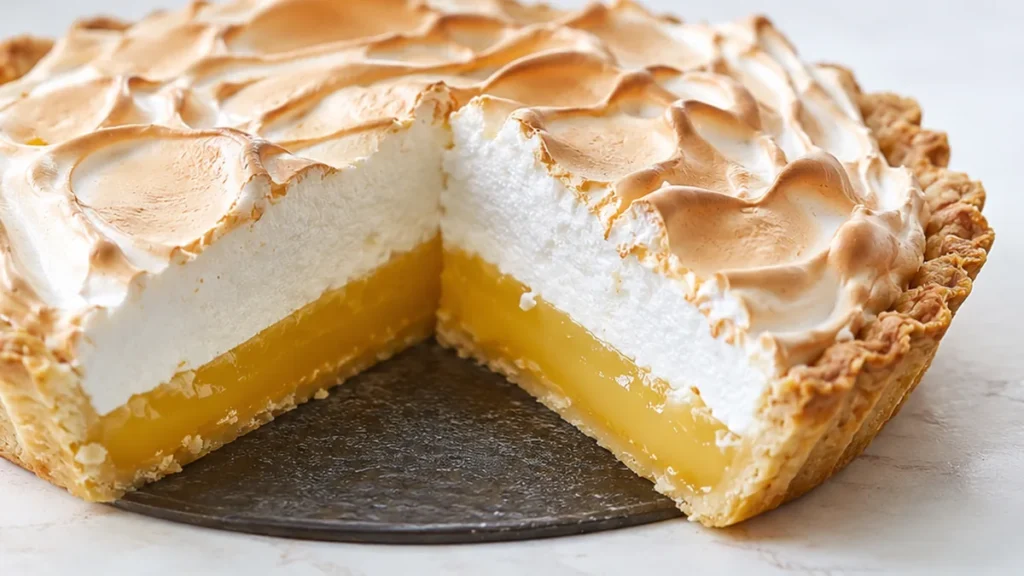
This gluten free lemon meringue pie combines a coconut crust with a zesty lemon filling. It’s a straightforward recipe that ensures a satisfying dessert.
Key takeaways
- A stable meringue is crucial for success; incorporate sugar gradually and ensure proper cooking time to avoid weeping.
- Monitor temperatures closely for both meringue and lemon filling to achieve the right consistency.
- Experiment with sweeteners while considering their impact on flavor and texture.
Gluten-Free Lemon Meringue Pie That Will Wow You!
Ingredients
Instructions
- Place the gluten-free flour, sugar, salt, and butter in a food processor and pulse a few times until coarse and a few pea-sized pieces of butter are visible.
- Add the apple cider vinegar and one tablespoon of water at a time, and pulse 2 times after each tablespoon of water. Add water until the dough comes together and forms large clumps.
- Shape the dough into a disk without kneading and wrap tightly in plastic wrap. Chill for 1 hour or up to 2 days.
- Preheat oven to 350°F (180°C).
- Roll the chilled pie crust into a ¼-inch thick circle and carefully transfer to a 9-inch pie dish and pierce a few times with a fork.
- Line the crust with a piece of parchment paper and fill it with baking beans, uncooked beans, or uncooked rice. Bake for 20 minutes, then carefully remove the parchment paper and the baking beans and bake the crust an additional 5 minutes. Remove from the oven and set aside while you prepare the filling.
- In a small bowl, whisk egg yolks and cornstarch until combined.
- In a medium saucepan, bring water, lemon juice, sugar, and salt to a simmer. Stir constantly, and cook until thickened about 3-4 minutes.
Understanding the Importance of a Stable Meringue
The key to a successful lemon meringue pie lies in the stability of the meringue. A well-made meringue is achieved by incorporating air into egg whites, which creates a foam that holds its shape. The ideal temperature for whipping egg whites is around 70°F (21°C). At this temperature, the proteins in the egg whites are more pliable, allowing for maximum air incorporation. Adding cream of tartar can help stabilize the foam by increasing the acidity, which strengthens the protein network.
Why Your Meringue Might Weep
Weeping meringue, or the formation of liquid on top of the meringue, can occur for several reasons. One common cause is undercooking the meringue, which can prevent the proteins from setting properly. Another reason could be the incorporation of sugar too quickly, which can destabilize the foam. To fix this, ensure you gradually add sugar when whipping the egg whites and bake the pie until the meringue is firm and lightly browned.
Choosing the Right Sweetener for a Gluten-Free Lemon Meringue Pie
When making a gluten-free lemon meringue pie, selecting the right sweetener is crucial. Traditional granulated sugar works well, but for a lower glycemic option, you can use coconut sugar. However, keep in mind that coconut sugar has a distinct flavor and will darken the meringue. If using a sugar substitute, ensure it is suitable for baking, as some do not provide the same texture or volume when whipped.
Temperature Control for the Perfect Lemon Filling
The lemon filling requires careful temperature management to achieve the right consistency. The filling should be cooked over medium heat (around 180°F or 82°C) until it thickens. If cooked too quickly, the eggs can scramble, resulting in a grainy texture. Use a thermometer to monitor the temperature closely and stir continuously to ensure even cooking.
Why This Pie is Unique Among Desserts
This gluten-free lemon meringue pie stands out because of its harmonious balance of tartness from the lemon and sweetness from the meringue. Unlike many other desserts, the combination of a zesty filling with a fluffy topping creates a light yet satisfying experience. The use of gluten-free ingredients ensures that those with dietary restrictions can enjoy this classic dessert without compromising on flavor or texture.
How to Properly Store Your Gluten-Free Lemon Meringue Pie
Storing a gluten-free lemon meringue pie requires careful attention to maintain its texture and flavor. Ideally, the pie should be refrigerated if not consumed immediately. Cover it loosely with plastic wrap to prevent the meringue from becoming soggy. The pie is best enjoyed within 1-2 days of making, as the meringue can start to weep and lose its crispness over time. If you plan to store it longer, consider separating the filling and meringue, storing them in airtight containers, and assembling just before serving.
Scaling the Recipe for Larger Gatherings
If you’re looking to serve a crowd, scaling your gluten-free lemon meringue pie recipe is straightforward, but there are some considerations. Doubling the ingredients is usually effective, but ensure your baking dish can accommodate the increased volume. Adjusting baking times is crucial; a larger pie may require additional time in the oven to set the filling properly. Use a thermometer to check that the filling reaches at least 160°F (71°C) for food safety. For smaller gatherings, consider making mini pies in tartlet pans, which will also reduce baking time.
Choosing the Right Equipment for Optimal Results
The equipment you use can significantly impact the outcome of your gluten-free lemon meringue pie. A glass or ceramic pie dish is preferred as it provides even heat distribution, ensuring the crust cooks evenly. For the meringue, a stand mixer is ideal for achieving stiff peaks, but a hand mixer can also work if you have the patience. Use a candy thermometer to monitor the temperature of your lemon filling, ensuring it reaches the right consistency without curdling. Lastly, a spatula with a silicone edge is excellent for spreading the meringue evenly without deflating it.
Adapting to Seasonal Ingredients for Best Flavor
Seasonality affects the flavor and quality of the ingredients in your gluten-free lemon meringue pie. Fresh lemons in spring and summer are often juicier and more flavorful, providing a bright, zesty filling. In contrast, winter lemons may be less vibrant, so consider adding a touch of lemon zest to enhance the flavor. Additionally, if you’re using gluten-free flour blends, their quality can vary with the season, affecting the crust texture. Always taste your filling before baking; if it lacks brightness, a little extra lemon juice or zest can elevate the dish.
How to Prepare Your Gluten-Free Lemon Meringue Pie in Advance
Making a gluten-free lemon meringue pie can be time-consuming, but with proper planning, you can prepare several components ahead of time. Start by making the gluten-free crust; it can be baked and stored in an airtight container for up to three days. The lemon filling can also be made a day in advance. Allow it to cool completely before covering it with plastic wrap to prevent a skin from forming. The meringue, however, is best made fresh to maintain its airy texture. If you must make it in advance, consider keeping it in the refrigerator, but be aware that it may lose some volume and stability.
Scaling Up Your Gluten-Free Lemon Meringue Pie for Larger Gatherings
If you need to serve a crowd, scaling your gluten-free lemon meringue pie recipe is straightforward. Simply multiply the ingredient quantities by the number of servings you require. For instance, if your original recipe serves 8, and you need to serve 16, double all ingredients. However, be mindful of the baking time; larger pies may require additional time in the oven, and you should check for doneness by observing the meringue’s color and texture. A larger pie may also need a slightly cooler oven temperature to ensure even cooking without burning the meringue.
Choosing the Right Ingredients for Optimal Flavor and Texture
The quality of your ingredients significantly impacts the final flavor and texture of your gluten-free lemon meringue pie. For the crust, using a blend of gluten-free flours, such as almond flour and coconut flour, can enhance the flavor and provide a more traditional texture. When selecting lemons, opt for fresh, organic lemons for the best flavor. Their zest and juice should be vibrant and fragrant. Additionally, using high-quality eggs will improve the meringue’s stability and flavor. Fresh, organic eggs tend to whip better and create a more stable meringue, ensuring your pie has a perfect topping.
How to Make Your Gluten-Free Lemon Meringue Pie Ahead of Time
Preparing a gluten-free lemon meringue pie in advance can be a great time-saver. The lemon filling can be made a day ahead and stored in the refrigerator, covered with plastic wrap directly on the surface to prevent a skin from forming. For the meringue, it’s best to prepare it fresh right before serving, as it is most stable when freshly whipped. However, if you must make it ahead, store it in an airtight container at room temperature for up to 2 hours. Keep in mind that the texture of the meringue may change slightly if stored longer, so plan accordingly. The crust can also be baked in advance; simply cool it completely before wrapping it tightly in plastic wrap and storing it at room temperature. When assembling, allow the filling and crust to come to room temperature for the best texture when serving.
Why Your Gluten-Free Lemon Meringue Pie Might Not Set Properly
One common issue with lemon meringue pie is the filling not setting properly. This can happen if the lemon curd is undercooked or if the cornstarch is not fully activated. To ensure the filling thickens correctly, cook the lemon mixture over medium heat until it reaches a minimum of 170°F (77°C), where the cornstarch will activate fully, ensuring a stable filling. If the filling is too runny, it may not hold up when sliced. Additionally, avoid overmixing the filling after adding the eggs, as this can introduce air and cause it to be less stable. If your pie does not set, consider adding a bit more cornstarch to the filling next time or cooking it longer until the desired thickness is achieved. This will help you achieve that perfect slice of pie that holds its shape beautifully.
Pro tips
Pro tip: Best served immediately while hot!
Frequently asked questions
What can I do if my meringue is too runny?
If your meringue is runny, it may be due to insufficient whipping or too much moisture. Ensure you whip the egg whites until stiff peaks form and avoid any contact with water or fat. You can also try adding a small amount of cornstarch to help stabilize it.
How can I prevent my lemon filling from curdling?
To prevent curdling in your lemon filling, cook it over medium heat and stir continuously. Using a thermometer to monitor the temperature can help; aim for around 180°F (82°C) to ensure it thickens without scrambling the eggs.
Can I use a different type of flour for the crust?
Yes, you can use alternative flours like almond flour or a gluten-free all-purpose blend. However, be aware that different flours can affect the texture and flavor of the crust. Almond flour will yield a nuttier flavor, while a blend may closely mimic traditional pie crust.
How do I store leftover lemon meringue pie?
Store leftover lemon meringue pie in the refrigerator, covered lightly with plastic wrap. It’s best consumed within 1-2 days, as the meringue can start to weep and lose its texture over time. Avoid freezing, as the meringue does not freeze well.
More from Gluten-Free Desserts & Sweets →