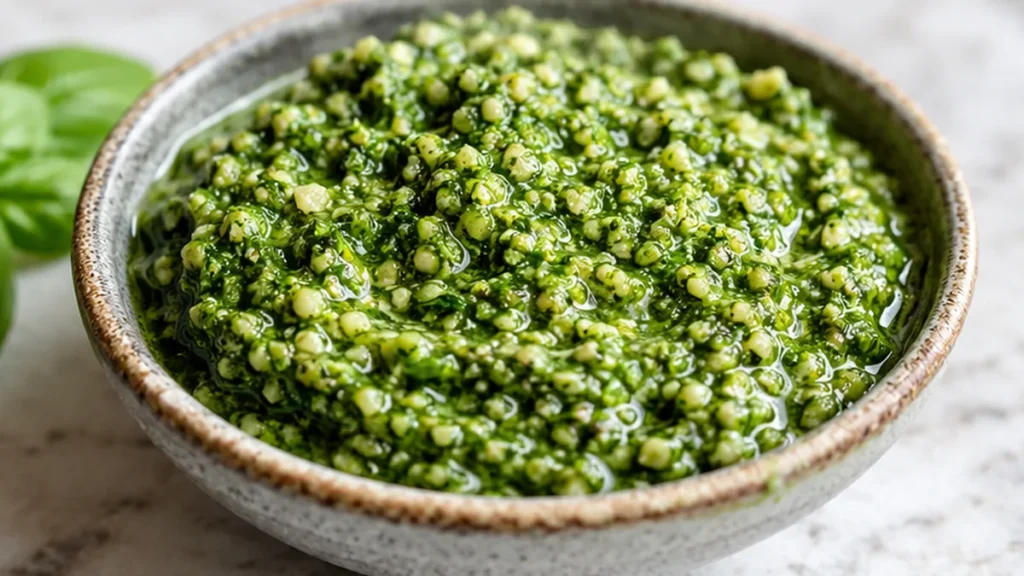
The secret to a truly bright vegan pesto lies in the quality of your basil and a light hand with the lemon. This simple vegan pesto recipe proves that you don’t need cheese to achieve a rich, herbaceous, and utterly satisfying sauce. This vegan pesto focuses on fresh, whole ingredients, making it a healthy and adaptable staple for any kitchen. Walnuts stand in for the pine nuts here and give a lovely earthy depth.
Key takeaways
- Emulsify by slowly drizzling in olive oil while processing.
- Use fresh, vibrant basil for the best flavor and color.
- Balance flavors by tasting and adjusting salt and lemon juice.
- Prevent browning by adding lemon juice and storing with a top layer of oil.
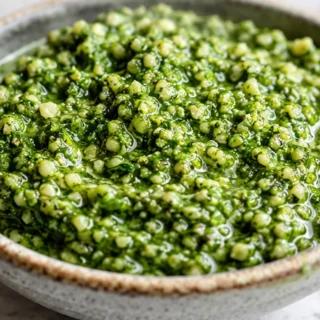
Zesty Vegan Pesto: Fresh and Fast!
Ingredients
- 2 oz fresh basil leaves (~2 packed cups, large stems removed)
- 2 tablespoons walnuts halves and pieces
- 1 regular-sized or 2 small garlic cloves
- heaping 1/4 teaspoon salt
- 1/2 lemon (may not need all)
- 1/3 cup extra virgin olive oil
Instructions
- In a food processor, combine basil, walnuts, garlic, and salt. Pulse until finely chopped.
- Add a drizzle of lemon juice, then stream in olive oil while processing until smooth. Scrape sides as needed.
- Taste and adjust salt or lemon juice as desired.
- Store in an airtight container in the refrigerator for up to 5 days, or freeze for longer storage.
Notes
The technique that makes it
The magic of this vegan pesto lies in the emulsification process, which binds the oil and the water-based ingredients (from the basil and lemon juice) into a cohesive sauce. The key is the gradual addition of olive oil while the basil, walnuts, garlic, and salt are being processed. This slow incorporation allows the oil to coat the solid particles and create tiny droplets suspended within the liquid, resulting in a smooth, creamy texture. The walnuts contribute to this by releasing their natural oils, further aiding the emulsion and adding richness. Using fresh basil is crucial; wilting or bruising the leaves excessively before processing can lead to a duller flavor and a less vibrant green color. The lemon juice not only adds brightness but also helps to stabilize the emulsion and prevent oxidation, preserving the pesto’s fresh color.
Troubleshooting
- Problem: Pesto is too oily or separated.
Fix: While processing, slowly drizzle in the olive oil in a thin, continuous stream. If already separated, try processing a small portion of the pesto with a teaspoon of water or lemon juice, then blend it back into the main batch to help re-emulsify.
- Problem: Pesto is too bitter or has a strong raw garlic taste.
Fix: Ensure you are using fresh, vibrant basil and not too much of the tough stems. For the garlic, start with a smaller clove or even half of a regular-sized clove. You can also lightly toast the walnuts to mellow their flavor and the garlic by roasting it briefly before adding.
- Problem: Pesto is not flavorful enough.
Fix: Taste and adjust seasoning. Pesto relies heavily on salt to enhance the basil’s flavor. Add more salt gradually, tasting as you go. A bit more lemon juice can also brighten the overall taste profile.
- Problem: Pesto has turned brown.
Fix: This is due to oxidation. Ensure you’ve added the lemon juice, as its acidity helps prevent browning. Store the pesto with a thin layer of olive oil on top to create a barrier against air, and refrigerate immediately after making.
Substitutions
- Walnuts: Pine nuts are the traditional choice, offering a milder, slightly sweeter flavor and a smoother texture. Cashews can also be used for a creamier, richer pesto. Pecans offer a similar flavor profile to walnuts but can be slightly sweeter.
- Lemon Juice: Lime juice can be used for a tangier, more citrus-forward flavor. A splash of white wine vinegar can provide acidity but will alter the flavor profile more significantly.
- Garlic: Shallots can be substituted for a milder allium flavor. Roasted garlic will provide a sweeter, less pungent taste. Use sparingly as the flavor is different.
- Basil: A mix of basil and other fresh herbs like parsley or spinach can be used. Parsley adds a fresh, slightly peppery note, while spinach adds bulk and a milder flavor without significantly altering the pesto’s character.
Pro tips
- For the freshest flavor, use very fresh basil and good quality extra virgin olive oil. Older oil can make your vegan pesto bitter.
- Don’t over-process the pesto; a slightly chunky texture is often preferred over a completely smooth one, and over-processing can lead to bitter oil.
- If your pesto looks too thick, add an extra tablespoon of olive oil or a tiny splash of water to reach your desired consistency.
- To prevent browning during storage, press a piece of plastic wrap directly onto the surface of the pesto before sealing the container. This limits air exposure.
This simple vegan pesto is a testament to how incredible plant-based cooking can be. Experiment with different nuts or herbs to find your perfect blend. Enjoy this versatile sauce!
Frequently asked questions
How do I get a creamy texture?
Achieving creaminess involves proper emulsification. Slowly drizzle the olive oil into the food processor while it’s running. This allows the oil to break down into tiny droplets, creating a smooth, cohesive sauce rather than an oily separation. Toasting the walnuts lightly can also enhance creaminess.
Can I make this pesto ahead of time?
Yes, vegan pesto can be made ahead. To maintain its vibrant green color and fresh flavor, store it in an airtight container in the refrigerator. Pour a thin layer of olive oil over the surface before sealing to minimize oxidation and prevent browning.
What is the best way to store leftover pesto?
For optimal freshness, store leftover pesto in an airtight container in the refrigerator. Covering the surface with a thin layer of olive oil acts as a barrier against air, significantly slowing down oxidation and preserving the bright green color and flavor for up to a week.
Why is my pesto bitter?
Bitterness can stem from using too many tough basil stems or over-processing the basil, which can bruise the leaves and release bitter compounds. Using slightly older or lower-quality basil can also contribute. Ensure you’re using fresh ingredients and process just until combined.
More from Gluten-Free Snacks & Sides →