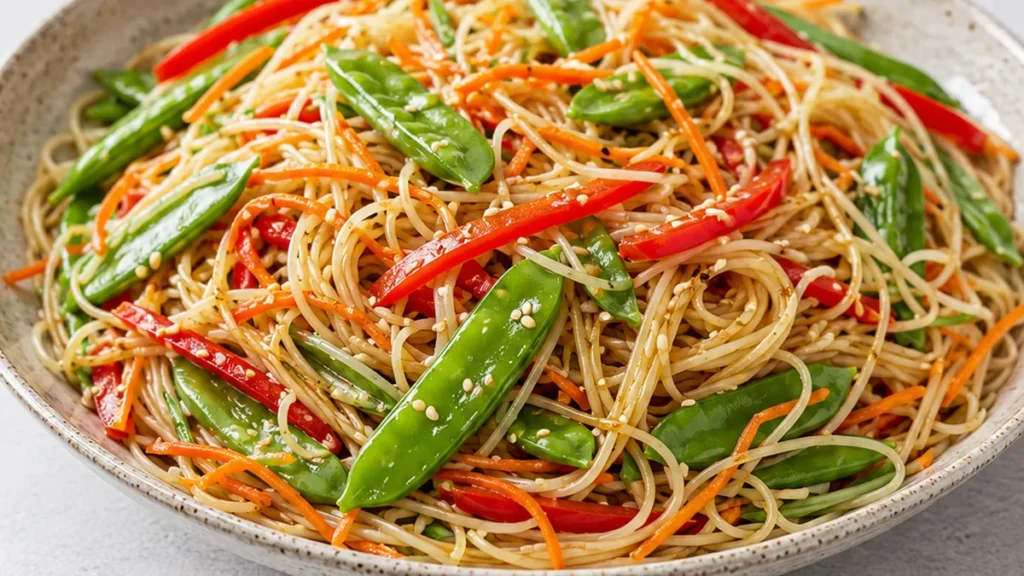
This sesame noodle salad is a delightful dish that brings together fresh vegetables and tender noodles in a savory, aromatic dressing. It’s a versatile meal, perfect for a light lunch, a satisfying side, or a quick dinner that comes together in minutes. The beauty of this recipe lies in its simplicity and the vibrant medley of textures and flavors it offers. The balance of the dressing matters most in this sesame noodle dish; the right ratio of Tamari and sesame oil turns simple ingredients into something special. This recipe is also naturally gluten-free, making it accessible for many dietary needs.
Key takeaways
- Cook gluten-free angel hair pasta until just al dente.
- Rinse pasta immediately in cold water to stop cooking and prevent sticking.
- Whisk dressing ingredients thoroughly to ensure even flavor distribution.
- Toss noodles with vegetables and dressing just before serving to maintain crispness.
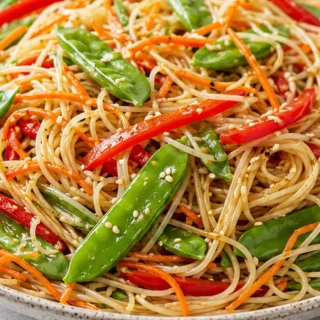
Flavor Explosion: Sesame Noodle Salad!
Ingredients
- 12 oz gluten free angel hair pasta (Jovial Capellini recommended)
- 1/2 cup snap peas (sliced on the diagonal)
- 1/2 cup frozen shelled edamame (thawed in a bowl of warm water)
- 1/2 cup shredded carrots
- 1/2 cup cilantro (chopped)
- 1/2 red pepper (seeded then julienned)
- 1/4 english cucumber OR 1 mini cucumber (julienned)
- 2 green onions (chopped)
- 1/4 cup gluten free reduced-sodium Tamari (or soy sauce if not GF)
- 3 tablespoons toasted sesame oil
Instructions
- Add Tamari and toasted sesame oil to a small mixing bowl then whisk to combine. Set aside.
- Bring a large pot of water to a boil then season with 1 Tablespoon salt. Add pasta then cook according to package directions. Drain then rinse under cold running water until pasta is cool. Drain very well then add to a large mixing bowl. Drizzle half the dressing over the top then toss with tongs to combine and let sit for 5 minutes.
- Add snap peas, edamame, shredded carrots, cilantro, red pepper, cucumber, green onions, and remaining sesame dressing to the mixing bowl then toss well with tongs to combine. Serve immediately.
Notes
The Technique That Makes It: Perfect Pasta Hydration and Dressing Emulsification
The success of this sesame noodle salad hinges on two primary culinary techniques: properly hydrating the gluten-free angel hair pasta and creating a stable, flavorful dressing. Gluten-free pastas, particularly delicate ones like angel hair, can easily become mushy if overcooked. The key is to cook them just until al dente, ensuring they retain a slight bite. This is achieved by boiling water vigorously and cooking for the minimum time recommended on the package, often just a few minutes. Rinsing the pasta immediately after draining in cold water is crucial. This stops the cooking process instantly, preventing further softening, and also washes away excess starch, which can make the noodles clump together and become gummy. The starch washed away also helps the dressing adhere better to the noodles rather than pooling at the bottom of the bowl.
The second critical element is the dressing’s emulsification. While this recipe doesn’t call for a vigorous whisking to create a true mayonnaise-like emulsion, the combination of tamari (or soy sauce) and toasted sesame oil, along with the natural moisture from the vegetables, creates a cohesive sauce. The oil coats the noodles and vegetables, distributing the flavor evenly. Toasted sesame oil has a lower smoke point and a more intense flavor than regular sesame oil, so using it toasted is essential for the characteristic nutty depth. Ensuring the dressing is mixed thoroughly before tossing with the noodles helps distribute the ingredients evenly, preventing pockets of concentrated saltiness from the tamari or oiliness from the sesame oil.
Troubleshooting
- Failure: Noodles are sticky and clumped together.
- Fix: Ensure you rinsed the pasta thoroughly in cold water immediately after draining. This removes excess starch. Also, make sure you are using a gluten-free pasta designed for quick cooking like angel hair, and avoid overcooking. Toss with a tiny bit more sesame oil if needed.
- Failure: Dressing is watery and separates.
- Fix: While this recipe doesn’t require a strong emulsion, ensure all dressing ingredients are well-combined before tossing. The natural moisture from the vegetables will help thicken it slightly. If it still seems too thin, you can add a tiny bit more sesame oil or a teaspoon of cornstarch slurry (cornstarch mixed with a tablespoon of cold water, then simmered briefly) to the dressing before adding it to the noodles.
- Failure: Flavors are too strong or too bland.
- Fix: Taste and adjust seasoning after tossing. Add more tamari/soy sauce for saltiness and umami, or a touch more toasted sesame oil for nutty depth. A squeeze of lime or a pinch of sugar can also balance flavors.
- Failure: Vegetables are soggy.
- Fix: Ensure vegetables are julienned thinly and consistently. Add them to the noodles just before serving, or toss them with the noodles while the pasta is still slightly warm but not hot, allowing them to slightly soften without becoming limp.
Substitutions
- Substitution: Regular angel hair pasta instead of gluten-free.
- Result: The noodles will have a chewier texture and a more traditional bite. Be mindful of gluten content if this is an allergy concern.
- Substitution: Regular soy sauce instead of gluten-free Tamari.
- Result: The flavor will be slightly saltier and less rich, as Tamari is typically brewed with more soybeans. Ensure it’s low-sodium if preferred.
- Substitution: Soba noodles or spaghetti instead of angel hair.
- Result: These will require longer cooking times and will result in a heartier, thicker noodle salad. Adjust dressing quantity as needed for the increased noodle volume.
- Substitution: Peanut butter (1-2 tablespoons whisked into the dressing) instead of some of the sesame oil.
- Result: This will add a creamy texture and a distinct peanut flavor, creating a different but delicious flavor profile.
Pro tips
– For extra flavor, toast your own sesame seeds and sprinkle them over the finished salad. – Make-ahead magic: Prepare the dressing and chop all vegetables up to a day in advance. Store them separately in airtight containers in the refrigerator. Cook the pasta just before serving for the freshest texture. – If your dressing seems too thick after sitting, whisk in a tablespoon of warm water to loosen it to your desired consistency.
This sesame noodle salad is a fantastic way to enjoy a light yet fulfilling meal. Experiment with adding your favorite proteins like grilled chicken or tofu for an even heartier dish. Enjoy this fresh and flavorful creation!
Frequently asked questions
Can I make this sesame noodle salad ahead of time?
It’s best to assemble this salad shortly before serving. Gluten-free pasta can become mushy if stored dressed for too long, and the fresh vegetables will lose their crispness. You can prepare the dressing and chop the vegetables in advance and toss everything together when ready to eat.
What kind of gluten-free pasta works best?
Delicate, thin pastas like angel hair (capellini) are ideal as they cook very quickly and absorb the dressing well without becoming heavy. Thicker gluten-free pastas may require longer cooking times and a larger quantity of dressing.
How can I make the dressing spicier?
To add heat, incorporate sriracha or chili garlic sauce into the dressing. Start with a teaspoon and add more to taste. A pinch of red pepper flakes can also be added for a more direct heat sensation.
Can I add protein to this sesame noodle salad?
Absolutely. Cooked shredded chicken, pan-fried tofu, or grilled shrimp are excellent additions. Ensure the protein is cooked and cooled before tossing it with the noodles and vegetables to maintain the salad’s temperature and texture.
More from Gluten-Free Pasta & Pizza →