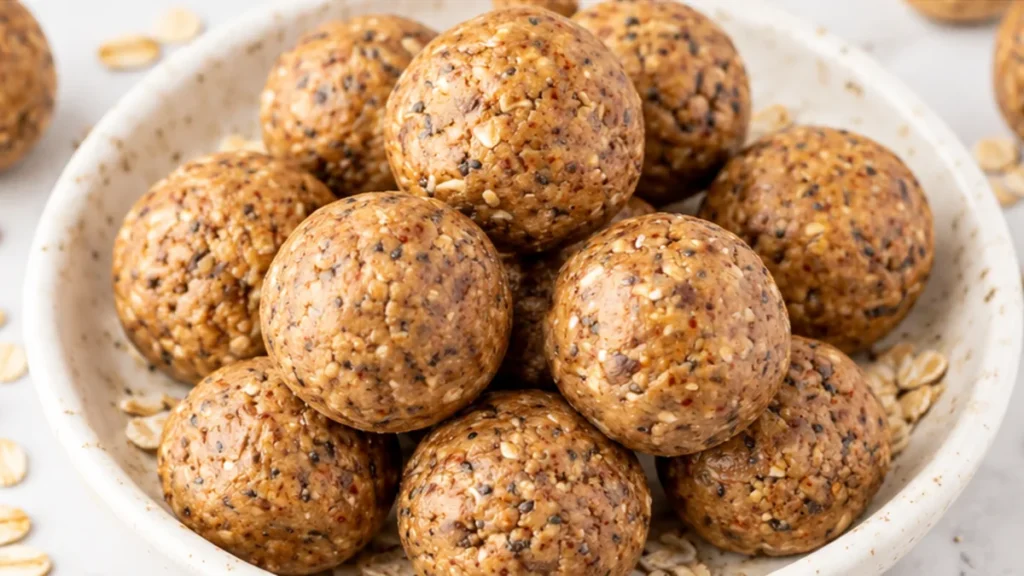
These supercharged gluten free protein balls are easy to make and packed with nutrition. They are ideal for a quick snack or post-workout boost.
Key takeaways
- Balance dry and wet ingredients for the right texture.
- Adjust moisture levels to avoid crumbly or overly wet mixtures.
- Substitutions can change flavor and texture, so choose wisely.
- Homemade protein balls offer control over ingredients and nutrition.
Supercharged Gluten-Free Protein Balls
Ingredients
Instructions
- Combine nut butter, rolled oats, honey, protein powder, flaxseed meal, chia seeds, vanilla, and salt in a food processor and pulse until well combined.
- Add mini chocolate chips and pulse a few more times until mixed.
- Roll the mixture into balls, using about 1½ tbsp for each ball.
- Place the balls on a baking sheet and refrigerate for at least 30 minutes to firm up.
Understanding the Ingredients in Supercharged Gluten-Free Protein Balls
The foundation of supercharged gluten-free protein balls lies in the careful selection of ingredients, each contributing to the overall texture, flavor, and nutritional profile. Key components often include nut butters, protein powders, and sweeteners. For instance, nut butters provide healthy fats and a creamy texture, while protein powders can vary widely in flavor and nutritional content depending on their source, such as whey, pea, or brown rice.
Moreover, the ratio of dry to wet ingredients is crucial. A common guideline is to maintain a balance where the mixture holds together without being too sticky or dry. Typically, a ratio of 2:1 dry ingredients (like protein powder and oats) to wet ingredients (like nut butter and honey) works well. This balance ensures that the protein balls can be easily rolled and maintain their shape during storage.
Common Issues and Solutions for Perfect Protein Balls
Creating the perfect supercharged gluten-free protein balls can sometimes lead to common pitfalls. One frequent issue is the mixture being too dry, which can occur if there is an imbalance in the ingredient ratios. To remedy this, consider adding a small amount of liquid, such as almond milk or additional nut butter, to achieve the desired consistency.
Conversely, if the mixture is too wet, the protein balls may not hold their shape. In this case, incorporating more dry ingredients, such as oats or protein powder, can help absorb excess moisture. Another common issue is the protein balls being too crumbly. This often happens when not enough binding agents, like nut butter or honey, are used. Increasing these ingredients can enhance cohesion.
Ingredient Swaps and Their Effects
When making supercharged gluten-free protein balls, ingredient substitutions can lead to varied results. For instance, swapping almond butter for peanut butter will alter the flavor profile while still providing healthy fats and protein. However, almond butter tends to be smoother, which may affect the texture of the final product.
Using maple syrup instead of honey can provide a vegan option, but it may yield a slightly different sweetness level and moisture content. Additionally, replacing traditional oats with a gluten-free variety or even ground flaxseed can enhance the nutritional profile, adding omega-3 fatty acids while maintaining a gluten-free status.
The Unique Benefits of Protein Balls
What sets supercharged gluten-free protein balls apart from other snacks is their high protein content combined with healthy fats and fiber. This combination promotes satiety, making them an ideal snack for those looking to maintain energy levels throughout the day. Unlike many store-bought protein bars, which can be high in added sugars and artificial ingredients, homemade protein balls allow for complete control over the ingredients, ensuring a wholesome snack option.
Moreover, the versatility of these protein balls means they can be tailored to individual dietary needs and preferences, whether someone is looking for a post-workout recovery snack or a midday energy boost. The ability to customize flavors and mix-ins, such as dark chocolate chips or dried fruits, further enhances their appeal.
Understanding the Impact of Ingredient Quality on Texture
The quality of ingredients used in supercharged gluten-free protein balls significantly affects their final texture and flavor. For instance, fresh nuts and seeds will provide a more vibrant taste and better crunch compared to stale options. Similarly, the protein powder’s source—whether whey, pea, or hemp—can alter the consistency. For optimal results, consider using high-quality, organic ingredients whenever possible. The protein powder should ideally contain a minimum of 70% protein content for a denser ball. Additionally, the moisture content in ingredients like nut butters can vary; thus, adjusting the amount based on the specific brand can lead to a better texture.
Scaling the Recipe for Different Serving Sizes
When scaling the recipe for supercharged gluten-free protein balls, it’s important to maintain the ratios of the ingredients to ensure consistency in flavor and texture. For example, if doubling the recipe, simply doubling each ingredient usually works well. However, if you’re looking to make a smaller batch, consider reducing the recipe by a third instead of half to avoid issues with mixing and binding. For larger batches, using a food processor can streamline the process, allowing for even blending and easier incorporation of dry and wet ingredients. Always taste as you go, especially when adjusting flavors with added sweeteners or spices.
Equipment Variations and Their Effects on the Final Product
The equipment you use can greatly influence the outcome of your supercharged gluten-free protein balls. A high-powered blender or food processor will create a smoother mixture, which is ideal for a uniform texture. Conversely, using a less powerful blender may leave chunks of nuts or seeds, resulting in a more textured ball. Additionally, the method of mixing—whether by hand or using a mixer—can affect the incorporation of ingredients. For example, mixing by hand may lead to a denser ball due to less aeration compared to using an electric mixer. Consider your equipment carefully to achieve the desired texture and consistency.
Make-Ahead Strategies and Storage Tips
Supercharged gluten-free protein balls are perfect for meal prep and can be made ahead of time. Once prepared, store them in an airtight container in the refrigerator for up to two weeks. For longer storage, consider freezing them, where they can last up to three months. To freeze, place the protein balls in a single layer on a baking sheet until firm, then transfer them to a freezer-safe bag. This prevents them from sticking together. When ready to eat, simply thaw them in the refrigerator overnight or at room temperature for a quick snack. This make-ahead strategy not only saves time but also ensures you always have a nutritious option on hand.
How to Properly Store Supercharged Gluten-Free Protein Balls
Storing your supercharged gluten-free protein balls correctly is essential for maintaining their freshness and flavor. Ideally, these protein balls should be stored in an airtight container. This prevents moisture from entering and keeps them from drying out. For short-term storage, keep them in the refrigerator, where they can last for up to one week. If you want to extend their shelf life, consider freezing them. When frozen, they can last for up to three months. To freeze, place the protein balls in a single layer on a baking sheet until solid, then transfer them to a freezer-safe container. This method helps prevent them from sticking together. When ready to eat, simply thaw them in the refrigerator overnight or let them sit at room temperature for a short time.
Adjusting Serving Sizes for Supercharged Gluten-Free Protein Balls
Scaling the recipe for supercharged gluten-free protein balls is straightforward, thanks to the simple ratios of ingredients involved. If you need to make a smaller batch, you can easily halve the quantities without compromising the texture or taste. Conversely, if you’re preparing for a larger gathering, doubling or even tripling the recipe is feasible. However, keep in mind that the mixing process might require a larger bowl or food processor to accommodate the increased volume. Additionally, when scaling up, pay attention to the binding agents; sometimes, you may need to slightly adjust the amounts of nut butter or sweetener to maintain the desired consistency. Always taste the mixture before shaping, as the balance of flavors can change with larger batches.
Understanding the Shelf Life of Supercharged Gluten-Free Protein Balls
When prepared correctly, supercharged gluten-free protein balls can last up to two weeks when stored in the refrigerator. The key to extending their shelf life lies in proper storage techniques. Keep them in an airtight container to minimize exposure to air, which can lead to spoilage. Additionally, consider the moisture content of your ingredients; for instance, using drier nut butters or adding a small amount of desiccant can help absorb excess moisture. Freezing is also an option, allowing them to last for several months. If you choose to freeze them, wrap each ball individually in plastic wrap before placing them in a freezer-safe bag. This prevents freezer burn and makes it easy to grab a quick snack.
Adapting Supercharged Gluten-Free Protein Balls for Seasonal Ingredients
Seasonal ingredients can greatly influence the flavor and texture of supercharged gluten-free protein balls. For example, during the fall, incorporating pumpkin puree or spices like cinnamon can add warmth and richness. In contrast, summer might call for fresh fruits like berries or peaches, which can introduce a refreshing sweetness. However, when using wetter ingredients, adjust the dry components accordingly to maintain the desired consistency. If using fresh fruits, consider reducing the amount of liquid sweeteners or nut butters to compensate for added moisture. This adaptability not only enhances the flavor profile but also allows for a more sustainable approach to cooking, utilizing what is fresh and available.
Pro tips
Pro tip: Best served immediately while hot!
Frequently asked questions
Can I use a different type of protein powder?
Yes, you can substitute different protein powders based on your dietary preferences. Just be aware that flavors and textures may vary, so adjust other ingredients accordingly for consistency.
How long do these protein balls last?
Supercharged gluten-free protein balls can typically last up to a week in the refrigerator. For longer storage, consider freezing them, which can extend their shelf life for up to three months.
Can I make these protein balls vegan?
Absolutely! You can easily make these protein balls vegan by using plant-based protein powder and substituting honey with maple syrup or agave nectar.
What can I add for extra flavor or nutrition?
Consider adding ingredients like chia seeds, flaxseeds, or cocoa powder for additional nutrition. You can also incorporate spices like cinnamon or vanilla extract to enhance the flavor.
More from Gluten-Free Snacks & Sides →