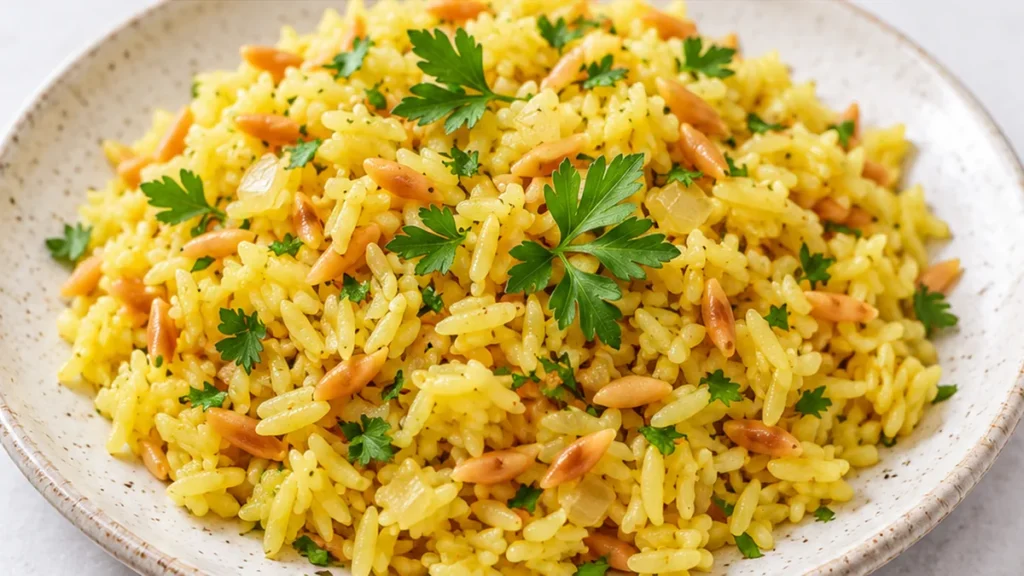
This flavorful gluten free rice pilaf combines rice with fresh herbs and vegetables. It’s a simple, nutritious side dish that complements various meals.
Key takeaways
- Rinse the rice to remove excess starch for a fluffy texture.
- Use high-quality broth for enhanced flavor.
- Monitor cooking time to prevent undercooking or overcooking.
- Experiment with ingredient swaps for unique flavors.
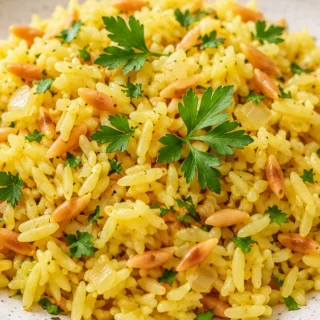
Flavorful Gluten-Free Rice Pilaf
Ingredients
Instructions
- Rinse the rice under cold water until the water runs clear. Drain well.
- Heat olive oil in a pan over medium heat.
- Add the gluten-free orzo and toast for 2–3 minutes, stirring, until golden brown.
- Stir in onion, sautéing for 3–4 minutes until softened. Add garlic and cook for 30 seconds until fragrant.
- Stir in the rinsed rice and cook for another 1–2 minutes.
- Pour in the broth, add salt, pepper, turmeric, and thyme, and bring to a boil.
- Reduce heat to low, cover, and simmer for 15–18 minutes until the rice and pasta are tender and the liquid is absorbed.
- Remove from heat and let sit, covered, for 5 minutes.
Understanding the Ingredients in Gluten-Free Rice Pilaf
The foundation of a flavorful gluten-free rice pilaf lies in the choice of ingredients. The primary ingredient, rice, should ideally be a long-grain variety such as basmati or jasmine. These types of rice not only provide a fluffy texture but also absorb flavors well. When cooking gluten-free rice pilaf, it is crucial to rinse the rice thoroughly before cooking. This step removes excess starch, preventing the rice from becoming gummy and ensuring each grain remains separate.
In addition to rice, the choice of broth plays a significant role. Using a high-quality vegetable or chicken broth enhances the overall flavor profile of the dish. Consider making your own broth to control the ingredients and sodium levels, which can significantly impact the taste. Aromatic vegetables like onions, garlic, and celery add depth, while herbs such as thyme or parsley can elevate the dish further.
Common Issues and Their Solutions
Even experienced cooks can encounter challenges when preparing gluten-free rice pilaf. One common issue is the rice being undercooked or overcooked. To avoid undercooking, ensure you follow the correct water-to-rice ratio, typically 2:1 for long-grain rice. For overcooking, monitor the cooking time closely, as different rice varieties may require varying cooking durations. Generally, basmati rice cooks in about 15-20 minutes, while jasmine rice may take slightly longer.
Another issue is flavor imbalance. If the pilaf tastes bland, it may be due to insufficient seasoning or lack of aromatic ingredients. Always taste and adjust seasoning throughout the cooking process. If you find the pilaf too salty, adding a bit of lemon juice can help balance the flavors.
Ingredient Swaps and Their Effects
When making gluten-free rice pilaf, some ingredient swaps can still yield a delicious result. For instance, substituting quinoa for rice can provide a nuttier flavor and additional protein. However, keep in mind that quinoa has a different cooking time and water ratio, typically 1:2.5.
Using different herbs or spices can also change the dish’s profile. For example, replacing thyme with dill can give the pilaf a fresh twist, perfect for summer dishes. Alternatively, adding saffron can impart a luxurious flavor and vibrant color, though it comes with a higher cost.
Unique Characteristics of Gluten-Free Rice Pilaf
What sets gluten-free rice pilaf apart from traditional pilafs is its versatility in flavor and texture. Unlike wheat-based pilafs, which can become heavy, gluten-free versions remain light and fluffy. This dish can easily accommodate various dietary preferences, making it suitable for a wide range of occasions, from casual dinners to festive gatherings.
Furthermore, the ability to customize gluten-free rice pilaf with seasonal vegetables or proteins allows for endless variations. Whether you add roasted vegetables in the fall or fresh herbs in the spring, this dish can adapt to the seasons while maintaining its core essence.
How to Properly Store and Reheat Gluten-Free Rice Pilaf
When it comes to storing gluten-free rice pilaf, proper techniques can significantly affect its texture and flavor upon reheating. Once cooled, place the pilaf in an airtight container and store it in the refrigerator for up to 4 days. For longer storage, consider freezing it in portioned containers, where it can last for up to 3 months. When reheating, avoid using high heat, as this can cause the rice to become mushy. Instead, reheat it gently on the stovetop or in the microwave, adding a splash of broth or water to restore moisture. This method helps maintain the integrity of the rice grains and enhances the overall flavor.
Scaling Up: Adjusting Ingredients for Larger Batches
Scaling recipes can be tricky, especially when it comes to achieving the same flavor and texture in larger batches of gluten-free rice pilaf. A general rule of thumb is to maintain the same proportions of rice to liquid, typically a 1:2 ratio for most gluten-free rice types. However, as you increase the batch size, consider the cooking time and heat distribution. Larger quantities may require a longer cooking time, and if using a conventional pot, ensure it is large enough to accommodate the increased volume without overcrowding. Stirring occasionally will help distribute heat evenly and prevent sticking.
Choosing Equipment: The Impact on Cooking Results
The choice of cooking equipment can dramatically influence the outcome of your gluten-free rice pilaf. While a traditional saucepan works well, using a heavy-bottomed pot can help prevent scorching and ensure even cooking. For those who prefer convenience, a rice cooker can be an excellent option, as it automatically adjusts cooking times and temperatures. When using an Instant Pot or pressure cooker, reduce the liquid slightly, as these methods trap steam and moisture more effectively. Regardless of the equipment, always monitor the rice during cooking to avoid overcooking.
Seasonal Ingredients and Their Influence on Flavor
Using seasonal ingredients can elevate the flavor profile of your gluten-free rice pilaf. Fresh herbs, such as parsley or dill, can brighten the dish, while seasonal vegetables like bell peppers or zucchini add texture and nutrition. Consider incorporating mushrooms in the fall or asparagus in the spring for a seasonal twist. The quality of ingredients also plays a crucial role; fresher vegetables and herbs will yield a more vibrant flavor. Adjusting your pilaf to include these seasonal elements not only enhances taste but also allows for greater culinary creativity.
Optimizing Flavor through Ingredient Quality and Preparation
The quality of the ingredients used in gluten-free rice pilaf significantly influences the final flavor profile. For instance, using high-quality broth instead of water can enhance the umami notes, while fresh herbs can impart brightness. Additionally, the method of toasting the rice in oil or butter before adding liquid is crucial; this step not only adds depth but also helps to achieve a nutty flavor. Toasting for about 2-3 minutes until the rice is lightly golden can make a remarkable difference. Furthermore, the choice of rice—whether it be basmati, jasmine, or a blend—affects both texture and taste. Basmati, with its fragrant aroma and fluffy texture, is often preferred, while jasmine rice offers a stickier consistency. Understanding these nuances allows for a more tailored and flavorful dish.
Batch Scaling and Its Impact on Cooking Times and Texture
When scaling up gluten-free rice pilaf, it’s essential to adjust both the ingredient quantities and cooking times appropriately. While doubling or tripling the recipe may seem straightforward, the cooking times can vary significantly. For larger batches, the rice may require additional liquid and a longer cooking time to ensure even absorption and prevent undercooked grains. A good rule of thumb is to increase the cooking time by about 5-10 minutes for every additional cup of rice added. Moreover, using a larger pot can help distribute heat evenly, preventing hotspots that lead to uneven cooking. It’s also advisable to stir the pilaf occasionally to ensure that all grains are cooked uniformly, especially in larger quantities.
Enhancing Presentation and Pairing with Seasonal Ingredients
Presentation is key in elevating the dining experience of gluten-free rice pilaf. To enhance visual appeal, consider adding colorful vegetables or garnishes that reflect the season. For example, springtime might call for peas and asparagus, while fall could inspire the addition of roasted butternut squash or cranberries. Pairing the pilaf with complementary proteins, such as grilled chicken or roasted fish, can create a balanced meal. Additionally, serving the pilaf in a decorative bowl and garnishing with fresh herbs or toasted nuts can make it more inviting. Seasonal ingredients not only improve the dish’s aesthetic but also enrich its flavor, making the meal more vibrant and enjoyable.
Understanding the Impact of Rice Variety on Texture and Flavor
The choice of rice variety plays a crucial role in the texture and flavor of gluten-free rice pilaf. Long-grain rice, such as Basmati or Jasmine, tends to remain fluffy and separate when cooked, making it ideal for pilaf. Short-grain rice, on the other hand, can become sticky and clump together, which may not be desirable in this dish. The cooking time and water absorption also vary by rice type; for instance, Basmati typically requires a 1:1.5 rice-to-water ratio and about 15-20 minutes of cooking, while short-grain varieties may need up to 1:2 and 20-25 minutes. Additionally, rinsing the rice before cooking can remove excess starch, further enhancing the desired texture. Understanding these nuances allows for a more tailored approach to achieving the perfect pilaf.
Enhancing Flavor Through Cooking Techniques
Cooking techniques significantly influence the flavor profile of gluten-free rice pilaf. Sautéing aromatics such as onions, garlic, or spices in oil or butter before adding rice can infuse the grains with rich flavors. This technique, known as ‘blooming,’ helps release essential oils from spices, enhancing the overall taste. Furthermore, toasting the rice in the pan for a few minutes before adding liquid can introduce a nutty flavor and improve texture. It’s important to monitor the heat; too high can burn the rice, while too low may not achieve the desired aromatic release. The choice of broth or stock instead of water can also elevate flavor, with homemade options providing depth and richness. These techniques ensure that every bite of the pilaf is flavorful and satisfying.
Pro tips
Pro tip: Best served immediately while hot!
Frequently asked questions
Can I use brown rice instead of white rice for pilaf?
Yes, you can use brown rice, but it will require a longer cooking time and more water. Typically, the ratio is 2.5:1 water to rice, and it may take around 40-45 minutes to cook.
What can I add to make my rice pilaf more nutritious?
You can add vegetables such as carrots, peas, or bell peppers for added nutrition. Additionally, incorporating nuts like almonds or walnuts can provide healthy fats and a nice crunch.
How can I store leftover rice pilaf?
Store leftover rice pilaf in an airtight container in the refrigerator for up to 4 days. Reheat it gently in the microwave or on the stovetop, adding a splash of broth to restore moisture.
Is rice pilaf a good option for meal prep?
Yes, rice pilaf is an excellent meal prep option. It can be made in bulk and paired with various proteins or vegetables throughout the week, making it versatile and convenient.
More from Gluten-Free Dinners & Mains →