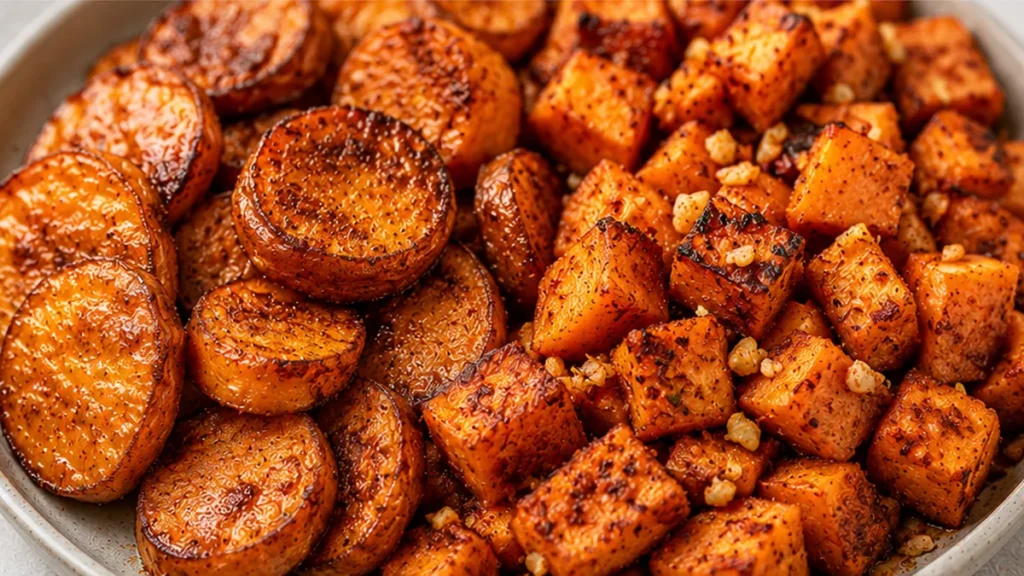
Craving a side dish that’s both healthy and incredibly delicious? These roasted sweet potato medallions are your answer! They offer a delightful balance of sweetness from the potatoes and sugar, with warming spices that create a truly comforting flavor profile. Perfect for busy weeknights or impressing guests, this recipe transforms simple sweet potatoes into a star attraction. Whether you choose the cinnamon-sugar coating for a sweet treat or the chili-spiced version for a savory kick, these roasted sweet potato medallions are guaranteed to become a favorite. They’re naturally gluten-free and paleo-friendly, making them a versatile addition to almost any meal plan.
Key takeaways
- Uniform slicing is key for even cooking and caramelization.
- Avoid overcrowding the pan to ensure crispiness, not steaming.
- Proper fat and heat management are crucial for achieving desired textures.
- Adjust spices and sweeteners to suit your flavor preferences.

Sweet Potato Bliss: Crispy & Cozy!
Ingredients
- 2-3 lbs sweet potatoes, sliced into medallions
- 2 tablespoons coconut oil
- 2 tablespoons coconut sugar
- 1/2 teaspoon ground cinnamon
- 1/2 teaspoon kosher salt
- 2-3 lbs sweet potatoes (cut into chunks)
- 2 tablespoons ghee or avocado oil
- 2 teaspoons chili powder
- 1/2 teaspoon ground cumin
- 2 cloves garlic, minced
Instructions
- Preheat your oven to 400°F (200°C).
- Peel the sweet potatoes and cut them into desired shapes (medallions or chunks).
- For the medallion version: Place slices on a baking sheet, drizzle with coconut oil, sprinkle with coconut sugar, cinnamon, and salt. Mix well by hand to coat evenly. Spread into a single layer.
- For the chunk version: Place chunks on a baking sheet, drizzle with ghee or avocado oil, sprinkle with chili powder, cumin, and minced garlic. Mix well by hand to coat evenly. Spread into a single layer.
- Bake for 30-35 minutes, flipping halfway through, until fork-tender and slightly caramelized.
- Serve warm and enjoy the sweet and savory goodness!
Notes
The technique that makes it
Achieving the perfect balance of crispy exterior and tender interior in sweet potatoes hinges on two key factors: proper preparation and controlled heat. For the sweet and cozy version, slicing the sweet potatoes into uniform medallions is crucial. This ensures even cooking and allows for maximum surface area to caramelize under the heat. The coconut oil, when melted and tossed with the medallions, coats them evenly, facilitating browning. Coconut sugar, with its slightly lower caramelization point than granulated sugar, helps create a delightful crispness and a subtle sweetness when it melts and browns. The cinnamon adds aromatic depth. Roasting at a moderate temperature (around 400°F or 200°C, though not explicitly stated in ingredients, this is a standard for crispy roasted vegetables) allows the natural sugars in the sweet potato to break down and caramelize without burning too quickly. Flipping them halfway through ensures even browning on both sides.
For the savory, chili-spiced version, the technique shifts slightly. Cutting the sweet potatoes into chunks provides a different texture, allowing for more surface area to crisp up while retaining a soft, yielding interior. The ghee or avocado oil provides a stable fat for higher heat searing, essential for developing a flavorful crust. The chili powder, cumin, and minced garlic are introduced to infuse the potatoes with robust, earthy flavors. The key here is to avoid overcrowding the baking sheet. This allows hot air to circulate freely around each chunk, promoting crisping rather than steaming, which would result in soggy potatoes. A higher initial heat, perhaps followed by a slight reduction, can also aid in achieving that desirable crispy exterior.
Troubleshooting
- Failure: Sweet potatoes are mushy and not crispy.
- Fix: Ensure the oven temperature is sufficiently high (around 400°F/200°C) and avoid overcrowding the baking sheet. Overcrowding leads to steaming instead of roasting.
- Failure: Sweet potatoes are burnt on the outside and undercooked inside.
- Fix: Slice or cut the sweet potatoes into more uniform sizes. If using higher heat, ensure they are flipped halfway through the cooking process to promote even cooking.
- Failure: Sweet potatoes are sticking to the baking sheet.
- Fix: Use enough oil or fat to coat the sweet potatoes thoroughly before roasting. Parchment paper or a silicone baking mat can also prevent sticking and aid in cleanup.
- Failure: The coating is falling off.
- Fix: Ensure the sweet potato pieces are dry before tossing with oil and seasonings. This helps the coating adhere better.
Substitutions
- Sweet Potatoes: Yams can be substituted for sweet potatoes. They have a similar texture and sweetness profile, though yams can sometimes be starchier. The cooking time may need slight adjustment.
- Coconut Oil/Ghee/Avocado Oil: Any high-heat cooking oil like olive oil (for medium-high heat) or grapeseed oil can be used. The flavor profile will change slightly depending on the oil chosen.
- Coconut Sugar: Brown sugar or even a small amount of maple syrup can be used for sweetness and caramelization. Be mindful that maple syrup is liquid and may affect crispness.
- Spices (Chili Powder/Cumin/Cinnamon): Adjust to personal preference. For the savory version, smoked paprika or a pinch of cayenne can add complexity. For the sweet version, nutmeg or ginger can complement the cinnamon.
Pro tips
- For extra crispy edges, ensure the sweet potato slices are in a single layer and not overlapping on the baking sheet.
- Internal temperature for fully cooked sweet potatoes should reach 165°F (74°C).
- Store leftovers in an airtight container in the refrigerator for up to 3 days. Reheat in the oven at 350°F (175°C) for 10-15 minutes for best texture.
Enjoy these versatile sweet potato medallions as a simple, satisfying side dish that brings warmth and flavor to your table.
More from Gluten-Free Snacks & Sides →
Frequently asked questions
What is the best temperature for roasting sweet potatoes?
For achieving crispy roasted sweet potatoes, a temperature between 375°F and 425°F (190°C to 220°C) is generally recommended. Higher temperatures promote better caramelization and crisping, but require closer monitoring to prevent burning.
Can I make these ahead of time?
Roasted sweet potatoes are best enjoyed fresh for optimal crispness. However, they can be made a day in advance and reheated in a single layer on a baking sheet at around 350°F (175°C) until warmed through and slightly crisped.
Why are my sweet potatoes not getting crispy?
Several factors can contribute to non-crispy sweet potatoes: insufficient heat, overcrowding the baking sheet (leading to steaming), not using enough oil, or cutting the pieces too small and thin, which can cause them to dry out rather than crisp.
How do I cut sweet potatoes for roasting?
For crispy results, cut sweet potatoes into uniform pieces, such as 1/2-inch thick medallions or 1-inch chunks. Uniformity ensures they cook at the same rate, preventing some pieces from burning while others remain undercooked.