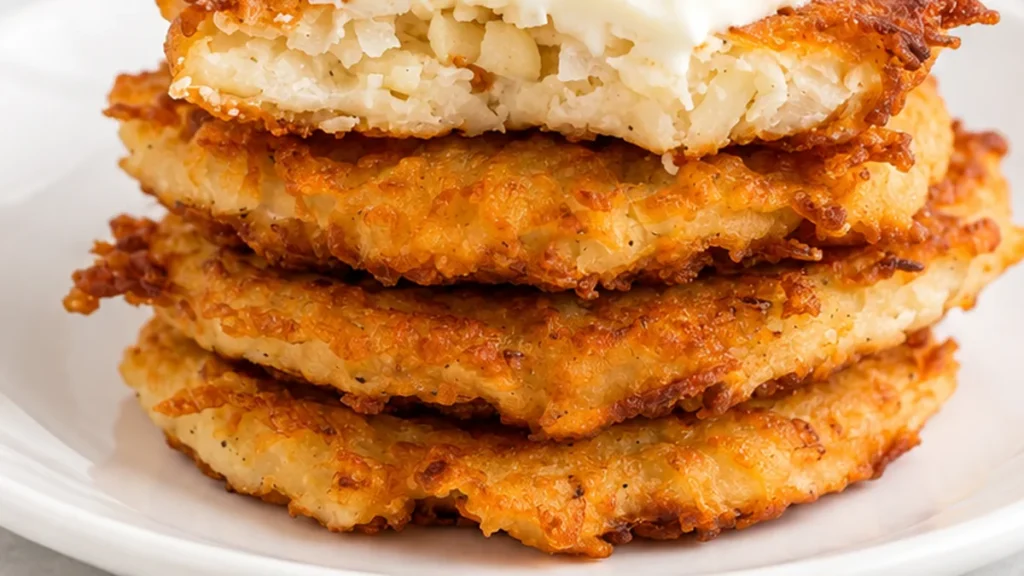
Gluten-free latkes offer a delightful crispy bite with a fluffy interior that everyone will love. The secret to their perfect texture lies in properly draining the grated potatoes, ensuring they fry beautifully. This recipe is perfect for family gatherings or holiday celebrations, providing a comforting dish that can be enjoyed by all. Whether you’re observing traditions or simply craving a savory treat, gluten-free latkes are a fantastic choice. Using simple ingredients, you can whip up these crispy potato delights that are worth making your guests and satisfy your palate.
Key takeaways
- Properly draining the potatoes is essential for crispy latkes.
- Use a gluten-free flour blend with starches for better texture.
- Maintain the oil temperature to ensure even cooking.
- Experimenting with spices can enhance flavor without gluten.
Crispy Gluten-Free Potato Latkes
Ingredients
- 4-5 medium-sized russet potatoes
- 1 small white onion
- 2 large eggs
- ¼ cup gluten-free all-purpose flour
- ½ tsp salt
- ¼ tsp ground black pepper
- ½ cup vegetable oil
Instructions
- Peel and grate 4-5 medium-sized russet potatoes until you have 4 cups of grated potatoes.
- Place grated potatoes in a large bowl and cover with cold water. Let soak for 10 minutes.
- Grate 1 small white onion until you have ¼ cup of grated onion.
- Drain water from grated potatoes, then place them in a cheesecloth with the grated onion and squeeze out all excess liquid.
- In a large bowl, mix the grated potato and onion with 2 large eggs, ¼ cup gluten-free flour, ½ tsp salt, and ¼ tsp black pepper. Stir until well combined.
- Line a large baking sheet with parchment paper and set aside.
- Using a ¼-cup measuring cup, measure the mixture into ¼ cup portions, squeezing excess liquid out before placing them on the baking sheet.
- Shape the latkes into ½” thickness for crisp edges and a soft middle.
Video
Notes
Understanding the Science Behind Crispy Gluten-Free Latkes
Crispy gluten-free latkes rely on the perfect balance of moisture and fat. When preparing the batter, it’s crucial to remove excess moisture from the grated potatoes. This can be achieved by salting the grated potatoes and allowing them to sit for about 10-15 minutes, which draws out water through osmosis. After draining, the potatoes should be patted dry with a clean kitchen towel. This step is vital as excess moisture can lead to soggy latkes, preventing them from achieving that desired crispiness.
Another important factor is the choice of gluten-free flour. A blend containing starches like tapioca or potato starch can enhance the crispiness of the latkes. The starches help create a better structure and absorb moisture, contributing to a crunchier texture. Ideally, the oil should be heated to around 180°C (350°F) before frying, ensuring that the latkes cook evenly and develop a golden-brown crust.
Common Issues and Solutions When Making Latkes
One common issue when making gluten-free latkes is that they may fall apart during cooking. This can happen if the batter is too wet or if there isn’t enough binding agent. To fix this, ensure that the grated potatoes are well-drained and consider adding an extra egg or more gluten-free flour to help bind the mixture together.
Another potential problem is uneven cooking, which can result in some latkes being burnt while others remain undercooked. To address this, maintain a consistent oil temperature and avoid overcrowding the pan. Frying in batches allows for better heat distribution and ensures that each latke has enough room to cook evenly.
Ingredient Swaps and Their Effects
While the traditional recipe calls for russet potatoes, you can experiment with other varieties like Yukon Gold for a creamier texture. However, keep in mind that this may result in a softer latke rather than a crispy one.
Using different types of gluten-free flour can also yield varied results. For instance, almond flour can provide a nutty flavor and a different texture, but it may require more binding agents due to its lack of starch. Similarly, coconut flour absorbs more moisture and may lead to a drier latke unless adjusted with additional eggs or liquids.
Unique Characteristics of Gluten-Free Latkes
One unique aspect of gluten-free latkes is their versatility in flavoring. Unlike traditional latkes that rely heavily on the potato’s natural flavor, gluten-free versions can incorporate various spices and herbs, such as garlic powder, onion powder, or fresh chives, to enhance their taste profile. This adaptability allows for creative variations, making them suitable for different occasions and personal preferences.
How to Adjust Cooking Times for Different Batch Sizes
When scaling the recipe for gluten-free latkes, cooking times may need to be adjusted. For smaller batches, keep the frying time consistent, but for larger batches, consider frying in multiple pans or batches to avoid overcrowding. Overcrowding can lead to uneven cooking and less crispiness. A good rule of thumb is to fry in batches of 4-5 latkes at a time, ensuring each latke has enough space to fry evenly. Monitor the oil temperature, which should remain around 180°C (350°F) for optimal frying. If the temperature drops too low, the latkes will absorb more oil, resulting in greasier latkes.
Understanding the Role of Potato Variety in Texture
The type of potato used can significantly impact the texture of gluten-free latkes. Russet potatoes are ideal due to their high starch content, which helps achieve a crispy exterior while maintaining a tender interior. If you substitute with waxy potatoes like red or new potatoes, expect a different texture; these potatoes contain more moisture and less starch, which may lead to a denser latke that doesn’t crisp as well. It is best to stick with russets for the authentic crispy experience. Additionally, using freshly grated potatoes rather than pre-packaged can enhance the texture and flavor.
Equipment Choices That Influence Latke Quality
The equipment you use can greatly affect the outcome of your gluten-free latkes. A heavy-bottomed skillet or cast iron pan is recommended for even heat distribution, which is crucial for achieving a crispy texture. Non-stick pans can work, but they may not provide the same level of browning. Additionally, using a food processor for grating potatoes can save time and ensure uniformity, but be cautious not to over-process, as this can release too much starch and lead to a gummy texture. A slotted spatula is also essential for flipping and removing latkes without excess oil.
Seasonal Considerations for Fresh Ingredients
The quality of your ingredients can vary seasonally, affecting the flavor and texture of your gluten-free latkes. Fresh, in-season potatoes will yield better results than those stored for long periods. During the fall and winter months, potatoes are usually at their peak, providing a firmer texture and richer flavor. Conversely, spring potatoes may be softer and contain more moisture, which can impact the frying process. Always choose firm potatoes without blemishes for the best results. Additionally, consider pairing your latkes with seasonal toppings, such as apple sauce or sour cream, to enhance the overall dish.
How to Make Latkes Ahead of Time and Store Them
Preparing gluten-free latkes in advance can save time during busy meals or gatherings. To make them ahead, you can shred the potatoes and onions and store them in a bowl of cold water to prevent browning. This can be done a few hours before cooking. However, for the best texture, it is advisable to fry the latkes just before serving. If you need to store cooked latkes, allow them to cool completely and place them in an airtight container. They can be refrigerated for up to three days. To reheat, place them on a baking sheet in a preheated oven at 190°C (375°F) for about 10-15 minutes until they regain their crispiness.
Understanding the Impact of Oil Temperature on Crispiness
The temperature of the oil when frying gluten-free latkes is crucial for achieving that desired crispiness. If the oil is not hot enough, the latkes will absorb too much oil and become soggy. Ideally, the oil should be heated to around 175-190°C (350-375°F) before adding the latkes. To test the oil, drop a small piece of batter into the oil; if it sizzles and rises to the surface, the oil is ready. Maintaining the oil temperature during cooking is essential; adding too many latkes at once can lower the oil temperature significantly, leading to uneven cooking. Use a thermometer for accuracy and adjust the heat as necessary to keep the temperature consistent.
Pairing Suggestions for Gluten-Free Latkes
When serving gluten-free latkes, the right accompaniments can enhance their flavor and texture. Traditional pairings include applesauce and sour cream, which provide a balance of sweetness and creaminess. For a modern twist, consider serving latkes with avocado or a yogurt-based dip flavored with herbs. Fresh herbs like dill or chives can also be sprinkled on top for added freshness. Additionally, serving latkes alongside a light salad can provide a refreshing contrast. Experimenting with different toppings can elevate the dish, making it versatile for various occasions.
Understanding the Effect of Resting Time on Latke Texture
Resting time is crucial in achieving the desired texture for crispy gluten-free latkes. After grating the potatoes and mixing them with other ingredients, allow the mixture to rest for at least 15-30 minutes. This resting period enables the grated potatoes to release excess moisture, which is essential for achieving crispiness. If the batter is cooked immediately, the moisture can lead to soggy latkes. During the resting phase, the starches in the potatoes also hydrate, which helps bind the mixture together, resulting in a firmer texture when cooked. For optimal results, consider a longer resting time of up to an hour, especially if you are using starch-heavy potatoes like russets, as this can enhance the overall crispiness.
Choosing the Right Equipment for Perfectly Crisp Latkes
The equipment you use can significantly influence the quality of your gluten-free latkes. A heavy-bottomed skillet or cast-iron pan is recommended for even heat distribution, which helps achieve a golden-brown crust. Avoid non-stick pans as they may not allow for the same level of crispiness. Additionally, the use of a food processor can make grating the potatoes faster and more uniform, ensuring even cooking. If you’re making a large batch, consider using a deep fryer, which maintains a consistent oil temperature and allows for even cooking without overcrowding the pan. This is essential for preventing steaming, which can occur in a crowded skillet, leading to less crispy latkes.
Pro tips
- Ensure you soak the grated potatoes for 10 minutes to remove excess starch.
- Use a cheesecloth for the best results in removing liquid.
- Fry in hot oil for extra crispy latkes.
Try this gluten-free latke recipe and enjoy these crispy bites with your favorite toppings. They are perfect for any occasion!
Frequently asked questions
Can I make latkes ahead of time?
Yes, you can prepare the latke mixture ahead of time and store it in the refrigerator for up to 24 hours. However, for the best texture, it’s recommended to fry them fresh just before serving.
What type of oil is best for frying latkes?
Vegetable oil is commonly used for frying latkes due to its high smoke point. Other options include canola oil or peanut oil, which also perform well for achieving a crispy texture.
How do I know when the latkes are done frying?
Latkes are done when they turn a golden brown color and are crispy on the outside. This typically takes about 3-4 minutes per side, but keep an eye on them to prevent burning.
Can I freeze leftover latkes?
Yes, leftover latkes can be frozen. Allow them to cool completely, then place them in an airtight container or freezer bag. They can be reheated in the oven for best results.
More from Gluten-Free Snacks & Sides →