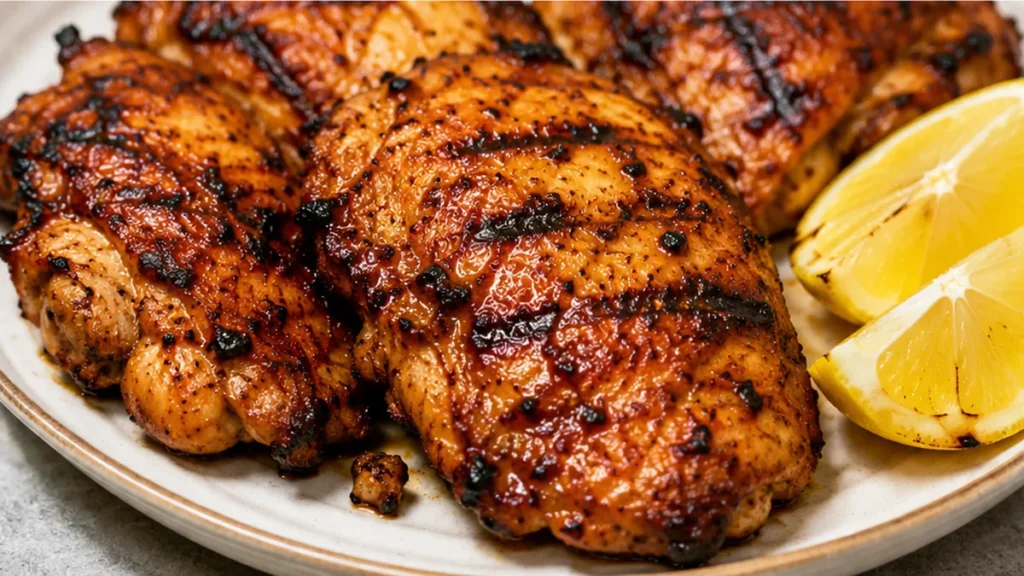
The secret to truly juicy grilled chicken thighs lies in managing your grill’s heat and allowing the meat to rest. This method ensures tender, flavorful results without drying out the chicken. Grilled chicken is a versatile dish, perfect for quick weeknight dinners or a relaxed backyard barbecue. This recipe focuses on simple seasoning and precise cooking to deliver consistently delicious chicken thighs that everyone will love.
Key takeaways
- Achieve juicy grilled chicken by managing medium-high grill heat for a good sear.
- Use an instant-read thermometer to pull chicken at 165°F to prevent overcooking.
- Always rest the chicken for 5-10 minutes after grilling to allow juices to redistribute.
- Properly oiling the chicken and ensuring clean, hot grates prevents sticking.
Juicy Grilled Chicken Thighs: Your New Go-To!
Ingredients
- 2-1 /2 lbs boneless skinless chicken thighs (8-10 medium-sized thighs)
- garlic salt
- pepper
- paprika (optional, for color)
- canola or vegetable oil
- fresh lemon, cut into wedges, for serving
Instructions
- Heat a gas or charcoal grill over medium-high heat until it reaches at least 400 degrees Fahrenheit. Let the grill preheat for 5-10 minutes at this temperature to ensure the grates are very hot.
- While the grill is preheating, trim the chicken thighs of excess skin and fat then place them onto a platter or large plate. Brush the tops with oil, or spray with nonstick spray, then season with garlic salt, pepper, and a small amount of paprika if desired for color. Flip the chicken thighs over then brush with oil and season the second side with garlic salt and pepper.
- Place the chicken thighs smooth-side-down on the grates then close the lid and grill for 3-5 minutes or until the chicken is opaque up and around the sides, grill marks appear on the bottoms, and the chicken does not stick to the grates when you attempt to flip it over.
- Close the lid then grill on the second side for another 3-5 minutes or until a meat thermometer inserted into the thickest part of the thigh reads 165 degrees Fahrenheit – I like them more around 175 degrees. Note: boneless skinless chicken thighs can be cooked up to 180-185 degrees Fahrenheit and still remain tender, so there’s some wiggle room here. Remove the chicken to a platter then cover with foil and let rest for at least 5 minutes before serving.
Notes
The Technique That Makes It: Mastering the Grill for Juicy Thighs
The key to incredibly juicy and flavorful grilled chicken thighs lies in a combination of proper heat management and understanding the Maillard reaction. Chicken thighs, with their higher fat content compared to breasts, are more forgiving and naturally tend towards juiciness. However, achieving that perfect sear and tender interior requires attention to the grill’s temperature. We aim for a medium-high heat (around 400-450°F or 200-230°C). This temperature is hot enough to initiate the Maillard reaction – the browning process that creates complex, savory flavors and a desirable crust – before the interior overcooks. Applying a thin layer of oil to the chicken thighs themselves, rather than just the grill grates, helps prevent sticking and promotes even browning. For boneless, skinless thighs, the cooking time is relatively short, typically 5-7 minutes per side. Overcooking is the primary enemy of juicy chicken. Using a meat thermometer is the most reliable way to ensure doneness without drying out the meat; aim for an internal temperature of 165°F (74°C) in the thickest part of the thigh. Allowing the chicken to rest for 5-10 minutes after grilling is crucial. This resting period allows the muscle fibers to relax and reabsorb the juices, preventing them from running out when you cut into the meat, thus ensuring maximum moisture and tenderness.
Troubleshooting
- Problem: Chicken is sticking to the grill.
Fix: Ensure your grill grates are clean and preheated properly. Apply a light coating of high-smoke-point oil (like canola or vegetable oil) directly to the chicken thighs before placing them on the grill. Don’t try to move the chicken too early; let it develop a crust before attempting to flip. - Problem: Chicken is burnt on the outside but raw inside.
Fix: Your grill temperature is likely too high. Reduce the heat to medium-high (400-450°F). If using charcoal, move the coals to one side to create a cooler zone for indirect cooking if needed. Ensure thighs are of relatively uniform thickness. - Problem: Chicken is dry and tough.
Fix: This is usually a result of overcooking. Use an instant-read meat thermometer and remove the chicken from the grill as soon as it reaches an internal temperature of 165°F (74°C). Always allow the chicken to rest for at least 5 minutes after grilling. - Problem: Uneven cooking.
Fix: Ensure your chicken thighs are roughly the same size and thickness. If there’s a significant difference, you may need to remove smaller pieces earlier to prevent overcooking.
Substitutions
- Chicken Cut: Boneless, skinless chicken breasts can be used, but they cook faster and are prone to drying out. Adjust cooking time accordingly and monitor internal temperature closely. Result: Potentially drier chicken if overcooked.
- Seasoning: A blend of garlic powder, onion powder, salt, and black pepper can replace garlic salt. Add salt separately to control sodium levels. Result: Slightly different flavor profile, but still delicious.
- Oil: Olive oil (not extra virgin) or avocado oil can be used instead of canola/vegetable oil for coating the chicken. Result: Similar results, though avocado oil has a higher smoke point.
- Citrus: A squeeze of orange or lime juice over the cooked chicken before serving can offer a different bright finish than lemon. Result: A variation in the final acidic note.
Pro tips
- For the juiciest grilled chicken, pull the thighs off the grill when they reach an internal temperature of 170-175°F (77-79°C). While 165°F (74°C) is safe, cooking boneless thighs slightly higher can improve tenderness.
- Don’t skip the resting step! Covering the cooked chicken with foil for 5 minutes allows the juices to redistribute, ensuring every bite is moist.
- To prevent sticking, ensure your grill grates are clean and well-oiled before placing the chicken. A hot grate helps create those desirable grill marks and makes flipping easier.
These simple grilled chicken thighs are a testament to how easy and delicious grilling can be. Perfect for any meal, experiment with different marinades next time! Enjoy!
Frequently asked questions
How do I prevent my chicken thighs from sticking to the grill?
Ensure your grill grates are clean and well-oiled. Lightly coat the chicken thighs themselves with canola or vegetable oil before placing them on the preheated grill. Resist the urge to move the chicken immediately; let it develop a nice crust first.
What is the best internal temperature for grilled chicken thighs?
The safest and most reliable internal temperature for cooked chicken thighs is 165°F (74°C). Use an instant-read meat thermometer inserted into the thickest part of the thigh, avoiding bone if present, to ensure accuracy.
Why are my grilled chicken thighs dry?
Dryness is almost always a result of overcooking. Chicken thighs are more forgiving than breasts, but they will still dry out if left on the grill too long. Remove them promptly once they reach the target internal temperature of 165°F.
Can I grill chicken thighs indoors?
Yes, you can achieve similar results using an indoor grill pan or a broiler. Ensure the pan or broiler is preheated adequately and use medium-high heat. Keep a close eye on the chicken as cooking times may vary slightly from outdoor grilling.
More from Gluten-Free Dinners & Mains →