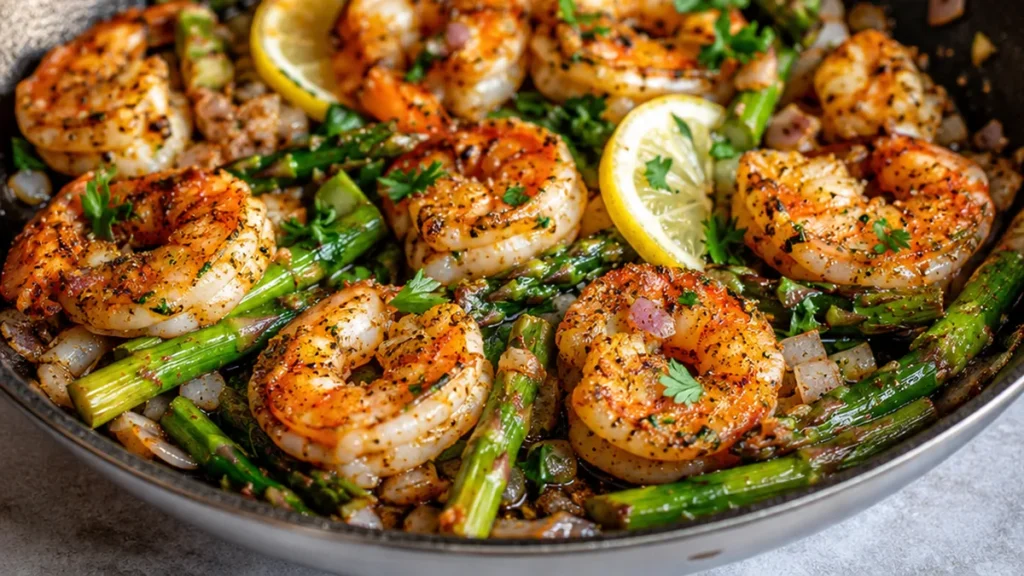
The key to a truly outstanding shrimp asparagus skillet lies in perfectly cooked shrimp that are tender, not rubbery, and crisp-tender asparagus. This shrimp asparagus recipe delivers on both, ensuring a delicious and healthy meal that comes together quickly. High heat and quick cooking are essential for the best texture, preventing the shrimp from overcooking while giving the asparagus a nice bite. This dish is ideal for anyone looking for a flavorful, low-carb option that doesn’t compromise on taste or speed.
Key takeaways
- High heat is crucial for searing shrimp and tender-crisp asparagus.
- Cook shrimp quickly in a single layer to avoid rubberiness.
- Add aromatics like garlic towards the end to prevent burning.
- Lemon zest and juice add brightness and help create a light pan sauce.
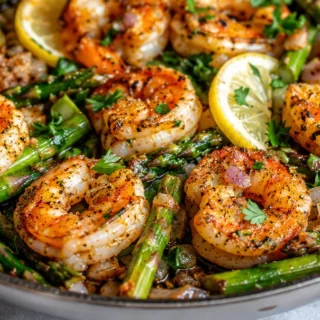
Speedy Lemon Garlic Shrimp & Asparagus Skillet
Ingredients
- 1 lb 16/20-count jumbo shrimp (peeled and deveined)
- 1 tablespoon Old Bay seasoning
- 3 tablespoons extra virgin olive oil (divided)
- 1 bunch asparagus (3/4 – 1lb, ends trimmed then cut into 2 ” pieces)
- 1 shallot or small onion (chopped)
- 1/2 teaspoon salt and 1/4 teaspoon pepper
- 4 cloves garlic (pressed or minced)
- 1 lemon (zested then sliced in half)
- 1/4 cup chopped fresh parsley
Instructions
- Pat shrimp very dry with paper towels then season both sides with Old Bay seasoning and set aside.
- Heat 1 Tablespoon oil in a large skillet over medium-high heat. Add shrimp then saute for 2-3 minutes per side, or until cooked through. Remove shrimp to a plate then set aside.
- Add remaining 2 Tablespoons oil to the skillet then add asparagus and shallot, season with salt and pepper, then saute until asparagus is crisp tender, 4-5 minutes. Add garlic then saute for 1 more minute or until very fragrant.
- Add cooked shrimp back into the skillet along with the lemon zest and juice of 1/2 lemon (if lemon is large you may not need to squeeze in the whole half). Toss to combine and re-warm the shrimp.
- Scoop into bowls alongside cooked white or brown rice, or sauted cauliflower rice. Sprinkle chopped parsley on top then slice remaining lemon half into wedges and serve with each bowl.
Notes
The Technique: Mastering the Skillet Sear
The key to this speedy shrimp and asparagus dish lies in high-heat skillet cooking and proper ingredient layering. Jumbo shrimp cook incredibly fast, and overcooking them results in a rubbery texture. The goal is to achieve a beautiful sear on the shrimp and tender-crisp asparagus without turning either mushy. This is accomplished by heating the olive oil until it shimmers (indicating it’s hot enough for searing) before adding the shrimp and asparagus. The Old Bay seasoning not only adds flavor but also helps create a flavorful crust on the shrimp through the Maillard reaction. Similarly, the asparagus benefits from the high heat, developing slight char marks while retaining its vibrant color and a pleasant bite. The shallot and garlic are added later in the cooking process to prevent burning, releasing their aromatic compounds into the pan juices, which then form the base of the quick pan sauce when deglazed with the lemon juice.
Troubleshooting
- Shrimp are rubbery: This indicates they were overcooked. To fix, ensure your skillet is sufficiently hot before adding shrimp and cook them in a single layer for only 1-2 minutes per side until just pink and opaque. Remove them from the skillet immediately after cooking and set aside.
- Asparagus is mushy: The skillet was likely not hot enough, or the asparagus was overcooked. Trim the tough ends and cut the asparagus into uniform 2-inch pieces. Cook in a hot skillet with the shrimp, or slightly before, stirring frequently until tender-crisp.
- Sauce is too thin: The liquid from the lemon and the natural juices from the shrimp and asparagus may not be enough to create a cohesive sauce. Ensure you scrape up any browned bits from the bottom of the pan, as these add flavor and body. For a thicker sauce, you can let it simmer for an extra minute or two, or create a slurry of 1 teaspoon cornstarch mixed with 1 tablespoon cold water and stir it into the simmering pan juices.
- Garlic is burnt: Garlic burns very quickly over high heat. Add the minced garlic only during the last 30-60 seconds of cooking, stirring constantly, to infuse its flavor without scorching.
Substitutions
- Shrimp: Scallops can be substituted for shrimp. They will cook even faster, so be very careful not to overcook them – aim for opaque and lightly seared.
- Asparagus: Green beans or broccoli florets can be used instead. Green beans will require a similar cooking time. Broccoli florets may need an extra minute or two in the skillet to become tender-crisp.
- Shallot: A small yellow onion or 1-2 green onions (white and light green parts) can be used in place of the shallot. The flavor will be slightly different but still delicious.
- Lemon: Lime can be used for a different citrus note. The zest and juice will still provide acidity to balance the richness of the dish.
Pro tips
- Don’t overcrowd the skillet: Cook shrimp in batches if necessary to ensure even searing and prevent steaming. This helps them get a beautiful pink color.
- For an extra a hit of flavor, try finishing with a tiny pat of butter or a drizzle of good quality extra virgin olive oil before serving.
- Leftovers can be stored in an airtight container in the refrigerator for up to 2 days. Reheat gently in a skillet over low heat or in the microwave to avoid overcooking the shrimp.
This shrimp asparagus skillet is a testament to how simple ingredients can create extraordinary flavor. Give it a try for a delicious, healthy meal that’s perfect any night of the week. Enjoy!
Frequently asked questions
Can I use pre-cooked shrimp?
No, this recipe relies on cooking raw shrimp directly in the skillet to achieve the best texture and flavor. Pre-cooked shrimp would become tough and overcooked if added to the hot skillet for the duration of this recipe.
What if I don’t have Old Bay seasoning?
You can substitute with a similar seafood seasoning blend or create your own mix using paprika, celery salt, black pepper, and a pinch of cayenne. The goal is to add a savory, slightly spiced flavor profile to the shrimp.
How do I ensure the asparagus is cooked perfectly?
Trim the woody ends and cut the asparagus into uniform 2-inch pieces. Cook over medium-high heat, stirring frequently, for about 3-5 minutes until it’s bright green and tender-crisp. It should still have a slight bite.
Can I add other vegetables to this dish?
Yes, you can add other quick-cooking vegetables like bell peppers (thinly sliced) or cherry tomatoes (halved). Add them along with the asparagus, ensuring they are cut to a size that will cook in a similar timeframe.
More from Gluten-Free Dinners & Mains →