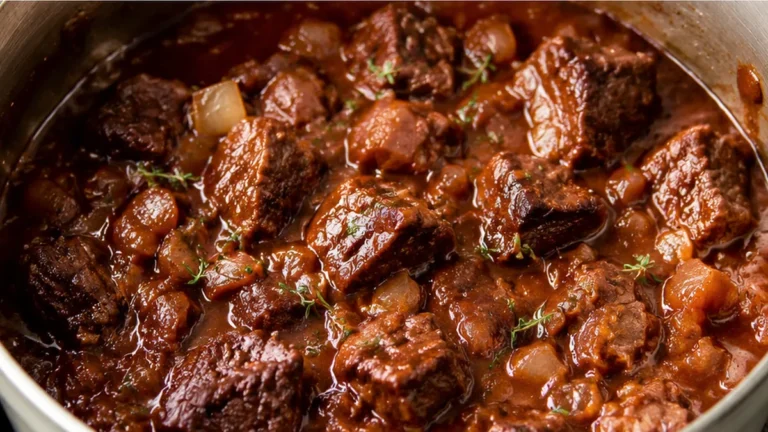
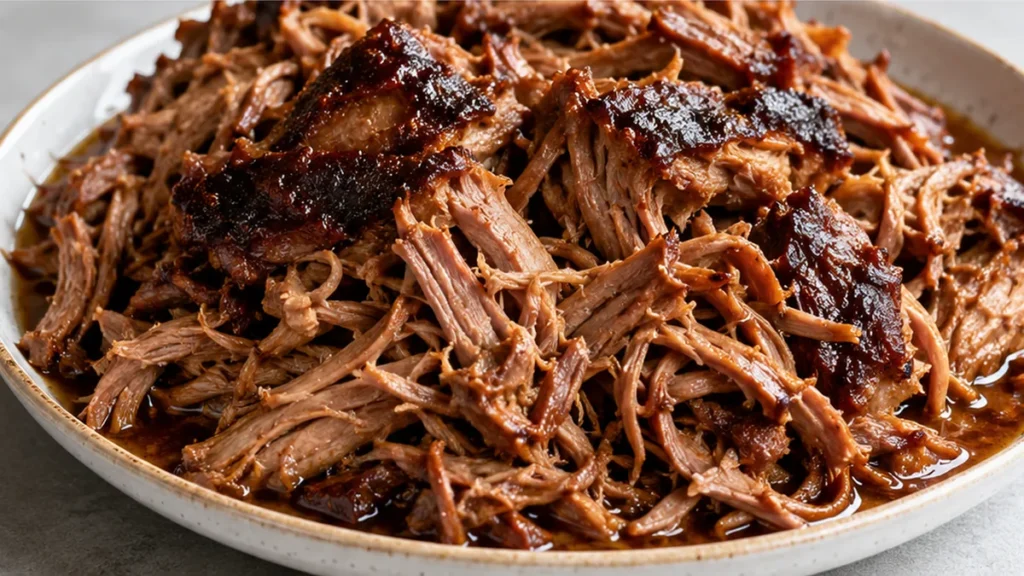
The secret to truly tender, fall-apart pulled pork lies in patience and the trick to slow cooking. This pulled pork recipe transforms a humble pork butt into a succulent, flavorful centerpiece perfect for any gathering or a simple weeknight dinner. Achieving that melt-in-your-mouth texture for pulled pork isn’t complicated when you let your slow cooker do the work. This method ensures consistent moisture and allows the collagen in the pork to break down beautifully, resulting in meat that shreds with just a fork.
Key takeaways
- Low and slow cooking is essential for breaking down connective tissues.
- Ensure the pork reaches an internal temperature of at least 195°F for maximum tenderness.
- Adequate resting time after cooking allows juices to redistribute.
- Proper seasoning with salt and pepper is crucial for flavor development.
Fall-Apart Pulled Pork: Tender & Flavorful
Ingredients
- 4-5 lb boneless pork butt (trimmed of excess fat then cut into 4 – 6 large pieces)
- 5 large garlic cloves (pressed or minced)
- 3 tablespoons brown sugar
- 1 tablespoon sea salt
- 1/2 tablespoon ground black pepper
- 3/4 cup chicken broth
Instructions
- Place pork pieces in a 6-quart crock pot. Sprinkle garlic, brown sugar, salt, and pepper over pork. Rub seasonings in. Pour chicken broth around edges.
- Cook on LOW for 6-8 hours or HIGH for 3-4 hours, until meat shreds easily. Optionally, turn pork at the halfway point.
- Transfer pork to a plate. Pour cooking juices into a fat separator. Shred meat with two forks. Return shredded pork to crock pot or container.
- Pour desired amount of cooking juices over pork, leaving fat in separator. Stir to combine and serve.
Notes
The Science Behind Tender Pulled Pork
The magic of fall-apart pulled pork lies in breaking down tough connective tissues in the pork butt. Pork butt, also known as pork shoulder, is a cut rich in collagen and fat. When subjected to low and slow cooking, typically in an oven or slow cooker, this collagen undergoes a process called hydrolysis. It slowly converts into gelatin, which lubricates the meat fibers and creates that signature tender, moist texture. The initial searing or browning of the pork pieces (though not explicitly detailed in the minimal ingredient list, it’s a crucial preparatory step for flavor development via the Maillard reaction) creates complex flavor compounds. The chicken broth provides essential moisture and steam during the cooking process, preventing the pork from drying out and aiding in the tenderization. The salt draws out some moisture initially, which then gets reabsorbed, helping to season the meat throughout. The brown sugar contributes to caramelization, adding depth of flavor and a slightly sticky exterior.
Troubleshooting
- Problem: Pork is dry and tough.
Fix: This usually means it wasn’t cooked long enough or at a low enough temperature. Ensure the internal temperature reached at least 195-205°F (90-96°C) and allow for adequate resting time after cooking.
- Problem: Pulled pork lacks flavor.
Fix: Ensure you’ve seasoned generously with salt and pepper. Consider adding more aromatics like onion or additional garlic during the cooking process, or a flavorful sauce after shredding.
- Problem: Meat is mushy instead of tender.
Fix: This can happen if overcooked significantly past the ideal temperature. While still edible, the texture is compromised. For future attempts, monitor the internal temperature more closely.
- Problem: Fat cap is still hard and unrendered.
Fix: The cooking temperature might have been too high, causing the exterior to cook before the fat had time to render. Lower the heat and extend the cooking time, ensuring the internal temperature is reached.
Substitutions
- Pork Butt: Boneless pork shoulder or even pork loin can be used, though pork loin is leaner and may result in a drier finished product. Expect a slightly different texture and potentially less richness.
- Chicken Broth: Beef broth, vegetable broth, or even water can be substituted. Using broth will add more flavor than water. The result will be similar in tenderness but may vary slightly in savory depth.
- Brown Sugar: White sugar, honey, or maple syrup can be used. These will provide sweetness and aid in caramelization, though the specific flavor profile will change.
- Garlic: Garlic powder can be used at a ratio of 1 teaspoon per 5 cloves. The flavor will be less pungent and fresh but still provide an aromatic base.
Pro tips
- For optimal flavor, season the pork generously and rub it into all surfaces. Don’t be shy!
- Ensure the internal temperature of the pork reaches 200-205°F (93-96°C) for easy shredding. This is well beyond the 145°F (63°C) for doneness, indicating the collagen has broken down.
- Store leftover pulled pork in an airtight container in the refrigerator for up to 3-4 days, or freeze for up to 2-3 months. Reheat gently in a microwave or on the stovetop with a splash of broth to maintain moisture.
This simple slow cooker pulled pork recipe delivers incredible flavor and tenderness with minimal effort. Experiment with different sauces and enjoy this versatile dish!
Frequently asked questions
What is the best way to cook this pulled pork?
The best method for this recipe is low and slow cooking, either in a Dutch oven in the oven at around 300-325°F (150-160°C) for several hours until tender, or in a slow cooker on low for 8-10 hours. Ensure the pork is submerged in the liquid.
How do I know when the pulled pork is done?
The pork is done when it is fork-tender and easily shreds apart. An instant-read thermometer should register an internal temperature between 195°F and 205°F (90°C and 96°C). The meat should feel very soft.
Can I make pulled pork ahead of time?
Yes, pulled pork is excellent for making ahead. Once cooked and shredded, let it cool completely before storing it in an airtight container in the refrigerator for up to 3-4 days. Reheat gently on the stovetop or in the oven.
What should I do if my pulled pork is too wet?
If the pulled pork is too wet after cooking, you can drain off some of the excess liquid before shredding. Alternatively, after shredding, you can return the meat to the cooking liquid in a pan over medium heat and simmer gently to reduce the moisture until you reach your desired consistency.
More from Gluten-Free Dinners & Mains →