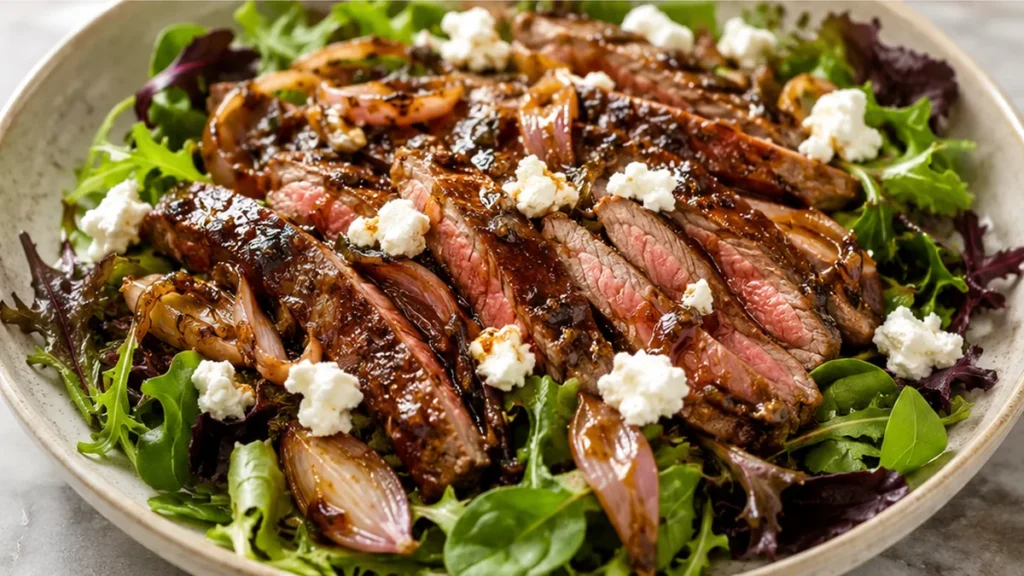
The secret to a truly exceptional steak salad isn’t just the steak; it’s the interplay of textures and flavors. This steak salad recipe delivers just that, combining tender, perfectly seared beef with crunchy candied pecans and delicate crispy shallots, all brought together by a bright maple balsamic vinaigrette. The goal is crispy shallots without burning them. Dropping the heat slightly after the initial sizzle and stirring constantly made all the difference, ensuring a golden, not dark, crisp. This steak salad is a fantastic option for a satisfying meal that feels gourmet yet is entirely achievable at home, proving that salads can be much more than just greens.
Key takeaways
- Achieve a deep sear on the steak through high heat and proper seasoning.
- Allow the steak to rest adequately after cooking to retain juices.
- Emulsify the dressing by slowly adding oil while whisking vigorously.
- Ensure salad greens are thoroughly dried before tossing.
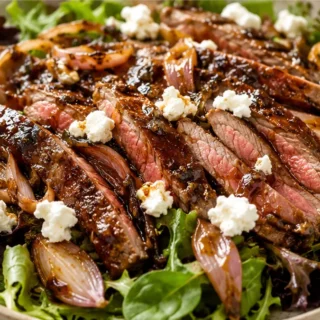
Sizzle & Crunch Steak Salad
Ingredients
- 1 tablespoon brown sugar
- 1/2 tablespoon pure maple syrup
- 1/2 tablespoon butter
- 1/4 cup extra virgin olive oil
- 2 large shallots (thinly sliced then separated into rings)
- 2 8-10oz strip steaks (trimmed of excess fat)
- salt and pepper
- 5 oz mixed greens
- 1/4 cup dried cherries
- 2 oz goat cheese (crumbled)
Instructions
- Place a silpat or parchment paper on the counter. Add the brown sugar, maple syrup, and butter to a small saucepan. Turn heat to medium and stir until melted and bubbly. Add pecans, cook while stirring until sugar crystalizes and adheres, 2-4 minutes. Scrape pecans onto parchment, spread, sprinkle with salt, and cool completely.
- For the vinaigrette, add ingredients to an airtight container or small bowl. Shake or whisk to combine and refrigerate for at least 30 minutes.
- If steaks are thicker than 1-1/2″, preheat oven to 400°F.
- Meanwhile, line a plate with paper towels. Add 1/4 cup olive oil to a large (10-12″) oven-safe, preferably cast iron skillet over medium-high heat. Once hot, add half the shallots, pan fry until golden brown (NOT dark brown), 2-3 minutes, stirring often with tongs. Transfer to prepared plate, sprinkle with salt. Repeat with remaining shallots. Drain excess oil from skillet and return it over heat just below high.
- Place seasoned steaks inside the hot skillet. Sear for 3 minutes. Flip, lower heat slightly, and sear for 2 minutes for rare, 3 minutes for medium-rare, or 4 minutes for medium. Remove steaks to a cutting board, rest for 10 minutes before slicing against the grain.
- Divide the lettuce between two plates. Top with sliced steak, candied pecans, fried shallots, dried cherries, and dollops of goat cheese. Drizzle with Maple Balsamic Vinaigrette then serve.
Notes
The Technique for the Perfect Steak Salad
The Art of the Sear and the Emulsified Dressing
This steak salad hinges on two key techniques: achieving a perfect sear on the strip steaks and creating a stable, flavorful vinaigrette. The Maillard reaction, a complex browning process, is crucial for developing the rich, savory flavor of the steak. This occurs when amino acids and reducing sugars react under heat. For strip steak, a hot pan and proper seasoning with salt and pepper are essential. Salt draws out moisture initially, which then evaporates, allowing for better browning. Overcrowding the pan or using a pan that isn’t hot enough will lead to steaming rather than searing, resulting in a gray, unappetizing surface. The resting period after searing is equally important. It allows the muscle fibers to relax, redistributing the juices throughout the steak, ensuring a tender and moist result when sliced. Without adequate resting, the juices will run out onto the cutting board, leaving the steak dry.
The dressing is an emulsion, a stable mixture of two liquids that normally don’t mix, like oil and vinegar (or in this case, oil and the shallot-maple-brown sugar reduction). The shallots, cooked down with brown sugar and maple syrup, provide a sweet base and release volatile compounds that contribute to flavor. Butter adds richness and aids in caramelization. The olive oil is then whisked in. For a stable emulsion, the oil must be added slowly and in a thin stream while whisking vigorously. This breaks the oil into tiny droplets, which are then suspended within the other liquid. The sugar and shallot reduction acts as an emulsifier, helping to stabilize the mixture. A well-emulsified dressing will cling to the greens and steak, rather than pooling at the bottom of the bowl.
Troubleshooting
- Steak is tough and dry: Ensure the steak is brought to room temperature before cooking and is not overcooked. Use a meat thermometer to check for desired doneness (130-135°F for medium-rare). Crucially, allow the steak to rest for at least 5-10 minutes after searing before slicing.
- Dressing is separated or oily: The emulsion likely broke. Try whisking vigorously again, adding a tiny bit more of the shallot reduction or a pinch of mustard (if substituting) to help re-emulsify. Ensure oil was added in a very slow, thin stream.
- Salad is watery: Make sure the mixed greens are thoroughly dried after washing. Excess water will dilute the dressing and make the greens soggy.
- Steak not browned properly: The pan was likely not hot enough, or the steak was overcrowded. Ensure the pan is smoking hot before adding the steak, and cook in batches if necessary. Pat the steak dry before seasoning.
Substitutions
- Strip Steaks: Sirloin or ribeye steaks can be used. The cooking time may vary slightly, but the searing and resting principles remain the same. The result will be a similarly flavorful steak.
- Dried Cherries: Dried cranberries or chopped dried apricots offer a similar tart-sweet counterpoint. The overall flavor profile will shift slightly but remain complementary to the steak and cheese.
- Goat Cheese: Feta cheese provides a salty, briny alternative. Blue cheese can also be used for a more pungent flavor. Both will offer a creamy or crumbly texture and a distinct taste.
- Shallots: Red onion, thinly sliced and perhaps soaked in cold water for 10 minutes to mellow its bite, can be substituted. The flavor will be sharper than shallots.
Pro tips
- For the crispiest shallots, ensure your oil is hot enough before adding them, but don’t overcrowd the pan. Fry in batches if necessary.
- Allow your steak to rest for at least 10 minutes after cooking. This crucial step lets the juices redistribute, resulting in a more tender and flavorful steak.
- To ensure food safety, cook steaks to an internal temperature of 145°F (63°C) for medium-rare, measured with a meat thermometer, followed by a 3-minute rest.
- Store leftover vinaigrette in an airtight container in the refrigerator for up to 5 days. Candied pecans can be stored at room temperature in an airtight container for up to 3 days.
This steak salad offers a delightful balance of savory, sweet, and tangy elements, making it a standout dish. Experiment with different nuts or berries to customize it to your taste. Enjoy this elevated salad experience!
Frequently asked questions
How do I get a good sear on the steak?
To achieve a proper sear, ensure your pan is very hot before adding the steak. Season the steak generously with salt and pepper. Pat the steak dry before cooking to promote browning. Cook undisturbed for several minutes per side until a deep brown crust forms.
Why should I rest the steak before slicing?
Resting allows the muscle fibers in the steak to relax and reabsorb the juices. If you slice it immediately after cooking, the juices will escape onto the cutting board, leaving the steak dry and less tender. Aim for at least 5-10 minutes of rest.
My dressing looks oily and separated. What went wrong?
This usually happens if the oil was added too quickly or if the ingredients weren’t whisked vigorously enough. For a stable emulsion, add the oil in a very thin, slow stream while continuously whisking. The sugar and shallot reduction helps stabilize it.
Can I make this steak salad ahead of time?
It’s best to assemble this salad just before serving. Cook and slice the steak, prepare the dressing, and wash/dry the greens. Toss everything together right before you plan to eat to prevent the greens from wilting and the steak from drying out.
More from Gluten-Free Dinners & Mains →