
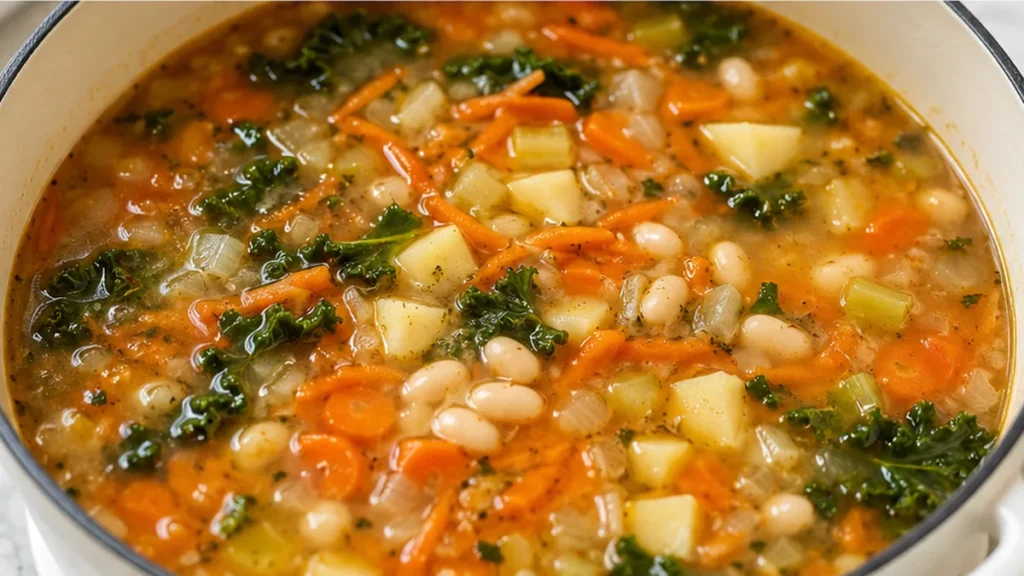
The secret to a truly comforting vegetable soup lies in building layers of flavor from the start, allowing the aromatics to soften deeply before adding liquids. This vegetable soup recipe focuses on fresh, accessible ingredients and a balanced blend that delivers both nutrition and warmth. This method ensures every spoonful is rich and satisfying, making it an ideal meal for any day of the week. Letting the carrots, celery, and onion caramelize slowly makes a big difference to the soup’s flavor.
Key takeaways
- Sauté aromatics gently to build flavor.
- Season adequately throughout the cooking process.
- Simmer gently to cook ingredients evenly.
- Uniformly cut potatoes for consistent cooking.

Cozy Vegetable Soup: Soul-Warming Comfort
Ingredients
- 2 tablespoons extra virgin olive oil
- 1 cup shredded carrots or thinly sliced carrots (~2 medium carrots)
- 2 ribs celery (chopped small)
- 1 onion or large shallot (chopped)
- homemade seasoned salt and pepper
- 4 cloves garlic (pressed or minced)
- 8 cups chicken stock or vegetable stock
- 2 cans great northern beans (drained then rinsed)
- 2 medium-sized Gold potatoes (~8oz, chopped into 1/2″ cubes)
- 7 oz jar roasted red peppers (drained then chopped)
Instructions
- Heat the extra virgin olive oil in a very large soup pot or Dutch Oven over medium heat then add the carrots, celery, and onion or shallot. Season with seasoned salt and pepper to taste then saute until the vegetables are tender, 10-12 minutes. If the vegetables are taking too long to soften, add a glug of stock or a few Tablespoons water to the pot then place the lid on top and steam for a few minutes. Add the garlic then saute until fragrant, 1-2 minutes.
- Add the chicken or vegetable stock, beans, potatoes, and peppers, then turn the heat up to high to bring the soup to a simmer. Turn the heat back down to medium then simmer until the potatoes are tender, 15-20 minutes, stirring occasionally.
- Continue to simmer until all vegetables are tender, about 5 more minutes.
- Scoop the soup into bowls and serve warm.
Notes
The technique that makes it
The foundation of this vegetable soup’s comforting depth lies in the careful layering of aromatics and the simmering process. Starting with sautéing the mirepoix (carrots, celery, and onion) in olive oil at a moderate heat is crucial. This isn’t about achieving a deep Maillard sear, but rather a gentle softening and sweetening of these vegetables. This process, known as sweating, releases their natural sugars and creates a more complex flavor base than simply boiling them. Adding the garlic later in this stage prevents it from burning, which would impart a bitter taste. The subsequent simmering of the stock with the beans, potatoes, and roasted red peppers allows the flavors to meld and the potatoes to become tender. The slow, controlled heat ensures that the ingredients cook through without becoming mushy, and the starches from the potatoes will slightly thicken the broth, contributing to the soup’s body.
Troubleshooting
- Problem: Soup tastes bland. Fix: Ensure you’ve seasoned generously with salt and pepper throughout the cooking process, especially after adding the stock and beans. Taste and adjust seasoning before serving.
- Problem: Potatoes are too hard or too mushy. Fix: For hard potatoes, ensure they are cut into uniform 1/2-inch cubes and simmer for a few more minutes until tender. For mushy potatoes, they may have been overcooked; ensure the heat is kept at a gentle simmer, not a rolling boil, and that the potatoes are added at the correct stage.
- Problem: Soup is too thin. Fix: The starch released from the potatoes will naturally thicken the soup. If it’s still too thin after cooking, you can mash a small portion of the cooked potatoes against the side of the pot and stir them back in, or simmer uncovered for a short period to allow some liquid to evaporate.
- Problem: Roasted red peppers are overpowering. Fix: Ensure the roasted red peppers are well-drained and chopped. If their flavor is still too intense for your liking, you can reduce the quantity slightly in future batches or balance with a touch more stock.
Substitutions
- Vegetables: While the recipe calls for carrots, celery, and onion, you can add other hardy vegetables like parsnips, leeks, or sweet potatoes. Add them with the potatoes to ensure they cook through.
- Beans: Cannellini beans or chickpeas can be substituted for Great Northern beans. They will offer a similar creamy texture and mild flavor.
- Stock: If you don’t have chicken or vegetable stock, a good quality mushroom broth can add a rich umami flavor, though it will alter the overall taste profile.
- Aromatics: A pinch of dried thyme or a bay leaf added with the stock can introduce additional herbal notes to the soup.
Pro tips
- For extra depth, roast your vegetables (carrots, celery, onions) in the oven for 15-20 minutes before adding them to the pot.
- Don’t overcrowd the pot; if you’re doubling the recipe, consider using two pots to ensure even cooking and browning of vegetables.
- Storage: Leftovers can be refrigerated in an airtight container for up to 4 days or frozen for up to 3 months. Thaw overnight in the fridge and reheat gently on the stovetop.
This vegetable soup is a versatile and nourishing dish that adapts beautifully to your favorite seasonal vegetables. Experiment with different herbs or a dollop of fresh pesto for a new twist. Enjoy this warm, satisfying bowl!
Frequently asked questions
What is the best way to cut the vegetables for this soup?
For optimal cooking and texture, chop the celery and onion finely. Cut the potatoes into uniform 1/2-inch cubes. This ensures that all the vegetables cook at a similar rate, preventing some from becoming mushy while others remain undercooked.
Can I make this soup ahead of time?
Yes, this soup can be made ahead. The flavors often meld and deepen overnight. Reheat gently on the stovetop, adding a splash more stock if it has become too thick from the potatoes.
How can I make this soup vegetarian or vegan?
To make this soup vegetarian or vegan, simply use vegetable stock instead of chicken stock. Ensure all other ingredients, like any added seasonings, are also plant-based.
What can I do if my soup is too salty?
If the soup turns out too salty, you can try adding more unsalted stock or water to dilute the saltiness. Adding a peeled, raw potato to simmer in the soup for about 15-20 minutes can also help absorb excess salt.
More from Gluten-Free Dinners & Mains →