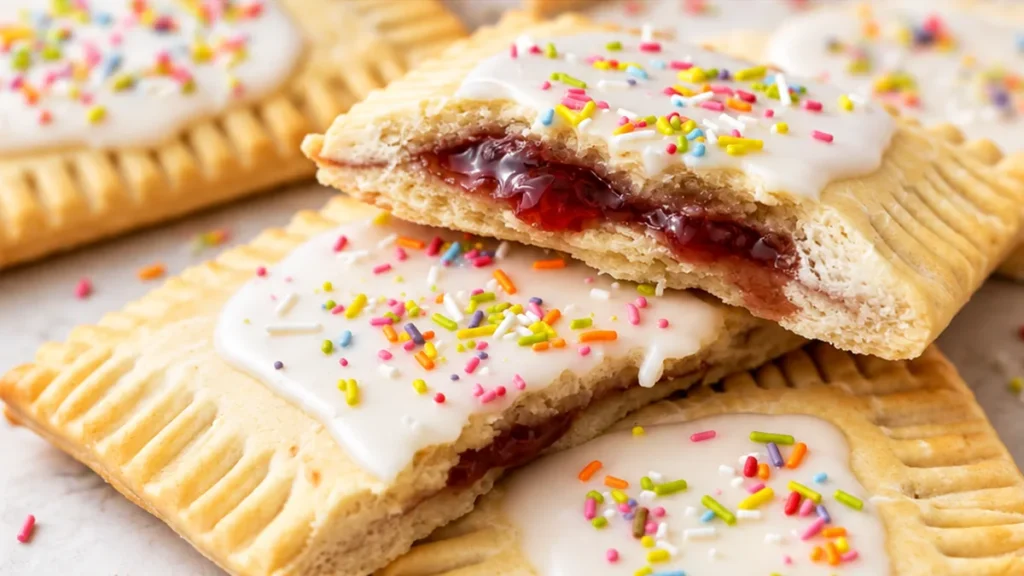
Gluten-free pop tarts are a fun and delicious treat that can take you back to your childhood. The texture is flaky and buttery, making them the perfect vehicle for a sweet strawberry filling. Whether you’re gluten intolerant or just looking for a tasty dessert, this homemade version is easy to prepare. These pop tarts are not only delightful but also customizable. You can choose any jam or filling you like, from raspberry to blueberry. This recipe allows you to enjoy your favorite flavors without any gluten!
Key takeaways
- Use very cold ingredients to achieve a flaky texture.
- Balance the flour and fat for optimal dough consistency.
- Chill the dough before rolling to prevent stickiness.
- Experiment with different gluten-free flours for varied results.
Gluten-Free Pop Tarts
Ingredients
- 2 3/4 cup gluten-free all-purpose rice flour blend with xanthan gum
- 1/4 cup granulated sugar
- 1/2 teaspoon salt
- 1/2 cup very cold unsalted butter (dairy-free use Smart Balance butter)
- 1/2 cup very cold shortening
- 2 large eggs
- 1/2 teaspoon apple cider vinegar
- 6 tablespoons ice cold water
- 16 teaspoons gluten-free seedless strawberry jam
- 1 large egg
Instructions
- In a large bowl, mix 2 3/4 cups rice flour blend, 1/4 cup sugar, and 1/2 teaspoon salt.
- Cut in 1/2 cup cold butter and 1/2 cup cold shortening until the mixture resembles coarse crumbs.
- Beat 2 large eggs, 1/2 teaspoon apple cider vinegar, and 6 tablespoons ice cold water together, then add to the flour mixture and mix until combined.
- Divide the dough in half, wrap in plastic, and refrigerate for 1 hour.
- Roll out the dough, cut into rectangles, and add a spoonful of 16 teaspoons strawberry jam to the center of half the pieces.
- Top with remaining rectangles, seal edges, and brush with 1 large egg wash before baking.
Video
Notes
Understanding the Gluten-Free Dough Composition
The foundation of gluten-free pop tarts lies in the choice of flour. A gluten-free all-purpose rice flour blend with xanthan gum is essential for achieving the right texture. Xanthan gum acts as a binding agent, mimicking the elasticity that gluten provides in traditional doughs. This blend allows for a flaky yet sturdy crust, which is crucial for holding the filling. The balance of fat from butter and shortening contributes to the tenderness and flakiness of the pastry. When using cold butter and shortening, the fat remains solid during mixing, creating small pockets that will expand during baking, leading to a desirable flaky texture.
Common Issues and Solutions in Gluten-Free Baking
One of the most common issues when making gluten-free pop tarts is the dough being too crumbly. This can occur if the fat is not cold enough or if there is an imbalance in the flour-to-fat ratio. To fix this, ensure that your butter and shortening are very cold before incorporating them into the flour mixture. If the dough is still too dry, adding an additional tablespoon of ice-cold water can help bind it together.
Another issue is the dough being too sticky. This can happen if too much moisture is added or if the dough is overworked. To remedy this, lightly dust your work surface with gluten-free flour when rolling out the dough. Additionally, chilling the dough for 30 minutes before rolling can help it firm up and reduce stickiness.
Ingredient Substitutions and Their Effects
While the recipe calls for a specific blend of gluten-free flour, other gluten-free flours can be used, such as almond flour or coconut flour. However, these alternatives will alter the texture and flavor. Almond flour will yield a denser pastry, while coconut flour absorbs more moisture and may require additional liquid in the recipe. If you prefer a dairy-free option, using a plant-based butter like Smart Balance works well, but it’s important to ensure it is cold to maintain the dough’s structure.
The Unique Aspect of Gluten-Free Pop Tarts
Unlike traditional pop tarts, which rely on gluten for structure, gluten-free pop tarts require precise temperature control during preparation. The cold ingredients are crucial in preventing the fat from melting too quickly, which can lead to a dense and chewy texture rather than the desired flaky crust. Additionally, the use of a seedless jam ensures that the filling doesn’t leak during baking, which is particularly important for maintaining the integrity of the pastry.
Understanding the Make-Ahead and Storage Options for Gluten-Free Pop Tarts
Gluten-free pop tarts can be made ahead of time, which is a great advantage for busy bakers. After preparing the dough, you can wrap it tightly in plastic wrap and refrigerate it for up to 3 days. This allows the flavors to meld and can improve the texture of the pastry. Alternatively, you can freeze the dough for up to 3 months. To freeze, shape the pop tarts and place them in a single layer on a baking sheet until solid, then transfer them to a freezer bag. When ready to bake, there’s no need to thaw; simply add a few extra minutes to the baking time. Proper storage is key to maintaining the texture of these treats. Store baked pop tarts in an airtight container at room temperature for up to 3 days. For longer storage, consider refrigerating or freezing them, but be aware that freezing may alter the texture slightly.
Scaling the Batch for Gluten-Free Pop Tarts
One of the benefits of gluten-free pop tarts is their versatility in batch sizes. When scaling the recipe, it’s important to maintain the ratios of ingredients to ensure the same texture and flavor profile. If you double the recipe, for example, use 5.5 cups of gluten-free flour blend, and adjust the sugar and fat accordingly. However, be cautious with the egg and water; sometimes, increasing these ingredients proportionally can lead to a wetter dough. It’s advisable to add the eggs one at a time and monitor the dough’s consistency. If it appears too wet, you can add a bit more flour until you reach the desired texture. This careful scaling will help you produce consistent results whether you’re making a small batch for a snack or a large batch for a gathering.
Equipment Considerations for Perfect Gluten-Free Pop Tarts
The choice of equipment can significantly impact the outcome of your gluten-free pop tarts. A good quality rolling pin is essential for achieving an even thickness in the dough, which ensures uniform baking. Consider using a silicone baking mat to roll out the dough, as this helps prevent sticking without the need for excessive flour, which can alter the dough’s moisture content. Additionally, using a sharp pastry cutter or knife will help create clean edges, which not only looks better but also helps the pastries bake evenly. If you have a food processor, it can be a great tool for cutting in the butter and shortening quickly, ensuring a flaky texture. Finally, a baking sheet lined with parchment paper can help prevent sticking and promote even browning.
Seasonal Variations and Ingredient Quality Impacting Gluten-Free Pop Tarts
Seasonal ingredients can greatly enhance the flavor of gluten-free pop tarts. For instance, using fresh strawberries in the filling during peak season can elevate the taste compared to out-of-season fruit, which may lack sweetness and flavor. Additionally, consider experimenting with different jams or fillings based on what’s available. In the fall, apple or pumpkin spice fillings can provide a seasonal twist, while in the summer, peach or berry jams are refreshing options. The quality of your gluten-free flour blend also plays a crucial role; not all blends are created equal. Higher-quality blends will contain a better balance of flours and starches, leading to a more desirable texture. Always check for freshness, as stale flour can negatively affect the dough’s performance and flavor.
Why the dough may become too crumbly and how to achieve the right texture
When making gluten-free pop tarts, achieving the right dough consistency is crucial. A common issue is that the dough can become too crumbly, making it difficult to roll out. This is often due to the ratio of dry to wet ingredients. Gluten-free flours, such as rice flour, require adequate moisture to bind properly. Aim for a balance of around 60% flour to 40% fats (butter and shortening) and ensure your cold ingredients are not too warm, as this can affect the dough’s texture. If your dough is too crumbly, try adding an extra tablespoon of ice-cold water, mixing until just combined. Allowing the dough to rest for at least 30 minutes in the refrigerator can also help it hydrate and become more pliable.
How to enhance flavor and texture with proper baking techniques
The baking process plays a significant role in the final quality of gluten-free pop tarts. Preheating the oven to 190°C (375°F) is essential for achieving a crispy exterior while keeping the filling warm and gooey. Using a baking stone can help distribute heat evenly, preventing undercooked or burnt spots. Additionally, brushing the tops with a beaten egg before baking not only enhances color but also adds a glossy finish. For optimal results, bake until the edges are golden brown, which usually takes about 20-25 minutes. This technique not only improves flavor through caramelization but also ensures a delightful texture contrast between the flaky crust and the sweet jam filling.
How to Achieve the Perfect Texture in Gluten-Free Pop Tarts
The texture of gluten-free pop tarts can be a challenge due to the absence of gluten, which provides elasticity and structure in traditional pastries. To ensure your pop tarts have a tender yet flaky texture, it is crucial to handle the dough with care. Begin by chilling your butter and shortening, as this helps to create layers in the dough. When mixing the ingredients, avoid overworking the dough; just combine until the ingredients are moistened. A good ratio of fat to flour is essential, and in this recipe, the 1:5 ratio of fat (butter and shortening) to flour blend helps achieve a desirable texture. Additionally, using ice-cold water to bring the dough together minimizes gluten formation, resulting in a more delicate pastry. Aim for a dough that is slightly crumbly but holds together when pressed.
Understanding the Impact of Ingredient Quality on Flavor
The quality of your ingredients significantly influences the flavor profile of gluten-free pop tarts. For instance, using a high-quality gluten-free all-purpose flour blend can enhance the taste and texture of your pastry. Different brands of gluten-free flour blends may vary in flavor, so it’s worth experimenting to find one that suits your palate. Similarly, the choice of jam is crucial; opt for a premium seedless strawberry jam that is free from artificial flavors and preservatives. This will not only add sweetness but also a rich fruit flavor that complements the buttery crust. Lastly, consider the freshness of your eggs and butter, as these key ingredients contribute to the overall taste. Fresh ingredients can elevate your pop tarts, making them more enjoyable and flavorful.
Pro tips
- Chill your butter and shortening for a flakier crust.
- You can use dairy-free butter for a vegan option.
- Experiment with different fruit jams for varied flavors.
Try making these gluten-free pop tarts and enjoy a delightful homemade treat! Feel free to share your variations and favorite fillings!
Frequently asked questions
Can I use a different gluten-free flour blend?
Yes, you can experiment with other gluten-free flour blends, but keep in mind that the texture and flavor may change. Almond flour or coconut flour are alternatives, but they will require adjustments in liquid content.
Why is my dough too crumbly?
A crumbly dough often results from using fat that is too warm or an incorrect flour-to-fat ratio. Ensure your butter and shortening are very cold, and consider adding a tablespoon of ice-cold water to help bind the dough.
How do I prevent the filling from leaking?
Using seedless jam is essential to prevent leakage. Additionally, ensure the edges of the pastry are sealed well before baking to keep the filling contained.
Can I make these pop tarts ahead of time?
Yes, you can prepare the dough and fill the pop tarts ahead of time. Store them in the refrigerator for up to 24 hours or freeze them before baking for later use. Just remember to adjust the baking time if baking from frozen.
More from Gluten-Free Bread & Baking →