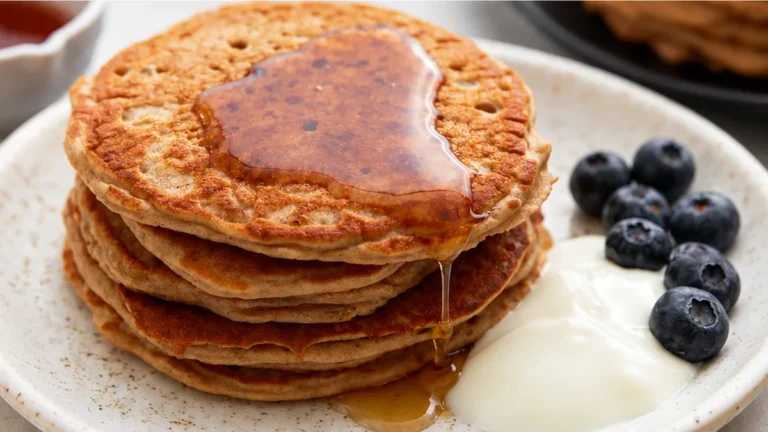
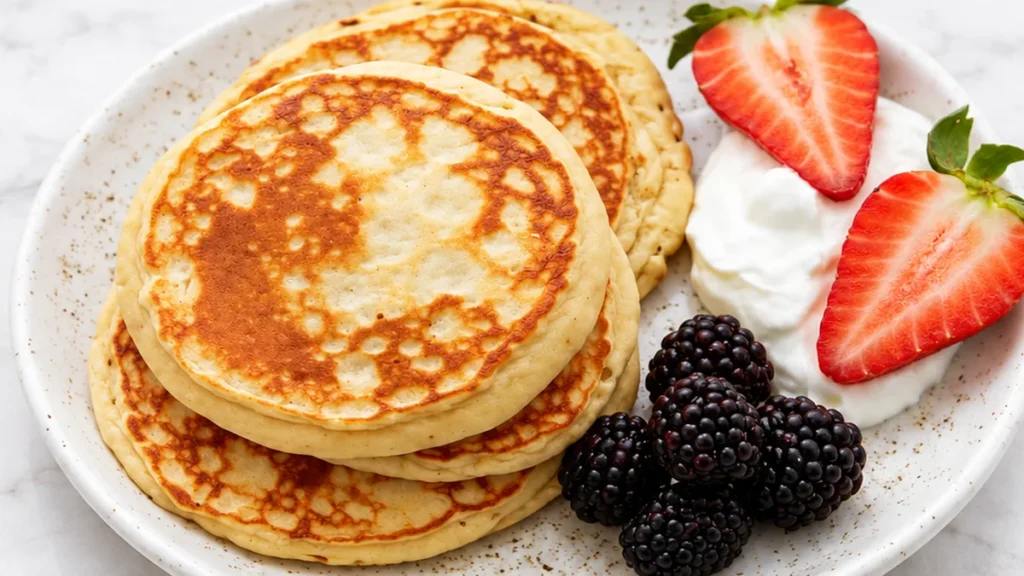
These gluten free protein pancakes are a nutritious breakfast choice. Made with almond flour, they offer a great source of protein and flavor.
Key takeaways
- Use a balanced protein-to-flour ratio for optimal texture.
- Avoid overmixing the batter to prevent density.
- Ingredient swaps can enhance flavor but may require moisture adjustments.
- These pancakes provide higher protein content, making them nutritious.
Gluten-Free Protein Pancakes
Ingredients
Instructions
- In a bowl, whisk together almond flour, gluten-free all-purpose flour, protein powder, baking powder, and salt.
- In a separate bowl, whisk eggs, almond milk, melted butter, maple syrup, and vanilla extract.
- Add the wet ingredients to the dry ingredients and stir until smooth. Let the batter rest for 5 minutes.
- Heat a non-stick pan over medium heat and lightly grease with oil or butter.
- Pour about 1/4 cup of batter per pancake onto the pan, spreading slightly if needed.
- Cook for 2–3 minutes until bubbles form on the surface, then flip and cook for another 1–2 minutes.
- Repeat with the remaining batter, adjusting heat if necessary.
- Serve warm with toppings of choice.
Understanding the Role of Protein in Pancake Structure
Protein plays a crucial role in the structure and texture of pancakes. In gluten-free protein pancakes, the primary source of protein often comes from alternatives like whey, pea, or soy protein. These proteins contribute to the overall structure by forming a network that holds the batter together. For optimal results, a protein-to-flour ratio of approximately 1:3 can be beneficial. This means if you’re using 100 grams of flour, aim for about 30 grams of protein powder. This balance helps achieve a fluffy texture while ensuring the pancakes maintain their shape during cooking.
Common Pitfalls: Why Pancakes Might Come Out Dense
A common issue with gluten-free protein pancakes is density. This can occur if the batter is overmixed, which activates the protein and leads to a tough texture. Additionally, using too much protein powder can absorb excess moisture, resulting in a dry pancake. To prevent this, mix the batter just until combined and allow it to rest for 5 to 10 minutes before cooking. This rest period helps to hydrate the ingredients and can lead to a lighter pancake. If your pancakes are still dense, consider reducing the protein powder by 10-20% and increasing the liquid slightly.
Ingredient Swaps That Impact Flavor and Texture
When making gluten-free protein pancakes, ingredient swaps can significantly affect the final product. For instance, substituting almond flour for a portion of the gluten-free flour can add a nutty flavor and enhance moisture. However, this may also require adjustments in liquid content, as almond flour can absorb more moisture than standard gluten-free flour blends. Another swap is using coconut milk instead of regular milk, which can impart a subtle sweetness and richness but may alter the pancake’s texture slightly. Always consider the moisture content of your substitutes to maintain the desired batter consistency.
Unique Characteristics of Gluten-Free Protein Pancakes
One unique aspect of gluten-free protein pancakes is their nutritional profile. Unlike traditional pancakes, these pancakes offer a higher protein content, making them a great option for a post-workout meal or a filling breakfast. Additionally, the absence of gluten means they are suitable for those with gluten sensitivities or celiac disease. However, the challenge lies in achieving a light and fluffy texture without gluten’s natural elasticity. Incorporating ingredients like baking powder or baking soda can help create lift during cooking, resulting in a more appealing pancake.
Understanding the Effects of Ingredient Quality on Gluten-Free Protein Pancakes
The quality of your ingredients significantly impacts the final product in gluten-free protein pancakes. For instance, the type of protein powder used can alter the texture and flavor. Whey protein tends to create a fluffier pancake, while plant-based proteins may yield denser results. Additionally, using fresh eggs can improve the structure and rise of the pancakes, while stale ingredients can lead to poor texture. Always check the expiration dates on your baking powder and protein powder, as these can lose their effectiveness over time, resulting in flat pancakes.
Batch Scaling: Adjusting Ingredients for Larger Portions
Scaling your gluten-free protein pancake recipe is straightforward, but precision is key. When doubling or tripling the recipe, maintain the same ratios of dry to wet ingredients to ensure consistency in texture and flavor. For example, if your original recipe calls for 100 grams of flour, 30 grams of protein powder, and 200 milliliters of milk, simply multiply each by the same factor. However, be mindful that cooking time may vary with larger batches; pancakes may need slightly longer on the heat to cook through without burning.
Equipment Variations: Choosing the Right Tools for Cooking
The equipment you use to cook gluten-free protein pancakes can affect the outcome. Non-stick pans are ideal as they prevent sticking and allow for easier flipping. A griddle can also be beneficial for cooking multiple pancakes at once, ensuring even cooking. If using a cast-iron skillet, preheat it adequately and use enough oil to prevent sticking. Additionally, consider using a spatula with a thin edge for easier flipping, especially when working with fluffy pancakes that may be fragile.
Serving Suggestions: Enhancing Your Pancake Experience
Serving gluten-free protein pancakes can be an opportunity to enhance their flavor and nutritional value. Top them with fresh fruits like berries or bananas, which add natural sweetness and fiber. A drizzle of maple syrup or honey can complement the protein-rich base without overpowering it. For a savory twist, consider adding a dollop of Greek yogurt or cottage cheese, which pairs well with the pancakes while boosting their protein content. Experimenting with toppings can elevate your pancake experience and make them suitable for various meal occasions.
Maximizing Freshness: Make-Ahead and Storage Tips
Preparing gluten-free protein pancakes in advance can save time on busy mornings. To make ahead, cook the pancakes and let them cool completely. Once cooled, stack them with parchment paper between each pancake to prevent sticking, and store them in an airtight container in the refrigerator for up to three days. For longer storage, freeze the pancakes in a single layer on a baking sheet before transferring them to a freezer-safe bag. They can be reheated directly from frozen in a toaster or microwave. This method preserves their texture and flavor, allowing you to enjoy a quick, nutritious breakfast any day.
Scaling Portions: Adjusting for Larger Gatherings
When scaling up your gluten-free protein pancakes for larger gatherings, it’s essential to maintain the correct ratios of ingredients to ensure consistent texture and flavor. For every additional serving, increase the dry ingredients (flour, protein powder, and any leavening agents) proportionally while also adjusting the wet ingredients (eggs, milk, and oil). A good rule of thumb is to prepare a test batch first to refine your ratios before making a larger quantity. This approach helps avoid the pitfalls of overmixing or undercooking, ensuring that each pancake remains fluffy and delicious.
Equipment Considerations: Choosing the Right Cooking Tools
The choice of cooking equipment can significantly impact the outcome of gluten-free protein pancakes. Non-stick skillets are ideal for cooking these pancakes, as they allow for easy flipping and prevent sticking. Additionally, using a griddle can provide a larger cooking surface, which is beneficial when making multiple pancakes at once. Heat control is crucial; a medium heat setting helps achieve a golden-brown exterior while ensuring the inside is fully cooked. Investing in a high-quality spatula and thermometer can also enhance your cooking experience, ensuring consistent results every time.
Understanding the Impact of Ingredient Quality on Texture and Flavor
The quality of ingredients used in gluten-free protein pancakes significantly affects their texture and flavor. For instance, using high-quality gluten-free flour blends can enhance the pancakes’ structure, making them fluffier and more appealing. Additionally, fresh eggs contribute to a richer flavor and better binding properties. When selecting protein powder, opt for a high-quality, unflavored variety to avoid overpowering the pancakes. The ratio of wet to dry ingredients must also be balanced; for every 100 grams of flour, aim for about 70-80 grams of liquid to achieve the desired batter consistency. This balance is crucial in maintaining the pancakes’ moisture without making them soggy.
Batch Scaling: Adjusting Ingredients for Larger Portions
Scaling the recipe for gluten-free protein pancakes can be straightforward if you maintain the correct ratios. For larger gatherings, consider that increasing the batch size requires careful adjustments to the liquid ingredients. For example, if you double the dry ingredients, you might not need to double the liquid; start by adding 1.5 times the amount and adjust as necessary. This is due to the different absorption rates of gluten-free flours. Additionally, keep in mind that cooking time may vary with larger batches. Use a lower heat to ensure even cooking without burning the pancakes. A good rule of thumb is to cook for an extra minute per side for each additional pancake.
Understanding the Effects of Resting Time on Gluten-Free Protein Pancakes
Resting the batter is a crucial step in making gluten-free protein pancakes. This process allows the ingredients to hydrate properly, which can enhance the texture and flavor of the pancakes. Ideally, let the batter rest for at least 10 to 20 minutes. During this time, the starches from the gluten-free flour absorb moisture, which helps to create a more cohesive batter. If you skip this step, the pancakes may turn out grainy or dry. For optimal results, consider covering the bowl with a clean kitchen towel or plastic wrap to prevent the batter from drying out.
Maximizing Flavor and Texture Through Ingredient Quality
The quality of your ingredients can significantly influence the outcome of gluten-free protein pancakes. For example, using high-quality protein powder can enhance the nutritional value and flavor profile of the pancakes. Moreover, fresh baking powder is essential for achieving the desired rise. Check the expiration date on your baking powder, as stale ingredients can lead to flat pancakes. Additionally, using fresh eggs can contribute to a fluffier texture. When selecting gluten-free flour, consider blends that include a mix of whole grains and starches for a better flavor and mouthfeel.
Pro tips
Pro tip: Best served immediately while hot!
Frequently asked questions
What can I do if my pancakes are too dense?
If your pancakes are dense, try reducing the amount of protein powder and increasing the liquid slightly. Also, be careful not to overmix the batter, as this can lead to a tough texture.
Can I make these pancakes ahead of time?
Yes, you can prepare the batter ahead of time and store it in the refrigerator for up to 24 hours. Just give it a gentle stir before cooking, as some separation may occur.
What is the best way to store leftover pancakes?
Store leftover pancakes in an airtight container in the refrigerator for up to three days. For longer storage, freeze them in a single layer, then transfer to a freezer bag for up to two months.
Can I use different types of protein powder?
Absolutely! You can use whey, pea, or soy protein powder. Just keep in mind that different powders may affect the flavor and texture slightly, so adjust the liquid as needed.
More from Gluten-Free Breakfast & Brunch →