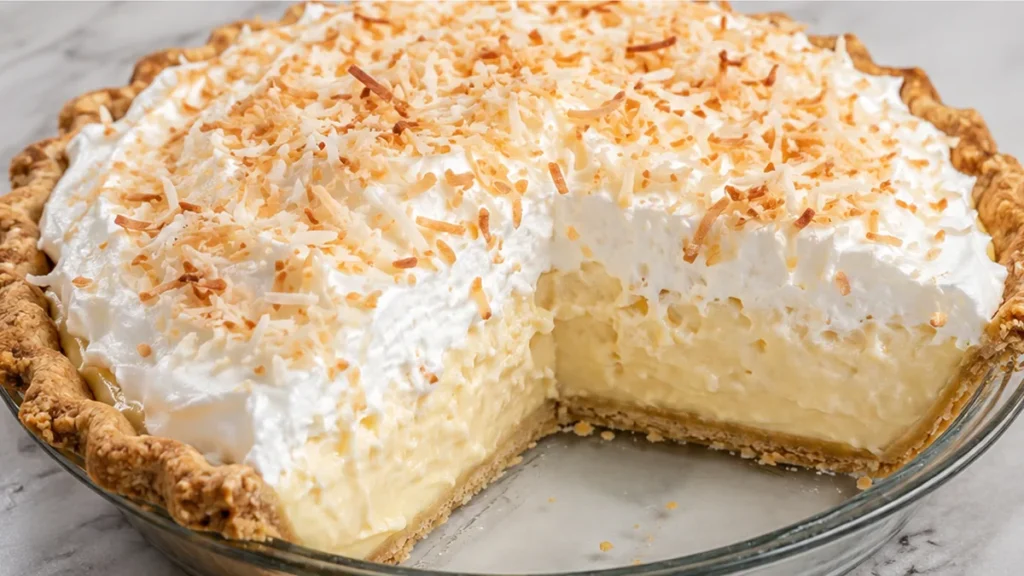
Gluten-free coconut cream pie is a must-try dessert that will transport your palate to a tropical paradise. This pie is made with a crunchy coconut crust and a rich, creamy filling that is both satisfying and indulgent. Each bite is filled with the perfect blend of sweetness and coconut flavor, making it the perfect treat for any occasion. In this recipe, we use simple ingredients that are gluten-free, ensuring that everyone can enjoy it. Whether you’re hosting a gathering or simply treating yourself, this pie promises to impress your guests and leave them asking for the recipe.
Key takeaways
- Properly heat the filling to at least 160°F for thickening.
- Use high-quality shredded coconut for better flavor and texture.
- Pre-bake the crust until golden to avoid sogginess.
- Reduce sugar carefully to maintain the pie’s structure.
Irresistibly Creamy Gluten-Free Coconut Cream Pie!
Ingredients
- 2 2/3 cups shredded sweetened coconut
- 3 tablespoons melted butter
- 2 large egg whites
- 2/3 cup granulated sugar
- 1/3 cup gluten-free all-purpose flour
- 2 cups milk
- 2 large egg yolks
- 1 cup shredded sweetened coconut
- 1 tablespoon pure vanilla extract
- 1 teaspoon butter
Instructions
- Preheat your oven and prepare your pie crust.
- In a bowl, mix together 2 2/3 cups shredded coconut, melted butter, and egg whites until combined.
- Press the mixture into the bottom of the pie dish and bake until lightly golden.
- In a saucepan, whisk together granulated sugar, gluten-free flour, milk, egg yolks, and vanilla extract over medium heat until it thickens.
- Remove from heat and stir in 1 cup of shredded coconut.
- Pour the coconut filling into the baked crust and let it cool before serving.
Video
Notes
Why Your Coconut Cream Pie Might Not Set Properly
Achieving the right consistency in your gluten-free coconut cream pie is crucial. The filling relies on a proper emulsion of egg yolks, sugar, and milk, which should be heated to a minimum of 160°F (71°C) to activate the thickening properties of the egg yolks. If the mixture is not heated sufficiently, it may remain runny.
The Role of Coconut in Texture and Flavor
Coconut adds both texture and flavor to the pie. The shredded sweetened coconut used in both the crust and filling contributes to a chewy texture that contrasts beautifully with the creamy filling. Aim for using fresh or high-quality shredded coconut, as it enhances the overall flavor profile of the pie.
How to Prevent a Soggy Crust
A soggy crust can ruin your gluten-free coconut cream pie. To prevent this, ensure that the crust is pre-baked until it is golden brown, which usually takes about 15-20 minutes at 350°F (175°C). Additionally, using melted butter in the crust helps to create a more stable structure. If you find your crust is still soggy, consider adding a light layer of melted chocolate to act as a barrier.
Understanding the Balance of Sweetness
Sweetness is a key element in coconut cream pie. The recipe calls for 2/3 cup of granulated sugar, which balances the flavors of the coconut and the richness of the cream. If you prefer a less sweet pie, you can reduce the sugar by up to 1/4 cup, but be cautious as this may affect the overall texture and stability of the filling.
Why Fresh Ingredients Matter in Flavor
Using fresh ingredients, particularly pure vanilla extract and high-quality coconut, significantly enhances the flavor of your gluten-free coconut cream pie. Fresh vanilla extract provides a depth of flavor that imitation vanilla cannot match. Always check the expiration date on your ingredients to ensure optimal taste.
How to Prepare a Make-Ahead Gluten-Free Coconut Cream Pie
Making your gluten-free coconut cream pie ahead of time can be a game-changer, especially for special occasions. The crust can be baked and stored in an airtight container for up to three days before filling. For the filling, prepare the coconut custard and let it cool completely before refrigerating. It will keep well for up to two days in the fridge. When ready to serve, simply fill the crust and top with whipped cream or additional coconut. This preparation allows the flavors to meld beautifully, enhancing the overall taste.
Scaling the Recipe for Different Occasions
This recipe can easily be scaled to suit various occasions. If you need to serve a larger crowd, doubling the ingredients is straightforward. For instance, use 5 1/3 cups of shredded coconut, 6 large egg whites, and 4 cups of milk for a larger pie. However, be cautious with the baking time; larger pies may require additional time in the oven to set properly. Conversely, if you want to make a smaller pie, halving the recipe is also feasible, but ensure you adjust the cooking times accordingly. Always use a suitable pan size to maintain even cooking.
Choosing the Right Equipment for Optimal Results
The type of equipment used can significantly impact the outcome of your gluten-free coconut cream pie. A glass pie dish is recommended for even heat distribution, which helps in achieving a perfectly baked crust. If using a metal pie pan, reduce the baking time slightly as metal conducts heat more efficiently. Additionally, a whisk or hand mixer is ideal for beating egg whites to stiff peaks, which is crucial for the texture of the pie. Using a double boiler for the custard filling can prevent overheating and curdling, ensuring a smooth consistency.
Serving Suggestions and Pairing with Other Flavors
Serving your gluten-free coconut cream pie can be enhanced with various accompaniments. A dollop of freshly whipped cream adds a light, airy texture that complements the creaminess of the pie. For an added tropical twist, consider garnishing with fresh pineapple or a drizzle of passion fruit sauce. Pairing the pie with a light dessert wine or a refreshing coconut-infused cocktail can elevate the dining experience. The pie can also be served alongside fresh fruit for a balanced dessert that combines sweetness with acidity.
How to Achieve the Perfect Coconut Cream Consistency
The key to a creamy texture in your gluten-free coconut cream pie lies in the proper emulsification of the ingredients. Begin by whisking the egg yolks with sugar and gluten-free flour until fully combined. Gradually incorporate the warm milk, ensuring it does not exceed 180°F (82°C) to prevent curdling. Once combined, return this mixture to the heat, stirring continuously until it thickens to a custard-like consistency, approximately 5-7 minutes. The right balance of heat and constant stirring will prevent lumps and ensure a smooth filling.
Understanding Ingredient Quality for Optimal Flavor
The success of your gluten-free coconut cream pie heavily relies on the quality of your ingredients. Fresh, high-quality coconut can elevate the flavor significantly. Opt for unsweetened, organic shredded coconut for a more natural taste. Additionally, using fresh eggs can enhance the richness of the custard. Avoid stale or old ingredients, as they can impart off-flavors and affect the overall texture. This attention to ingredient quality will yield a pie that is not only delicious but also satisfying.
Scaling Your Gluten-Free Coconut Cream Pie for Gatherings
When scaling your gluten-free coconut cream pie recipe for larger gatherings, consider the ratios of ingredients carefully. For a 9-inch pie, the current recipe serves about 8-10 people. To double the recipe for a 13-inch pie, maintain the same ratios: use 5 1/3 cups of shredded coconut, 6 tablespoons of melted butter, and adjust the baking time as necessary. Monitor the pie closely, as a larger pie may require an additional 10-15 minutes of cooking time. This ensures even cooking and a consistent texture throughout.
How to Achieve Optimal Flavor and Texture with Fresh Coconut
Using fresh coconut can elevate the flavor and texture of your gluten-free coconut cream pie significantly. Fresh coconut has a higher moisture content than dried, which can contribute to a creamier filling. When using fresh coconut, consider using about 1 1/2 cups of grated fresh coconut instead of the shredded sweetened coconut in the filling. This swap will provide a more robust coconut flavor and a delightful texture. However, be aware that the increased moisture may require a slight adjustment in the cooking time to ensure the filling sets properly. Aim for a filling temperature of around 180°F (82°C) to achieve the right consistency without compromising the flavor.
Understanding the Impact of Egg Whites on Structure and Stability
The use of egg whites in your gluten-free coconut cream pie not only contributes to the structure but also enhances the lightness of the filling. Beating the egg whites until they form stiff peaks is crucial; this process incorporates air, creating a fluffy texture that contrasts beautifully with the creamy coconut filling. If the egg whites are under-beaten, the filling may appear dense and heavy. Conversely, over-beaten egg whites can lead to a dry, grainy texture. The ideal beating time is around 3-5 minutes at medium-high speed until stiff peaks form, which means the egg whites should hold their shape when the beaters are lifted. This technique is essential for achieving that irresistible creamy consistency that coconut cream pie is known for.
Understanding the Ideal Storage Conditions for Coconut Cream Pie
Proper storage is crucial for maintaining the quality of your gluten-free coconut cream pie. Ideally, the pie should be refrigerated to prevent spoilage, especially since it contains dairy and eggs. Store it in an airtight container or cover it tightly with plastic wrap. This pie can last up to 3-4 days in the refrigerator, but the texture may change over time. The coconut may become slightly soggy, and the filling might lose some of its original creaminess. To prevent this, consider placing a piece of parchment paper between the pie and the wrap to minimize moisture absorption. If you need to store it longer, consider freezing it. However, freezing may alter the texture, so it’s best to freeze the pie without the whipped topping. When ready to enjoy, allow it to thaw in the refrigerator overnight and then add fresh whipped cream just before serving.
How to Adjust for Different Sizes of Coconut Cream Pie
Scaling your gluten-free coconut cream pie recipe is straightforward, but it requires careful adjustments to maintain the right balance of flavors and textures. If you want to make a smaller pie, simply halve the ingredients. For larger pies, increase the ingredients proportionally. A standard 9-inch pie typically requires the full ingredient list, while a 6-inch pie would use half. Keep in mind that baking times may vary; smaller pies may cook faster, while larger ones might need a bit more time in the oven. Always check for doneness by ensuring the filling is set and the crust is golden brown. Additionally, if you’re making mini pies or tarts, consider using a muffin tin, and adjust the baking time to about 15-20 minutes, depending on the size. This flexibility allows you to create the perfect dessert for any gathering or occasion.
Pro tips
- Use fresh, high-quality coconut for the best flavor.
- Allow the pie to cool completely before slicing for cleaner pieces.
- Experiment with dairy-free alternatives to suit your dietary needs.
Try this gluten-free coconut cream pie and let its delicious flavors take you on a tropical escape. Feel free to customize it with your favorite toppings!
Frequently asked questions
Can I use unsweetened coconut in this recipe?
Yes, you can substitute unsweetened coconut, but the pie will be less sweet. You may need to adjust the sugar to maintain the desired balance of sweetness.
How do I know when the filling is thick enough?
The filling should coat the back of a spoon and hold a line when you run your finger through it. This usually occurs when the mixture reaches about 160°F (71°C).
What can I do if my pie filling is too runny?
If your filling is runny, return it to the heat and cook it gently while stirring until it thickens. Be careful not to overheat, as this can cause the eggs to scramble.
Can I make this pie ahead of time?
Yes, you can make the pie a day in advance. Just be sure to cover it well to prevent it from absorbing other odors in the fridge, and add any toppings just before serving for the best texture.
More from Gluten-Free Desserts & Sweets →