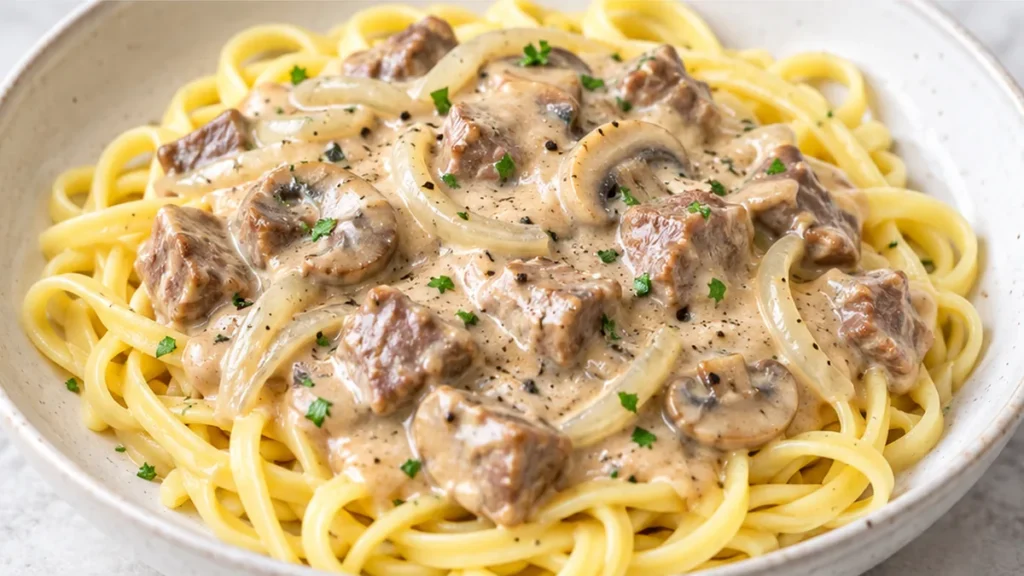
This creamy gluten free beef stroganoff combines tender beef and mushrooms in a rich sauce. It’s a straightforward recipe for a satisfying meal.
Key takeaways
- Achieving the right creaminess requires proper temperature control when adding sour cream.
- Overcooking the beef can lead to toughness; cook it quickly over high heat.
- Ingredient swaps can significantly change flavor; Greek yogurt offers tanginess, while different flours affect texture.
- Using tender cuts of beef is essential for maintaining juiciness in the dish.
Creamy Gluten-Free Beef Stroganoff
Ingredients
Instructions
- Fry the beef in olive oil for 10 minutes, stirring occasionally, then transfer to a plate.
- Fry the mushrooms, onions, and garlic in the remaining oil for 7 minutes, adding more oil if necessary.
- Add gluten-free flour to the pan and mix, frying for another 3 minutes.
- Pour the broth and cream into the pan, add salt, pepper, and other spices to taste. Stir and bring to a boil.
- Return the fried beef to the pan.
- Cover the pan with a lid and cook until the beef is soft, which can take from 15 to 60 minutes. Add water or broth as needed to control consistency.
The Role of Creaminess in Beef Stroganoff
The creamy texture of Beef Stroganoff is essential for achieving the dish’s signature mouthfeel. This creaminess is typically achieved through a combination of sour cream and a roux made from gluten-free flour. The ideal ratio is about 250 grams of sour cream for every 1 liter of sauce, which helps to create a rich, velvety consistency. Properly incorporating the sour cream at the right temperature (around 70°C or 160°F) prevents curdling and ensures a smooth sauce.
Identifying and Fixing Common Cooking Mistakes
One common issue with Beef Stroganoff is overcooking the beef, which can lead to a tough texture. To avoid this, cook the beef in small batches over high heat for about 3-4 minutes, ensuring it remains tender. Another issue is the sauce being too thin. If this occurs, you can thicken it by simmering for an additional 5-10 minutes or adding a slurry of gluten-free flour mixed with water. Conversely, if the sauce becomes too thick, adding a splash of beef broth or water can help restore the desired consistency.
Ingredient Alternatives and Their Consequences
Several ingredient swaps can be made in Beef Stroganoff, each affecting the dish’s final flavor and texture. For instance, using Greek yogurt instead of sour cream will yield a tangier flavor and a slightly thicker texture. Alternatively, substituting beef with chicken or mushrooms can create a lighter version of the dish, though the cooking time and flavor profile will change significantly. Additionally, using a different gluten-free flour, like almond flour, instead of rice flour may alter the sauce’s thickness and flavor, resulting in a nuttier taste.
Unique Characteristics of Gluten-Free Beef Stroganoff
This gluten-free version of Beef Stroganoff stands out due to its use of gluten-free flour, which allows those with gluten sensitivities to enjoy a classic dish without compromising on flavor. The choice of beef cuts also plays a crucial role; tender cuts like sirloin or tenderloin are recommended for their ability to remain juicy and flavorful when cooked quickly. Unlike traditional recipes, the gluten-free variant often requires careful temperature control to ensure the sauce remains creamy without clumping.
Understanding the Importance of Ingredient Quality in Beef Stroganoff
The quality of the ingredients used in creamy gluten-free beef stroganoff significantly influences the final dish. High-quality beef, such as sirloin or tenderloin, should be chosen for its tenderness and flavor. The meat should ideally be well-marbled, as this fat contributes to a richer taste and juiciness when cooked. Fresh mushrooms, preferably cremini or shiitake, add depth and umami. When it comes to gluten-free options, ensure that the broth and any sauces used are certified gluten-free to avoid cross-contamination. Using fresh herbs, like parsley, enhances the dish’s aroma and freshness, making it more appealing. Remember, the fresher the ingredients, the more vibrant the final dish will be.
Optimizing Cooking Techniques for Perfect Beef Stroganoff
Cooking techniques play a vital role in achieving the desired texture and flavor in creamy gluten-free beef stroganoff. Searing the beef at a high temperature creates a Maillard reaction, which adds a complex flavor profile to the dish. It’s crucial to avoid overcrowding the pan, as this can lead to steaming instead of searing. After browning the meat, deglaze the pan with broth or wine to incorporate the flavorful browned bits into the sauce. Simmering the dish gently allows the flavors to meld without overcooking the beef, which should remain tender. Aim for a simmering temperature of around 85°C (185°F) for optimal results. Lastly, adding the sour cream at the end prevents curdling, ensuring a smooth, creamy texture.
Scaling the Recipe for Different Occasions
When scaling creamy gluten-free beef stroganoff for larger gatherings or meal prep, it’s essential to maintain the right ratios of ingredients. Doubling or tripling the recipe is straightforward, but adjustments may be needed for cooking time and equipment. For larger batches, consider using a slow cooker or a larger pot to accommodate the increased volume. Cooking in batches may also help in achieving a proper sear on the beef. Be mindful that the sauce may require additional thickening agents, such as cornstarch or a gluten-free flour blend, to maintain the desired consistency. Always taste and adjust seasoning as you scale, as larger quantities may dilute flavors.
Pairing Suggestions to Enhance Your Stroganoff Experience
Pairing creamy gluten-free beef stroganoff with complementary sides can elevate the meal experience. Traditional accompaniments include egg noodles, but for a gluten-free option, consider serving it over rice, quinoa, or gluten-free pasta. A side of steamed vegetables, such as green beans or broccoli, adds color and nutrition, balancing the richness of the stroganoff. For beverages, a medium-bodied red wine, like Pinot Noir, pairs well, enhancing the dish’s flavors without overpowering them. Alternatively, a crisp salad with a tangy vinaigrette can provide a refreshing contrast to the creamy sauce. Experimenting with these pairings can create a well-rounded meal that satisfies various tastes.
Understanding the Impact of Ingredient Freshness on Flavor
The quality and freshness of ingredients play a crucial role in achieving the best flavor profile in creamy gluten-free beef stroganoff. Fresh beef, preferably from a reputable source, can significantly enhance the dish’s overall taste. When using beef, aim for cuts like sirloin or tenderloin, which are not only tender but also flavorful. Fresh mushrooms, whether cremini or shiitake, contribute earthy notes that elevate the dish. Similarly, using freshly minced garlic and finely chopped onions can create a more aromatic base. For the best results, purchase your ingredients just before cooking to ensure peak freshness and flavor.
Batch Scaling: Adjusting Ingredients for Larger Portions
Scaling the recipe for creamy gluten-free beef stroganoff can be straightforward, but attention to detail is essential. When increasing the batch size, maintain the same ratios of beef to sauce to ensure consistency in flavor and texture. For example, if doubling the recipe, double the amount of beef, mushrooms, and sauce ingredients proportionally. However, be cautious with the cooking time; larger batches may require additional time to cook evenly. Always check for doneness by ensuring the beef is tender and the sauce has thickened appropriately. Consider using a larger pan or pot to accommodate the increased volume without crowding the ingredients, which can lead to uneven cooking.
Make-Ahead Strategies for Busy Weeknights
Preparing creamy gluten-free beef stroganoff in advance can save time on busy weeknights. To make ahead, cook the beef and sauce as directed, then cool and store them separately in airtight containers. This method allows the flavors to meld while preventing the sauce from overcooking. When ready to serve, reheat the mixture gently on the stovetop, adding a splash of broth or cream to restore the desired consistency. For optimal results, it’s best to cook the gluten-free pasta fresh just before serving, as reheated pasta can become mushy. This strategy not only streamlines dinner prep but also ensures that each component retains its quality and flavor.
Understanding the Impact of Cooking Time on Flavor Development
The cooking time for creamy gluten-free beef stroganoff is crucial for achieving the desired flavor and texture. Cooking the beef too quickly can result in toughness, while insufficient cooking time may leave it chewy. Aim for a simmering time of 20-30 minutes after browning the beef, allowing the flavors to meld. During this period, the Maillard reaction occurs, enhancing the dish’s depth through browning. Additionally, simmering the sauce for 10-15 minutes helps to thicken it and integrate the creaminess, as the starches from gluten-free pasta or thickening agents activate. Monitoring the temperature is essential; a low simmer (around 85°C to 95°C or 185°F to 203°F) is ideal to prevent curdling of the cream. The longer cooking time can also help to break down tough cuts of meat, making them more tender and flavorful, which is especially important when using gluten-free alternatives that may not have the same binding properties as traditional ingredients.
Choosing the Right Gluten-Free Pasta for Optimal Texture
The choice of gluten-free pasta can significantly influence the final texture of your creamy gluten-free beef stroganoff. Traditional stroganoff typically uses egg noodles, which have a unique texture that holds sauce well. When selecting a gluten-free alternative, consider options made from brown rice, quinoa, or chickpeas, as these tend to mimic the texture of wheat pasta more closely. For instance, brown rice pasta often retains a firm bite, which is desirable in a dish like stroganoff. Always cook the pasta al dente, as it will continue to absorb sauce and moisture from the beef stroganoff during the final stages of cooking. Be cautious with overcooking gluten-free pasta, as it can become mushy and lose its structure. Additionally, some gluten-free pastas are formulated with added starches that can thicken the sauce, so adjust the liquid in your recipe accordingly to avoid a overly thick or gummy consistency.
Pro tips
Pro tip: Best served immediately while hot!
Frequently asked questions
Can I use a different type of meat in this recipe?
Yes, you can substitute beef with chicken or even mushrooms for a vegetarian option. Just be aware that cooking times will vary; chicken typically cooks faster, while mushrooms will require a bit more time to release their moisture.
What can I do if my sauce is too thin?
If your sauce turns out too thin, you can thicken it by simmering for an additional 5-10 minutes or adding a slurry made of gluten-free flour mixed with water. This will help achieve the desired creamy consistency.
Is there a way to make this dish dairy-free?
To make a dairy-free version of Beef Stroganoff, you can use coconut cream or a dairy-free sour cream alternative. Be sure to adjust the seasoning as these alternatives can impart different flavors.
How do I store leftovers of Beef Stroganoff?
Leftover Beef Stroganoff can be stored in an airtight container in the refrigerator for up to 3 days. Reheat gently on the stove, adding a splash of broth or water to maintain the sauce’s creaminess.
More from Gluten-Free Dinners & Mains →