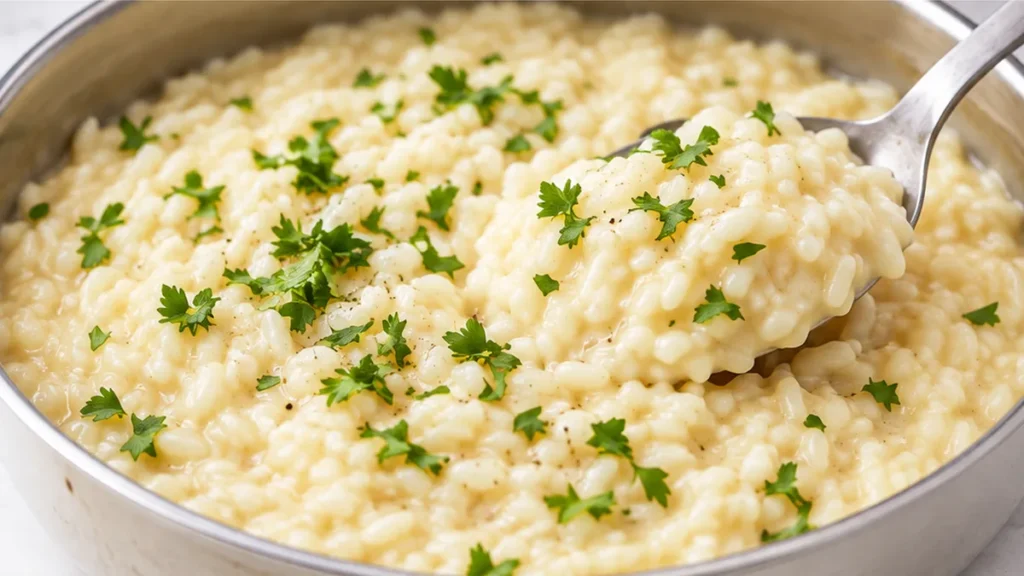
This creamy gluten free risotto is made with arborio rice and mushrooms. It’s a straightforward dish that delivers rich flavors and a satisfying texture.
Key takeaways
- Stir continuously to release starches for creaminess.
- Use enough broth gradually to prevent dryness.
- Sauté aromatics for enhanced flavor.
- Experiment with gluten-free grains for unique textures.

Creamy Gluten-Free Risotto
Ingredients
Instructions
- In a large, heavy-bottomed pan, heat olive oil and 1 tbsp butter over medium heat.
- Add onion and sauté until soft and translucent, about 3-4 minutes.
- Add garlic and cook for another 30 seconds until fragrant.
- Add the Arborio rice and stir to coat with oil and butter.
- Toast the rice for 1-2 minutes until the edges become slightly translucent.
- Add the white wine and stir until almost completely absorbed.
- Begin adding hot broth, one cup at a time, stirring frequently.
- Wait until each addition is almost completely absorbed before adding the next cup of broth.
The Importance of Stirring for Creamy Texture
Stirring is crucial in achieving the signature creamy texture of risotto. This technique helps release the starches from the rice, creating a smooth and velvety consistency. Aim to stir continuously for the first 10-15 minutes of cooking, ensuring the grains are well-coated with the cooking liquid. The ideal cooking temperature is around 85°C (185°F), which allows for a gentle simmer without boiling. This method promotes even cooking and prevents the rice from becoming mushy.
Common Issues and Solutions in Risotto Preparation
When making creamy gluten-free risotto, several common issues can arise:
- Problem: Risotto is too dry. Solution: Ensure you add enough broth gradually, about 120-150 ml (½-⅔ cup) at a time, allowing the rice to absorb the liquid fully before adding more.
- Problem: Risotto is too mushy. Solution: Avoid overcooking; check the rice after 18-20 minutes. The grains should be al dente, with a slight bite.
- Problem: Lack of flavor. Solution: Enhance the base by sautéing onions and garlic in olive oil before adding the rice. Consider using homemade broth for a richer taste.
Ingredient Alternatives and Their Impacts
Choosing the right ingredients can significantly affect the outcome of your risotto:
- Substitute Arborio rice with Carnaroli: Carnaroli has a higher starch content, leading to a creamier texture but requires slightly longer cooking time.
- Use vegetable broth instead of chicken broth: This swap is perfect for a vegetarian version, offering a different flavor profile without compromising creaminess.
- Replace parmesan cheese with nutritional yeast: For a dairy-free option, nutritional yeast adds a cheesy flavor but lacks the creaminess of cheese.
Unique Characteristics of Gluten-Free Risotto
Unlike traditional risotto, creamy gluten-free risotto can be made using a variety of gluten-free grains such as quinoa or millet. These alternatives provide distinct flavors and textures. For instance, quinoa offers a nuttier taste and a slightly firmer bite, while millet can create a creamier consistency similar to Arborio rice when cooked properly. Understanding these nuances allows for creative variations while maintaining the essence of a classic risotto.
How to Prepare Risotto in Advance Without Compromising Quality
Making risotto ahead of time can be a challenge, as the creamy texture is best enjoyed fresh. However, if you wish to prepare it in advance, consider cooking the risotto until it is just al dente, then cool it quickly to stop the cooking process. Store it in an airtight container in the refrigerator for up to 2 days. When ready to serve, reheat the risotto gently in a saucepan, adding a splash of broth or water to restore its creamy consistency. This method helps maintain the flavor and texture without losing the essential qualities of your creamy gluten-free risotto.
Adapting Risotto for Different Serving Sizes
Scaling your creamy gluten-free risotto recipe can be straightforward, but attention to ingredient ratios is crucial. For every 1 cup of Arborio rice, use approximately 4 cups of broth. If you’re doubling the recipe, ensure you have a large enough pot to accommodate the increased volume. Additionally, keep in mind that cooking time may vary slightly, as larger quantities can take longer to absorb the liquid. Always taste and adjust the seasoning as needed, especially when scaling up.
Choosing the Right Equipment for Perfect Risotto
The equipment you use can significantly impact the outcome of your creamy gluten-free risotto. A heavy-bottomed pot or a wide skillet is ideal, as it allows for even heat distribution and better evaporation of liquid. Avoid using non-stick pans, as they may not allow for the necessary stirring that develops the risotto’s creaminess. A wooden spoon is recommended for stirring, as it helps to scrape the bottom and sides of the pot, ensuring that the rice cooks evenly and releases its starches effectively.
Seasonal Variations and Ingredient Quality in Risotto
The quality of ingredients can greatly influence the final taste of your creamy gluten-free risotto. In spring, fresh peas and asparagus can brighten the dish, while autumn might call for roasted butternut squash or mushrooms. Seasonal ingredients not only enhance flavor but also provide a visual appeal. Always choose high-quality broth and fresh vegetables, as these will elevate your risotto. Remember, the fresher the ingredients, the more vibrant the flavors in your dish will be.
How to Achieve the Ideal Creaminess in Gluten-Free Risotto
The secret to a creamy gluten-free risotto lies in the right balance of starch and liquid. Arborio rice, a common choice for risotto, is high in amylopectin, which contributes to the creaminess. When cooking, maintain a consistent low simmer, adding warm broth gradually—typically 15-20 minutes of cooking time is needed. Aim for a ratio of about 3:1 broth to rice. Stirring frequently encourages the release of starch, enhancing creaminess. If you find your risotto is too thick, a splash of warm broth or even a bit of white wine can help adjust the consistency without sacrificing flavor.
Pairing and Serving Suggestions for Gluten-Free Risotto
Gluten-free risotto serves as a versatile base for various toppings and pairings. For a hearty meal, consider adding sautéed mushrooms, grilled vegetables, or roasted chicken. Fresh herbs like parsley or basil can elevate the dish’s flavor profile. Cheese, although not suitable for all diets, can enhance creaminess—try a sprinkle of grated Parmesan or a dollop of mascarpone. When serving, consider a drizzle of high-quality olive oil or balsamic reduction for added richness. Pair with a crisp white wine, such as Sauvignon Blanc or Pinot Grigio, which complements the dish without overpowering it.
Understanding the Role of Seasonal Ingredients in Risotto Quality
The quality of ingredients significantly impacts gluten-free risotto. Seasonal vegetables, such as asparagus in spring or butternut squash in fall, not only add flavor but also texture and color. Fresh, local produce often has more nutrients and better taste than out-of-season varieties. Additionally, using homemade broth can elevate the dish; it allows for control over salt and flavor intensity. When selecting rice, ensure it is labeled gluten-free, as cross-contamination can occur during processing. The freshness of your ingredients will directly influence the final dish, making it essential to choose wisely.
Understanding the Role of Liquid Temperature in Risotto Preparation
The temperature of the liquid used in risotto significantly impacts the cooking process. For optimal results, the broth or stock should be heated to a simmer before being added to the rice. Adding cold liquid can shock the rice, causing it to cook unevenly and potentially leading to a gummy texture. Ideally, keep the broth at around 80°C (175°F) during cooking to maintain a consistent temperature. This approach allows the rice to absorb the liquid gradually, promoting the release of starches and achieving the desired creaminess. Additionally, using a flavorful broth enhances the overall taste of the dish, making it essential to choose high-quality ingredients.
Scaling Your Risotto Recipe for Larger Gatherings
When scaling up a risotto recipe, it’s crucial to maintain the rice-to-liquid ratio and cooking time to ensure consistent results. A general guideline is to use about 1 part rice to 3 parts liquid by volume. However, when preparing larger batches, consider that the cooking time may increase slightly due to the larger volume of ingredients. Stirring becomes even more critical, as it helps to evenly distribute heat and moisture. Be mindful of the pot size; a wider pot allows for better evaporation, while a deeper pot may require more stirring to avoid sticking. Also, if you’re preparing risotto for a crowd, it can be beneficial to use multiple pots to manage the cooking process effectively.
Understanding the Impact of Ingredient Quality on Risotto
The quality of ingredients used in creamy gluten-free risotto significantly influences both flavor and texture. For instance, using high-quality rice, such as Arborio or Carnaroli, is essential as these varieties contain high starch levels, which contribute to the creamy consistency. Fresh, organic vegetables and homemade stock can elevate the dish by adding depth and richness. Additionally, the choice of cheese, especially a good quality Parmesan or a suitable gluten-free alternative, enhances the overall taste. Seasonal ingredients, such as asparagus in spring or butternut squash in fall, can also affect the flavor profile, making the risotto more vibrant and appealing. Using fresh herbs versus dried can make a noticeable difference in aroma and taste. Therefore, sourcing high-quality, fresh ingredients is crucial for achieving the best results in your risotto.
Scaling Your Creamy Gluten-Free Risotto for Gatherings
When preparing creamy gluten-free risotto for larger gatherings, it is essential to adjust cooking times and ingredient ratios carefully. A common mistake is to simply multiply the ingredients without considering the cooking process. Risotto requires constant attention and stirring, which can be challenging in larger batches. It is advisable to cook in smaller batches or use a wider, shallower pan to ensure even cooking. Additionally, the liquid ratio may need adjustment; typically, 3-4 cups of liquid are needed for every cup of rice. Monitor the consistency as you add liquid, as larger quantities may require more or less than the standard ratio. Serving the risotto immediately after cooking is ideal, but if made in advance, consider keeping it warm in a low oven or reheating gently on the stove with a splash of broth to restore creaminess.
Pro tips
Pro tip: Best served immediately while hot!
Frequently asked questions
What type of rice is best for creamy gluten-free risotto?
Arborio rice is the most commonly used for risotto due to its high starch content, which helps create a creamy texture. However, gluten-free alternatives like Carnaroli or even quinoa can be used for a different flavor and texture.
How do I know when my risotto is done?
Your risotto is done when the rice is al dente, meaning it should be tender but still have a slight bite to it. This usually takes about 18-20 minutes of cooking after adding the broth.
Can I make creamy gluten-free risotto ahead of time?
While risotto is best served fresh, you can prepare it ahead by cooking it until just al dente. Reheat with a bit of broth to restore creaminess before serving.
What can I add to enhance the flavor of my risotto?
Adding sautéed onions, garlic, and fresh herbs like parsley or thyme can greatly enhance the flavor. Consider incorporating seasonal vegetables or proteins like shrimp or mushrooms for added depth.
More from Gluten-Free Dinners & Mains →