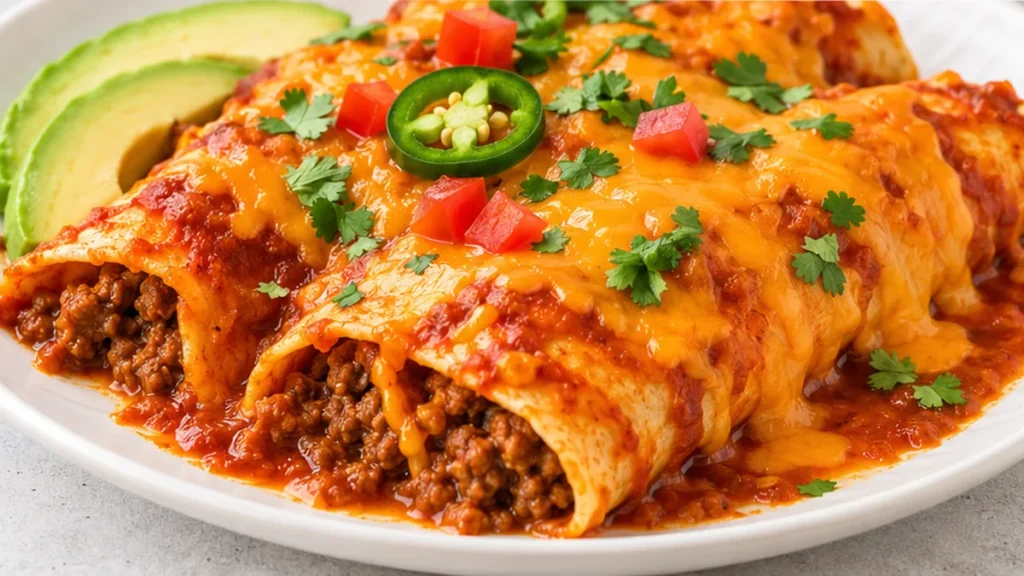
Cheesy beef enchiladas are a quick and satisfying meal. This recipe features a homemade sauce that elevates the dish, making it perfect for weeknights.
Key takeaways
- Select cheeses with the right melting points for optimal texture.
- Warm tortillas before filling to prevent tearing.
- Achieve the right sauce consistency to avoid soggy enchiladas.
- Season fillings carefully to maintain flavor balance.
Cheesy Beef Enchiladas: Weeknight Obsession!
Ingredients
Instructions
- Preheat oven to 375°F (190°C).
- Lightly spray a large oven-safe pan with gluten-free cooking spray.
- Add 1 lb. ground beef to the pan and break it apart.
- Combine 1 tbsp cumin, 2 tsp onion powder, ½ tsp garlic powder, 2 tsp oregano, 2 tsp paprika, and ½ tsp salt in a small bowl.
- Sprinkle seasoning blend onto the ground beef and stir well to fully coat.
- Cook meat over medium heat until browned, about 8-10 minutes, then drain excess oil.
- Pour ½ cup of the enchilada sauce into a shallow dish for dipping tortillas. If tortillas are stiff, microwave them for 30 seconds between damp paper towels.
- Spray a 9×13 inch glass baking pan with gluten-free cooking spray.
Understanding Cheese Melting Points for Optimal Texture
The success of cheesy beef enchiladas heavily relies on the choice of cheese. Different cheeses have varying melting points, which can affect the creaminess and texture of your dish. For instance, cheddar melts well at around 150-200°C (300-400°F), while mozzarella, known for its stretchiness, melts between 130-180°C (266-356°F). Using a blend of cheeses can enhance flavor and texture, creating that gooey, satisfying experience.
Common Issues with Tortilla Integrity
One common problem when making cheesy beef enchiladas is the tearing of tortillas during assembly. This often occurs if the tortillas are too cold or not properly warmed before use. To prevent this, heat the tortillas in a skillet or microwave until they are pliable. Additionally, consider using corn tortillas instead of flour; they hold up better to moist fillings and baking.
The Role of Sauce Consistency
The consistency of your enchilada sauce is crucial for achieving the right balance of flavor and moisture. A sauce that is too thin can lead to soggy enchiladas, while one that is too thick may dry out during baking. Aim for a sauce that coats the back of a spoon, typically around 200-250 ml (¾-1 cup) for a standard batch of enchiladas. Adjust the thickness by simmering longer to reduce or adding broth to thin it out.
Balancing Seasoning and Flavor Depth
Seasoning is essential in cheesy beef enchiladas; however, it can be tricky to get it right. Under-seasoned fillings can lead to a bland dish, while over-seasoning can overpower the cheese and sauce. A good rule of thumb is to use about 1 teaspoon of salt per pound of meat and taste as you go. Incorporating spices like cumin, chili powder, and garlic powder can add depth without overwhelming the palate.
Choosing the Right Meat for Flavor and Texture
The type of beef used can significantly impact the flavor and texture of your enchiladas. Ground beef is common, but using shredded beef or even a mix of meats can elevate the dish. For instance, brisket or chuck roast, when slow-cooked and shredded, offers a richer flavor. Aim for a fat content of around 80/20 for ground beef, as this provides a good balance of flavor and moisture without being greasy.
Understanding the Impact of Ingredient Quality on Enchiladas
The quality of ingredients plays a crucial role in the final outcome of cheesy beef enchiladas. Fresh, high-quality beef will yield a more flavorful filling, while aged or lower-quality meat can result in a less satisfying texture and taste. Additionally, fresh tortillas will hold up better during baking, maintaining their structure and flavor. When possible, opt for local or organic ingredients, as they tend to have superior flavor profiles. For instance, using grass-fed beef can enhance the umami notes in the dish, while store-bought tortillas may lack the elasticity needed to prevent tearing during assembly.
Batch Scaling for Family Gatherings
Scaling the recipe for cheesy beef enchiladas can be straightforward, but it requires careful adjustments to cooking times and ingredient ratios. When doubling or tripling the recipe, consider the size of your baking dish. A larger dish may require a longer cooking time to ensure even heating. Additionally, if you are using a larger quantity of cheese, you may need to increase the sauce quantity to maintain the right consistency. Generally, when increasing the batch size, aim for a 10-15% increase in sauce to prevent the enchiladas from drying out.
Make-Ahead Strategies for Busy Weeknights
Preparing cheesy beef enchiladas ahead of time can save valuable cooking time during busy weeknights. To make them in advance, assemble the enchiladas without baking, then cover and refrigerate for up to 24 hours. When ready to cook, simply add a few extra minutes to the baking time to ensure they are heated through. Alternatively, you can freeze assembled enchiladas for up to three months. To do this, wrap them tightly in plastic wrap and foil before freezing. When ready to enjoy, thaw in the refrigerator overnight and bake as directed.
Equipment Considerations for Optimal Cooking
The type of cookware used can significantly affect the cooking process and final result of cheesy beef enchiladas. A glass or ceramic baking dish allows for even heat distribution, which is essential for achieving a bubbly, golden cheese topping. If using metal pans, be aware that they can heat up faster and may require reduced baking times. Additionally, consider using a heavy-bottomed skillet for browning the beef; this ensures even cooking and prevents sticking. An enamel-coated cast iron skillet can also enhance flavor during the browning process due to its heat retention properties.
Understanding the Role of Tortilla Type in Texture and Flavor
The choice of tortilla is crucial in achieving the perfect cheesy beef enchiladas. Corn tortillas are traditional, offering a distinct flavor and texture that complements the beef filling. However, flour tortillas provide a softer, chewier texture and can hold more filling without breaking. When using corn tortillas, it’s essential to warm them before assembly to prevent cracking; heating them in a dry skillet for about 30 seconds on each side can enhance pliability. For flour tortillas, ensure they are fresh and not overly thick to maintain a delicate balance between texture and structural integrity. The ratio of filling to tortilla also plays a role; for instance, a thicker tortilla can support more filling, but if the tortilla is too thick, it may overwhelm the dish. Experimenting with different tortilla types can lead to unique flavor profiles and textures, making each batch of enchiladas a new experience.
Batch Scaling for Weeknight Cooking
Scaling the recipe for cheesy beef enchiladas is straightforward, but attention to ingredient ratios is vital. When doubling or tripling the recipe, maintain the same proportions of beef, cheese, and sauce to ensure consistent flavor and texture. For instance, if you’re using a 400g package of cheese for a single batch, use 800g for two batches. Additionally, consider the cooking time; larger batches may require a longer baking time to heat through evenly. A good rule of thumb is to add about 10-15 minutes for every doubled batch, checking for bubbling sauce and melted cheese as indicators of doneness. When preparing for larger gatherings, it’s also beneficial to prepare components in advance, such as cooking and seasoning the beef or making the sauce, to streamline the assembly process on the day of serving. This approach not only saves time but also enhances the overall flavor as the ingredients have time to meld.
Optimal Serving Suggestions and Pairings
Serving cheesy beef enchiladas with the right accompaniments can elevate the dish significantly. A fresh side salad with a citrus vinaigrette can provide a bright contrast to the rich flavors of the enchiladas, while refried beans or Mexican rice can complement the meal’s heartiness. Additionally, garnishing with fresh cilantro, diced onions, or a dollop of sour cream can add freshness and a creamy texture that balances the dish. When it comes to beverages, pairing enchiladas with a light lager or a zesty margarita can enhance the dining experience. Seasonal variations can also influence serving choices; for example, in the summer, incorporating fresh corn or avocado into the salad can add a refreshing touch, while in the colder months, serving with a warm, spiced cider can create a comforting meal.
Understanding the Optimal Cheese Blend for Flavor and Texture
The choice of cheese significantly affects the flavor and texture of cheesy beef enchiladas. A blend of cheeses can create a more complex flavor profile. Common choices include cheddar, Monterey Jack, and queso blanco. Cheddar offers a sharpness, while Monterey Jack provides creaminess and meltability. For the best results, consider using a 50-50 blend of sharp cheddar and Monterey Jack. This combination not only melts well but also adds depth to the dish.
When selecting cheese, pay attention to moisture content. Higher moisture cheeses like mozzarella can lead to a watery filling, while drier cheeses can enhance the overall texture. Aim for a moisture content between 45-55% for the best melting results. Additionally, pre-shredded cheeses often contain anti-caking agents that can affect melting quality. For the best texture, shred your cheese from a block just before use.
Mastering Tortilla Preparation for Enhanced Flavor and Texture
The type of tortilla and its preparation method can greatly influence the final outcome of your cheesy beef enchiladas. Corn tortillas are traditional and provide a distinct flavor, while flour tortillas offer a softer texture. When using corn tortillas, it’s crucial to warm them before filling to prevent cracking. Warm them in a dry skillet for about 30 seconds per side or wrap them in a damp cloth and microwave for 30 seconds.
For added flavor, consider lightly frying the tortillas in oil before filling. This not only enhances their flavor but also creates a barrier that helps retain moisture from the filling, preventing sogginess. If you prefer flour tortillas, opt for the thicker varieties, as they hold up better to the filling and sauce. A good rule of thumb is to use tortillas that are at least 20 cm in diameter to ensure adequate filling capacity without breaking.
Pro tips
Pro tip: Best served immediately while hot!
Frequently asked questions
Can I use different types of cheese in my enchiladas?
Yes, mixing different cheeses can enhance the flavor and texture of your enchiladas. Cheddar, Monterey Jack, and mozzarella are popular choices that melt well together.
What can I do if my tortillas keep tearing?
To prevent tearing, warm your tortillas in a skillet or microwave before filling them. This makes them more pliable and easier to roll without breaking.
How do I know if my enchilada sauce is too thin?
A good enchilada sauce should coat the back of a spoon. If it drips off quickly, it may be too thin. You can thicken it by simmering it longer to reduce moisture.
What type of beef is best for enchiladas?
Ground beef with a fat content of around 80/20 is ideal for enchiladas. Alternatively, shredded beef from cuts like brisket or chuck roast can add rich flavor and texture.
More from Gluten-Free Dinners & Mains →