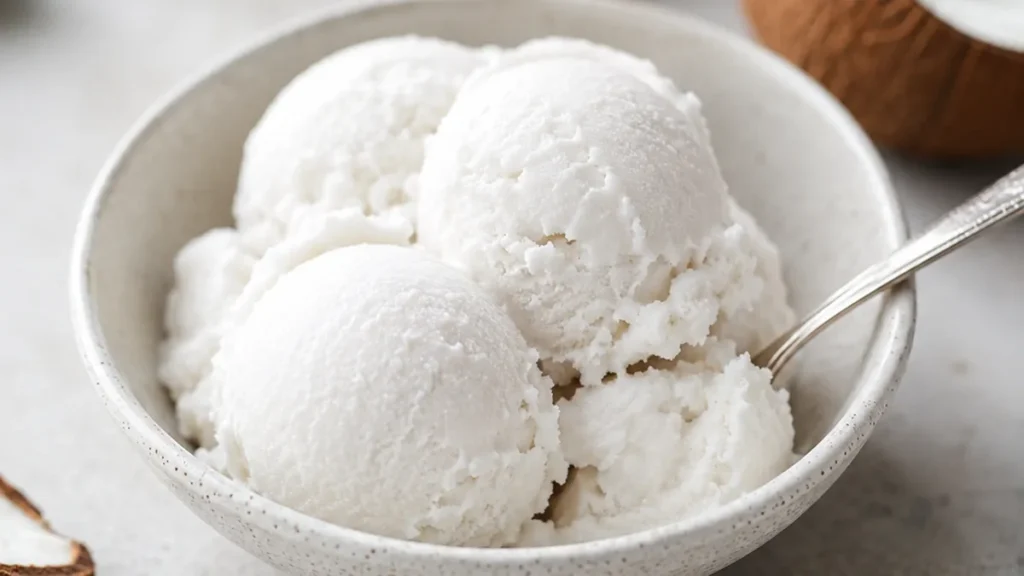
Creating a truly refreshing coconut sorbet with minimal effort is entirely possible, and the secret lies in the quality of your coconut products. This coconut sorbet recipe stands out for its simplicity, requiring only three key ingredients and yielding a spectacularly creamy texture that rivals more complex desserts. This recipe is designed for ease, making it perfect for both novice and experienced dessert makers. The focus is on letting the natural richness of coconut shine through, providing a dairy-free treat that doesn’t compromise on flavor or indulgence.
Key takeaways
- The balance of fat and water in coconut sorbet is key for creaminess.
- Thorough mixing prevents icy texture and ensures smooth consistency.
- Ingredient swaps can alter flavor and texture; choose wisely.
- This sorbet uniquely combines both coconut milk and cream for richness.
Dreamy 3-Ingredient Coconut Sorbet!
Ingredients
- 13.66 oz coconut milk (1 can)
- 13.66 oz unsweetened coconut cream (1 can)
- 11.6 oz sweetened condensed coconut milk (1 can)
- 1 can sweetened condensed coconut milk
- 1 can unsweetened coconut cream
- 1 can coconut milk
Instructions
- In a medium bowl, mix together the coconut milk, coconut cream, and sweetened condensed coconut milk until fully combined. Then, cover the bowl with plastic wrap and chill in the fridge until cold, about 4 hours.
- Once chilled, mix again and add to your ice cream maker per the manufacturer’s instructions. Churn your sorbet until the mixture resembles soft serve.
- Once churned, place your sorbet in a freezer safe container and freeze until solid, about 8 hours.
- Scoop and serve immediately, optionally topping with your favorite sorbet toppings!
Video
Notes
Understanding Coconut Sorbet’s Creamy Texture
The key to achieving a creamy texture in coconut sorbet lies in the balance of fat and water content from the ingredients. Coconut milk provides hydration, while coconut cream adds richness. The sweetened condensed coconut milk not only sweetens but also enhances the creaminess due to its high sugar content, which lowers the freezing point, resulting in a smoother sorbet.
Common Issues with Coconut Sorbet Consistency
One frequent issue is icy texture, which can occur if the mixture is not blended adequately or if it is frozen too quickly. To prevent this, ensure all ingredients are well combined and chilled before freezing. If the sorbet is too hard after freezing, allow it to sit at room temperature for 5-10 minutes before serving. This helps soften it for easier scooping.
Ingredient Swaps and Their Effects
- Using full-fat coconut milk instead of coconut cream: This will result in a slightly less rich texture but will still produce a palatable sorbet.
- Substituting regular sweetened condensed milk: This will increase the sweetness but may alter the coconut flavor profile, making it less authentic.
- Incorporating flavored extracts (like vanilla or almond): This can enhance the flavor complexity but might overshadow the coconut taste.
Why Proper Mixing is Crucial
Proper mixing ensures that the ingredients are emulsified, which is essential for a uniform texture. Use a blender to achieve a smooth consistency, blending for about 2-3 minutes. Inadequate mixing can lead to separation, resulting in a grainy texture rather than a smooth sorbet.
Unique Qualities of Coconut Sorbet
This coconut sorbet stands out because it utilizes both coconut milk and coconut cream, which is not common in many sorbet recipes. This combination not only enhances the coconut flavor but also contributes to its velvety mouthfeel, making it an indulgent yet dairy-free dessert option.
How to Properly Store Coconut Sorbet for Optimal Freshness
Coconut sorbet can be stored in an airtight container in the freezer for up to two weeks. For best results, let it sit at room temperature for about 10-15 minutes before scooping to achieve the ideal consistency. The sorbet can become hard over time due to ice crystal formation, so using a container that minimizes air exposure is crucial. Consider using a shallow container to allow for quicker freezing and easier scooping.
Adjusting Coconut Sorbet Recipes for Larger Batches
If you wish to scale up your coconut sorbet recipe, maintain the same ratios of coconut milk, coconut cream, and sweetened condensed coconut milk. For example, if doubling the recipe, use two cans of each ingredient. Note that freezing time may increase with larger batches, so ensure the mixture is adequately churned to prevent ice crystals. A larger batch may require a more powerful ice cream maker to ensure proper aeration and texture.
Equipment Considerations for Making Coconut Sorbet
The type of equipment used can significantly affect the outcome of your coconut sorbet. A high-quality ice cream maker is recommended for achieving a smooth texture, as it incorporates air into the mixture while freezing. If you do not have an ice cream maker, you can use a blender or food processor to mix the ingredients and freeze them in a shallow dish, stirring every 30 minutes to break up ice crystals. The method of freezing will impact the final texture and creaminess.
Seasonal Variations and Ingredient Quality Impacting Coconut Sorbet
The quality of your coconut sorbet can vary based on the season and the quality of the ingredients used. Fresh, high-quality coconut products will yield a creamier and more flavorful sorbet. In warmer months, using fresh coconut water or adding tropical fruits like mango or pineapple can enhance the flavor profile. Conversely, during colder months, consider adding spices like cinnamon or nutmeg for a warming twist. Always taste the ingredients before use to ensure the best possible flavor.
Understanding the Impact of Ingredient Quality on Coconut Sorbet
The quality of coconut milk, coconut cream, and sweetened condensed coconut milk can significantly affect the flavor and texture of your coconut sorbet. Look for brands that use minimal additives and preservatives, as these can alter the final product. Fresh, high-quality coconut milk and cream typically yield a richer and creamier sorbet. In contrast, lower-quality products may contain more water and emulsifiers, leading to a less satisfying texture. For the best results, opt for organic or artisanal brands when available.
Scaling the Recipe for Larger Gatherings
If you’re looking to make a larger batch of coconut sorbet, scaling the ingredients is straightforward. Maintain the same ratios: one can each of coconut milk, coconut cream, and sweetened condensed coconut milk. For instance, if doubling the recipe, use two cans of each ingredient. However, be cautious with the freezing time; larger quantities may require additional time to freeze evenly. Ensure your mixing bowl and freezer can accommodate the increased volume to avoid overflows and ensure proper chilling.
Equipment Differences that Affect Coconut Sorbet Texture
The type of equipment used to make coconut sorbet can greatly influence its texture. A high-quality ice cream maker will incorporate air into the mixture, creating a lighter, fluffier sorbet. If using a blender or food processor, ensure that the mixture is blended thoroughly to achieve a smooth consistency. Manual methods, such as freezing the mixture in a shallow dish and stirring every 30 minutes, can work but may result in a denser texture. The choice of equipment directly impacts the final mouthfeel of the sorbet.
Serving Suggestions and Pairings for Coconut Sorbet
Coconut sorbet is versatile and can be paired with various accompaniments to enhance its flavor. Consider serving it alongside tropical fruits like mango, pineapple, or passion fruit for a refreshing contrast. A drizzle of lime or lemon juice can add a zesty kick that brightens the flavors. For a more decadent experience, serve it with a scoop of chocolate or vanilla ice cream, or top it with toasted coconut flakes or nuts for added texture. These pairings can elevate the overall dessert experience.
Why the choice of coconut milk affects the final texture
The texture of your coconut sorbet is highly influenced by the type of coconut milk and cream you select. Coconut milk typically contains around 17-24% fat, while coconut cream can have up to 30-40% fat content. This higher fat content in coconut cream contributes to a creamier and richer mouthfeel, reducing the formation of ice crystals during freezing. If you use low-fat coconut milk, you may end up with a sorbet that is icier and less smooth. Aim for a ratio where the combined fats from coconut milk and cream account for at least 20-25% of the total volume for optimal creaminess. For example, using 13.66 oz of coconut milk with 13.66 oz of coconut cream provides a balanced fat content that enhances the texture.
How to effectively scale your coconut sorbet recipe
Scaling your coconut sorbet recipe requires careful consideration to maintain the desired texture and flavor. When increasing the quantity, ensure that the ratios of coconut milk, coconut cream, and sweetened condensed coconut milk remain consistent. For instance, if you double the recipe, use 27.32 oz of both coconut milk and coconut cream, along with 23.2 oz of sweetened condensed coconut milk. Keep in mind that larger batches may require longer freezing times to achieve the proper consistency, as a larger volume takes longer to freeze through. Additionally, use a larger container to allow for even freezing and avoid overcrowding in your freezer, which can lead to uneven temperatures and texture issues. Stirring the mixture every 30 minutes during the first few hours of freezing can also help incorporate air, resulting in a lighter sorbet.
Understanding the Impact of Temperature on Coconut Sorbet Texture
The temperature at which you serve coconut sorbet significantly affects its texture and flavor profile. Ideally, coconut sorbet should be served at around -10°C (14°F) to -5°C (23°F). At this range, the sorbet maintains a creamy consistency that allows for easy scooping while still being firm enough to hold its shape. If served too cold, below -10°C, the sorbet can become overly hard and icy, making it difficult to scoop. Conversely, if it is too warm, above -5°C, the sorbet may become too soft and lose its structure, resulting in a soupy mess. To achieve the perfect serving temperature, allow the sorbet to rest at room temperature for about 5-10 minutes before serving. This slight warming allows the fats in the coconut milk and cream to soften, enhancing the mouthfeel and flavor release.
How to Scale Your Coconut Sorbet Recipe Without Compromising Quality
Scaling your coconut sorbet recipe can be straightforward, but it requires attention to detail to maintain the desired texture and flavor. When increasing the batch size, keep the ratios of the three key ingredients—coconut milk, coconut cream, and sweetened condensed coconut milk—consistent. For instance, if you double the recipe, use two cans each of coconut milk and coconut cream, and two cans of sweetened condensed coconut milk. However, be cautious with the mixing process; larger batches may require longer mixing times to ensure proper emulsification. Additionally, consider the freezing time; larger quantities may take longer to freeze uniformly. To ensure even texture, you might want to stir the mixture halfway through the freezing process. This helps to break up ice crystals and maintain creaminess.
Pro tips
- For the creamiest texture, ensure all your coconut ingredients are well-chilled before mixing. Chilling for at least 4 hours, or even overnight, makes a noticeable difference.
- Don’t overchurn the sorbet in the ice cream maker; stop when it reaches a soft-serve consistency to prevent it from becoming icy once frozen solid.
- If your sorbet freezes too hard, let it sit at room temperature for 10-15 minutes before scooping to achieve a smoother consistency.
This simple coconut sorbet is a testament to how few ingredients can create extraordinary flavor. Experiment with toppings like toasted coconut flakes or fresh berries for an extra touch. Enjoy!
Frequently asked questions
Can I use sweetened coconut milk instead of unsweetened?
Yes, using sweetened coconut milk will increase the overall sweetness of the sorbet. However, it may alter the balance of flavors, so adjust the quantity of sweetened condensed coconut milk accordingly.
How can I make my sorbet less icy?
To reduce iciness, ensure all ingredients are well-blended and chilled before freezing. Additionally, consider adding a small amount of alcohol, like coconut rum, which can help lower the freezing point and improve texture.
What can I do if my sorbet is too hard after freezing?
If the sorbet is too hard, let it sit at room temperature for 5-10 minutes before serving. This allows it to soften slightly, making it easier to scoop without losing its texture.
Can I add fruit to the coconut sorbet mixture?
Yes, you can add pureed fruit such as mango or pineapple to the coconut mixture. This will add flavor and sweetness, but be mindful that it may affect the overall texture and freezing properties of the sorbet.
More from Gluten-Free Desserts & Sweets →