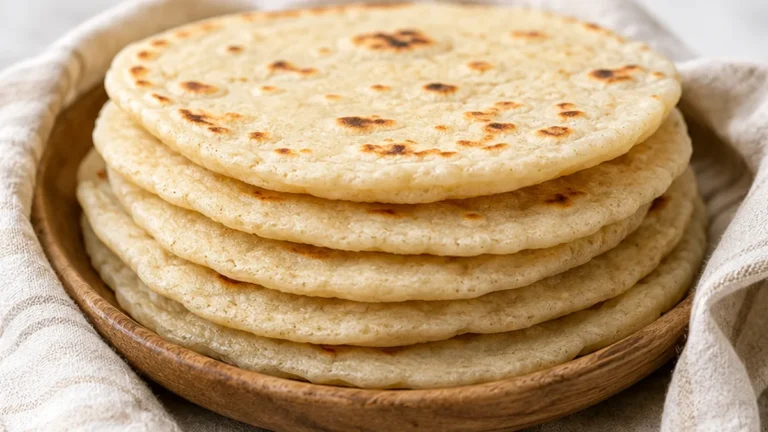
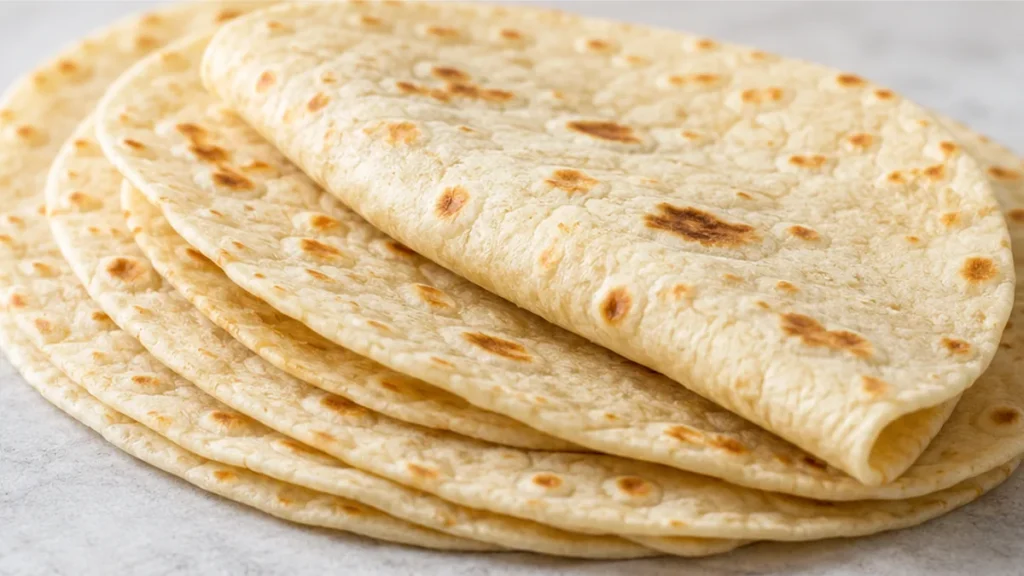
The secret to truly pliable almond flour tortillas lies in the delicate balance of ingredients and a specific binder: psyllium husk powder. This recipe ensures you get incredibly soft, bendable tortillas perfect for any meal, without the gluten. Almond flour tortillas are not just for those avoiding gluten; they offer a unique texture and a subtly nutty flavor that improves your wraps, tacos, and quesadillas. Gluten-free tortillas can easily turn out crumbly and stiff. Adding the right amount of psyllium husk powder transformed them, giving them the perfect elasticity.
Key takeaways
- The psyllium husk powder is essential for binding and creating a pliable texture in place of gluten.
- Ensure adequate hydration for the psyllium husk to form a gel; adjust water slightly if needed.
- Rest the dough for at least 10 minutes to allow the psyllium husk to fully absorb moisture.
- Cook tortillas until lightly golden and set, then store in a towel to maintain softness.
Fluffy Almond Flour Tortillas
Ingredients
- 1 5 teaspoons psyllium husk powder
- ½ cup blanched almond flour, loosely packed
- 3 tablespoons + 2 teaspoons warm water, not hot
- 1 tablespoon sunflower oil, or other neutral oil
- ⅛ teaspoon table salt
- ¼ teaspoon garlic powder
Instructions
- In a medium bowl, combine the psyllium husk powder, almond flour, warm water, sunflower oil, and salt. Mix well for 30 seconds until a dough forms.
- Knead the dough for 2-3 minutes until it’s smooth and pliable. If it feels too dry, add an extra teaspoon of water; if too sticky, add a sprinkle of almond flour.
- Divide the dough into 4 equal portions, approximately 30g each. Roll each portion into a ball.
- Place a dough ball between two pieces of parchment paper and flatten it with a rolling pin or a tortilla press into a thin, round tortilla (about 6 inches in diameter).
- Heat a non-stick skillet over medium-high heat. Cook each tortilla for 1-2 minutes per side, until lightly golden brown and slightly puffed.
- Transfer cooked tortillas to a plate and keep them covered with a clean kitchen towel to stay warm and soft while you cook the remaining tortillas.
Notes
The Psyllium Husk Secret to Fluffy Tortillas
The key to achieving a fluffy, pliable almond flour tortilla lies in the psyllium husk powder. Unlike wheat flour, almond flour lacks gluten, the protein network that gives traditional tortillas their elasticity and chew. Psyllium husk powder acts as a binder and a source of soluble fiber. When it interacts with warm water, it forms a gel-like substance. This gel traps moisture and creates a flexible structure that mimics the role of gluten. Proper hydration is crucial; the psyllium husk needs enough water to fully hydrate and form this binding gel. Too little water will result in a crumbly dough, while too much can make it sticky and difficult to handle. The dough should feel cohesive but still slightly tacky before resting, allowing the psyllium to fully absorb the liquid and develop its binding properties.
Troubleshooting Your Almond Flour Tortillas
- Problem: Tortillas are dry and crumbly.
Fix: Ensure you are using the correct amount of water. Psyllium husk needs adequate hydration to form a gel. You may need to add an extra teaspoon of water if the dough feels too dry. Let the dough rest for the full 10 minutes to allow the psyllium to absorb moisture. - Problem: Tortillas are sticky and hard to roll.
Fix: The dough might be too wet, or the psyllium husk may have over-hydrated. Try adding a tiny bit more almond flour (1 teaspoon at a time) until the dough is manageable. Dusting your rolling surface and the tortilla lightly with almond flour can also help. - Problem: Tortillas break when flipping.
Fix: This usually indicates insufficient psyllium husk hydration or an under-cooked tortilla. Ensure the psyllium has gelled properly and cook each side until golden brown and slightly firm to the touch before attempting to flip. - Problem: Tortillas are stiff after cooking.
Fix: Overcooking can dry out the tortillas. Cook them just until they are set and lightly golden on both sides. Storing them in a clean kitchen towel immediately after cooking helps them retain moisture and remain pliable.
Substitutions and Their Effects
- Psyllium Husk Powder: While psyllium is ideal, you could try 1 tablespoon of ground flaxseed or chia seeds mixed with 3 tablespoons of water and allowed to sit for 5 minutes to form a gel. However, the texture will be denser and less fluffy.
- Blanched Almond Flour: You can substitute with finely ground coconut flour, but you will need to significantly reduce the liquid (start with half the water) as coconut flour is highly absorbent. The texture will be more cake-like and less pliable.
- Sunflower Oil: Melted coconut oil or avocado oil can be used. The flavor profile might change slightly depending on the oil chosen, but the structural integrity should remain similar.
- Garlic Powder: Omit if you prefer plain tortillas, or substitute with onion powder or a pinch of smoked paprika for a different flavor dimension.
Pro tips
- Don’t skip the psyllium husk powder; it’s crucial for the tortilla’s elasticity and pliability. Without it, the tortillas will be brittle.
- Ensure your water is warm, not hot, to activate the psyllium husk without cooking the almond flour prematurely.
- Keep cooked tortillas covered with a damp towel to prevent them from drying out and becoming stiff.
Mastering almond flour tortillas opens up a world of gluten-free possibilities for your favorite dishes. Experiment with different spices in the dough to complement your fillings. Enjoy!
Frequently asked questions
Why are my almond flour tortillas crumbly?
Crumbly tortillas usually mean the psyllium husk powder didn’t hydrate enough. Ensure you’re using the exact water measurement, or add a tiny bit more if the dough feels too dry. Letting the dough rest for the full 10 minutes is also critical for moisture absorption.
Can I make these tortillas without psyllium husk powder?
While psyllium husk is key for texture, you could try a flax egg (1 tbsp ground flax + 3 tbsp water, let sit 5 mins). However, the resulting tortillas will be denser and less flexible, more like a flatbread.
How do I prevent my tortillas from sticking when rolling?
If the dough is too sticky, it might be too wet. Try adding a teaspoon of almond flour at a time. Lightly dusting your rolling surface and the dough with almond flour can also help prevent sticking, making it easier to achieve a thin, even tortilla.
Why are my tortillas tough after cooking?
Toughness often comes from overcooking or not storing them properly. Cook only until lightly golden and set. Immediately wrap the cooked tortillas in a clean kitchen towel to trap steam, which keeps them soft and pliable as they cool.
More from Gluten-Free Bread & Baking →