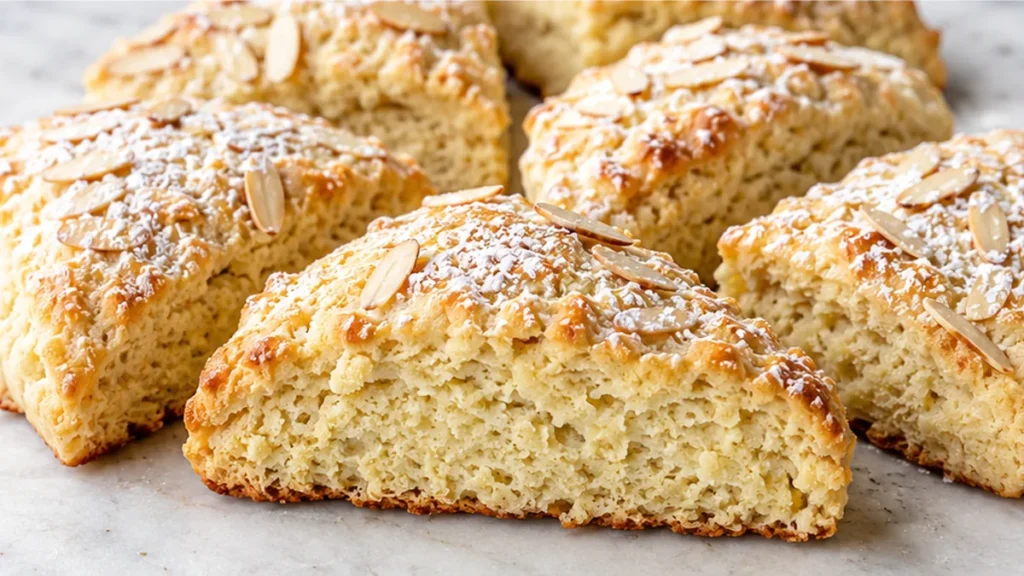
The secret to truly tender almond flour scones lies in gentle handling and a quick chill before baking. This ensures a light crumb and prevents the dough from becoming too sticky to work with. These almond flour scones are a fantastic gluten-free alternative, offering a rich, nutty flavor and a wonderfully soft texture. I discovered these almond flour scones are perfect for those mornings when I crave a homemade treat but need a healthier option. The quick prep makes them ideal for weekend brunches or even a special weekday breakfast.
Key takeaways
- Proper hydration and fat distribution are key for fluffy scones.
- Use fresh baking powder for optimal rise.
- Avoid overmixing to maintain a light texture.
- Consider ingredient temperature for desired flakiness.
Fluffy Almond Flour Scones!
Ingredients
- 3 cups almond flour
- ¼ tsp salt
- 2 tsp baking powder
- ¼ cup sugar
- 4 tbsp butter (melted)
- 1 large egg
- 1 tsp vanilla extract
- 2 tbsp milk (plus more for brushing on top)
- slivered almonds for sprinkling on top
- ¾ cup powdered sugar
Instructions
- Preheat the oven to 350°F (175°C) and line a baking tray with parchment paper.
- In a medium bowl, whisk together the almond flour, salt, and baking powder until well combined.
- In a large bowl, mix together the melted butter and sugar, then beat in the egg and vanilla until smooth.
- Gradually add the dry flour mixture to the wet ingredients, mixing until just combined.
- Stir in the milk until a soft dough forms.
- Wrap the bowl tightly with plastic wrap and chill in the freezer for 10-15 minutes to firm the dough.
- On a lightly floured surface, shape the dough into a thick disc, about 1-inch thick.
- Cut the disc into 6 triangle scones and carefully transfer them to the prepared baking tray.
Video
Notes
– The quick chill in the freezer is crucial for easier handling and better texture.
– For golden brown scones, brush with a little extra milk before baking. – Cook until an internal temperature of 200-205°F (93-96°C) is reached for perfect doneness. Nutrition information is an estimate, calculated automatically. Values vary with brands, substitutions and portion sizes.
The technique that makes it
Creating fluffy almond flour scones hinges on proper hydration and fat distribution. Almond flour, being gluten-free, does not provide the structure that traditional wheat flour does. Therefore, the use of melted butter is crucial as it aids in creating a tender crumb by coating the flour particles, preventing them from absorbing too much moisture. The baking powder acts as a leavening agent, producing carbon dioxide when mixed with wet ingredients, which helps the scones rise. It’s essential to combine the dry ingredients thoroughly before adding wet ingredients to ensure even distribution of the leavening agent. The temperature of the ingredients also plays a vital role; using cold butter can create a flakier texture, while warm butter results in a denser scone. Additionally, the egg and milk provide moisture and richness, enhancing the overall flavor and texture.
Troubleshooting
- Issue: Scones are too crumbly.
Fix: Ensure that you have not over-measured the almond flour. It’s best to spoon the flour into the measuring cup rather than scooping it directly, which can compact the flour and lead to excess. - Issue: Scones are dense.
Fix: Check that the baking powder is fresh and properly mixed with the dry ingredients. Also, avoid overmixing the dough, as this can lead to a denser texture. - Issue: Scones do not rise.
Fix: Ensure that the oven is preheated to the correct temperature before baking. An oven thermometer can help verify that the temperature is accurate. - Issue: Scones are too sweet.
Fix: Reduce the sugar amount in the recipe to suit your taste preference, keeping in mind that sugar also contributes to browning and moisture.
Substitutions
- Almond flour: Substitute with coconut flour at a 1:1 ratio, but reduce the amount by about 25% as coconut flour absorbs more moisture.
- Butter: Use coconut oil or vegan butter for a dairy-free version; the texture will remain similar, but the flavor will change slightly.
- Sugar: Replace granulated sugar with honey or maple syrup, adjusting the liquid content slightly to maintain the dough consistency.
- Milk: Almond milk or oat milk can be used instead of regular milk for a dairy-free alternative, with no significant change in texture.
Pro tips
- Don’t overmix the dough. Mix just until combined to keep the scones tender.
- The quick chill in the freezer is crucial for easier handling and better texture.
- For golden brown scones, brush with a little extra milk before baking. – Cook until an internal temperature of 200-205°F (93-96°C) is reached for perfect doneness.
Try these almond flour scones for a delightful, gluten-free treat that’s easy to make and sure to become a favorite. Enjoy them warm with jam or clotted cream!
Frequently asked questions
Can I make these scones ahead of time?
Yes, you can prepare the dough in advance and store it in the refrigerator for up to 24 hours. Just be sure to shape the scones before refrigerating and bake them fresh when ready to serve.
How do I store leftover scones?
Store leftover scones in an airtight container at room temperature for up to 2 days. For longer storage, you can freeze them for up to a month. Reheat in the oven for best results.
Can I add other flavors or ingredients?
Absolutely! You can incorporate dried fruits, chocolate chips, or citrus zest into the dough for added flavor. Just ensure that any additional ingredients do not significantly alter the moisture content.
Why are my scones not rising?
If your scones are not rising, check that your baking powder is fresh and that you are not overmixing the dough. Also, ensure that the oven is preheated to the correct temperature before baking.
More from Gluten-Free Breakfast & Brunch →