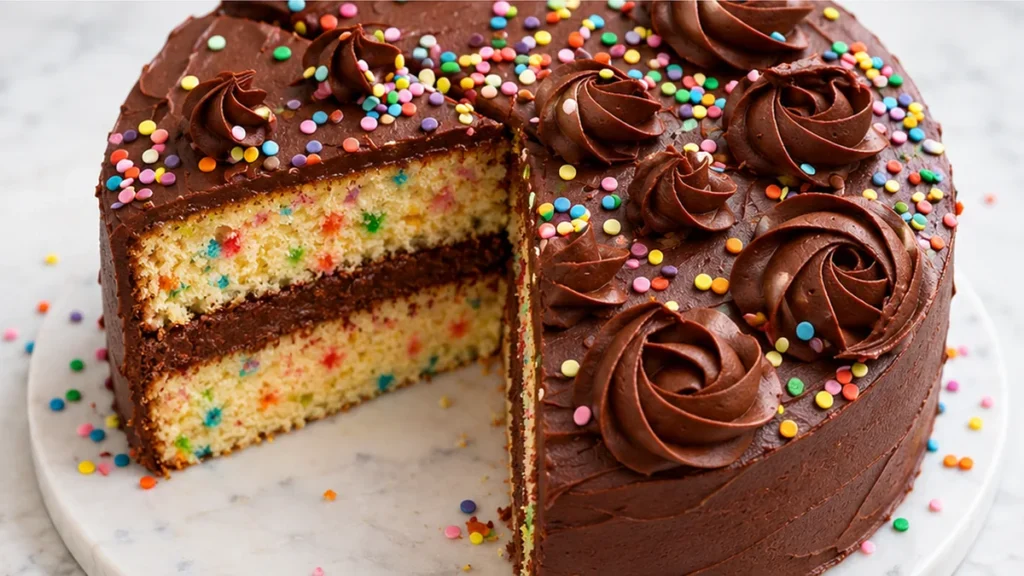
Gluten free birthday cake is a satisfying dessert that everyone can enjoy. Made with almond flour, it caters to those avoiding gluten while still being delicious.
Key takeaways
- Use a blend of gluten-free flours for better texture.
- Monitor baking time closely to prevent dryness.
- Consider ingredient swaps carefully for flavor impact.
- Incorporate moisture-rich ingredients for a tender cake.
Gluten-Free Birthday Cake Magic!
Ingredients
Instructions
- Preheat oven to 350°F (177°C). Prepare two 8-inch cake pans with parchment paper and gluten-free cooking spray.
- In a large bowl, cream the cake butter and granulated sugar until smooth, then mix in eggs and vanilla extract.
- Gradually add gluten-free flour, baking powder, and salt, mixing until just combined.
- Pour in milk and mix for 2 minutes on medium speed until the batter is smooth, then gently stir in the sprinkles.
- Divide the batter evenly into the prepared 8-inch cake pans.
- Bake for 25-30 minutes, or until a toothpick inserted into the center comes out clean and the cake sides pull away from the pan.
Understanding the Role of Gluten-Free Flours in Cake Texture
Gluten-free flours, such as almond flour, coconut flour, and rice flour, each contribute unique properties to the cake’s structure and texture. For instance, almond flour adds moisture and a nutty flavor, while coconut flour is highly absorbent and requires adjustments in liquid ratios. Understanding the hydration levels is crucial; typically, gluten-free flours need more liquid than their wheat-based counterparts. A general rule is to start with a 1:1 ratio of gluten-free flour to liquid and adjust based on the flour type.
Common Baking Pitfalls for Gluten-Free Cakes
One common issue when baking gluten-free cakes is dryness, often due to insufficient moisture or overbaking. To combat this, ensure you are using the correct flour blend and monitor the baking time closely. Another frequent problem is the cake collapsing, which can occur if the batter is overmixed or if the leavening agents are not balanced. For best results, mix until just combined and use a combination of baking powder and baking soda to achieve the desired rise.
Ingredient Alternatives and Their Impact on Flavor
When crafting a gluten-free birthday cake, you might consider substituting traditional ingredients. For example, using coconut sugar instead of granulated sugar can impart a caramel-like flavor but may also affect the cake’s color and moisture. Additionally, swapping eggs for flaxseed meal can work, but it may lead to a denser texture. Understanding these trade-offs is essential for achieving the desired flavor and texture in your cake.
Unique Characteristics of Gluten-Free Cakes
Gluten-free cakes often have a different crumb structure compared to traditional cakes; they can be denser and crumblier. This is primarily due to the absence of gluten, which provides elasticity and structure. To enhance the cake’s texture, consider incorporating ingredients like yogurt or applesauce, which can add moisture and tenderness. Additionally, using a blend of flours can help create a more balanced texture and flavor profile, making the cake more enjoyable.
Understanding the Impact of Ingredient Quality on Your Cake’s Outcome
The quality of ingredients significantly affects the final product of a gluten-free birthday cake. For instance, using fresh eggs can enhance the cake’s rise and texture, while stale eggs may result in a denser cake. Additionally, the freshness of baking powder is crucial; expired powder can lead to inadequate leavening, causing the cake to fall flat. When selecting gluten-free flours, consider those that are finely milled and free from additives, as these can influence the cake’s moisture and crumb structure. For example, almond flour provides a rich flavor but can make the cake denser compared to lighter flours like rice flour. Always check for the best-before dates and opt for organic ingredients when possible, as they often yield better flavor and texture.
Strategies for Scaling Your Gluten-Free Birthday Cake Recipe
Scaling a gluten-free birthday cake recipe requires careful consideration of ingredient ratios and baking times. When doubling the recipe, ensure that all ingredients are measured accurately to maintain the cake’s structure and moisture. It’s advisable to increase the baking time gradually; a cake that normally bakes for 30 minutes may require an additional 5-10 minutes when scaled up. Monitor the cake closely and use a toothpick to check for doneness. Furthermore, if you are scaling down the recipe, consider the impact on the baking pan size; smaller pans may cook faster and require a temperature adjustment to prevent over-baking. Adjusting the oven temperature by 10-15 degrees Celsius (or 20-30 degrees Fahrenheit) can help achieve a better rise and prevent the cake from drying out.
Best Practices for Storing Leftover Cake
Proper storage of leftover gluten-free birthday cake is essential to maintain its texture and flavor. If the cake is frosted, wrap it tightly in plastic wrap or place it in an airtight container to prevent it from drying out. For unfrosted cake, consider freezing individual slices to enjoy later; this method preserves texture and flavor effectively. When freezing, ensure the cake is completely cooled and wrap it securely to avoid freezer burn. Thaw slices in the refrigerator overnight or at room temperature for a few hours before serving. Additionally, cakes made with moist ingredients, such as applesauce or yogurt, tend to store better than drier cakes, maintaining their softness even after a few days.
Pairing Your Cake with Complementary Flavors and Textures
Pairing your gluten-free birthday cake with the right flavors and textures can elevate the overall dessert experience. Consider serving the cake with a side of fresh berries or a fruit compote, which can add acidity and brightness to balance the sweetness of the cake. A dollop of whipped cream or a scoop of ice cream can introduce a creamy element that complements the cake’s texture. Additionally, experimenting with flavored syrups, such as vanilla or caramel, can enhance the cake’s flavor profile. When selecting beverages, opt for light sparkling wines or herbal teas that won’t overpower the cake’s delicate flavors. The key is to create a harmonious balance between the cake and its accompaniments, enhancing the overall enjoyment.
How to Achieve the Perfect Texture in Gluten-Free Cakes
The texture of a gluten-free birthday cake can often differ from traditional cakes due to the absence of gluten, which provides structure and elasticity. To achieve a desirable texture, consider the balance of wet and dry ingredients. Using a combination of gluten-free flours, such as almond flour and coconut flour, can create a more complex texture. A common ratio is 1 part almond flour to 1 part coconut flour, which helps retain moisture while providing a light crumb. Additionally, incorporating eggs not only binds the ingredients but also adds richness and stability. Aim for a baking temperature of 175°C (350°F) and bake for 25-30 minutes, checking for doneness with a toothpick. This method ensures that the cake rises properly without becoming too dense or dry.
Understanding the Role of Sweeteners in Flavor Development
Sweeteners play a crucial role in both flavor and texture in gluten-free birthday cakes. While traditional cakes often rely on granulated sugar, gluten-free recipes can benefit from alternative sweeteners such as honey or maple syrup. These liquid sweeteners add moisture and can enhance the cake’s flavor profile, but they also require adjustments in other liquid ingredients. For instance, if using 100 grams of honey, reduce the liquid by about 15-30 milliliters to maintain the right consistency. Furthermore, sweeteners like coconut sugar can impart a caramel-like flavor, while stevia or erythritol can be used for lower-calorie options, though they may affect the cake’s texture. Understanding these nuances can help in achieving a balanced sweetness without compromising the cake’s structure.
Scaling Your Gluten-Free Birthday Cake for Larger Gatherings
When scaling a gluten-free birthday cake recipe for larger gatherings, it’s essential to maintain the integrity of the recipe while adjusting ingredient proportions. A general rule of thumb is to increase each ingredient by 1.5 times for a 9-inch round cake to a 12-inch round cake. However, be cautious with baking time; larger cakes may require additional time in the oven. Use a cake tester to check for doneness, as the outer edges may cook faster than the center. Additionally, consider using multiple pans to ensure even baking. For instance, if doubling the recipe, use two 9-inch pans instead of one larger pan. This approach not only helps in achieving uniform texture but also makes it easier to layer and frost the cake.
How to Make Your Gluten-Free Birthday Cake Ahead of Time
When planning a celebration, preparing your gluten-free birthday cake in advance can alleviate stress on the big day. To successfully make your cake ahead of time, consider baking the layers a day or two prior to the event. After cooling, wrap each layer tightly in plastic wrap to maintain moisture. Store them in the refrigerator for up to three days or freeze them for up to three months. If freezing, ensure the layers are well-wrapped to prevent freezer burn. On the day of serving, let the layers thaw in the refrigerator or at room temperature before frosting. This approach not only saves time but can also enhance the flavor as the ingredients meld together.
Understanding the Impact of Ingredient Quality on Cake Flavor
The quality of ingredients used in your gluten-free birthday cake directly affects its flavor and texture. For instance, using high-quality gluten-free flour blends can provide a better crumb and moisture retention compared to lower-quality alternatives. Additionally, fresh eggs contribute to a richer taste and improved structure. When selecting sweeteners, opt for natural options like honey or maple syrup, which can enhance the cake’s flavor complexity. Furthermore, consider the freshness of your baking powder or soda, as these leavening agents lose potency over time, impacting the cake’s rise. Investing in quality ingredients will yield a more delicious and satisfying cake.
Pro tips
Pro tip: Best served immediately while hot!
Frequently asked questions
What gluten-free flour works best for this cake?
A blend of almond flour and coconut flour is recommended for a balanced texture. Almond flour provides moisture, while coconut flour helps absorb excess liquid.
How can I prevent my gluten-free cake from being dry?
To prevent dryness, ensure you’re using enough moisture in your batter. Adding ingredients like yogurt or applesauce can help retain moisture during baking.
Can I substitute eggs in this recipe?
Yes, you can substitute eggs with flaxseed meal or applesauce. However, note that this may change the texture of the cake, making it denser.
What causes my gluten-free cake to collapse?
A collapsing cake can result from overmixing the batter or an imbalance in leavening agents. Ensure you mix just until combined and use the correct amount of baking powder and baking soda.
More from Gluten-Free Desserts & Sweets →