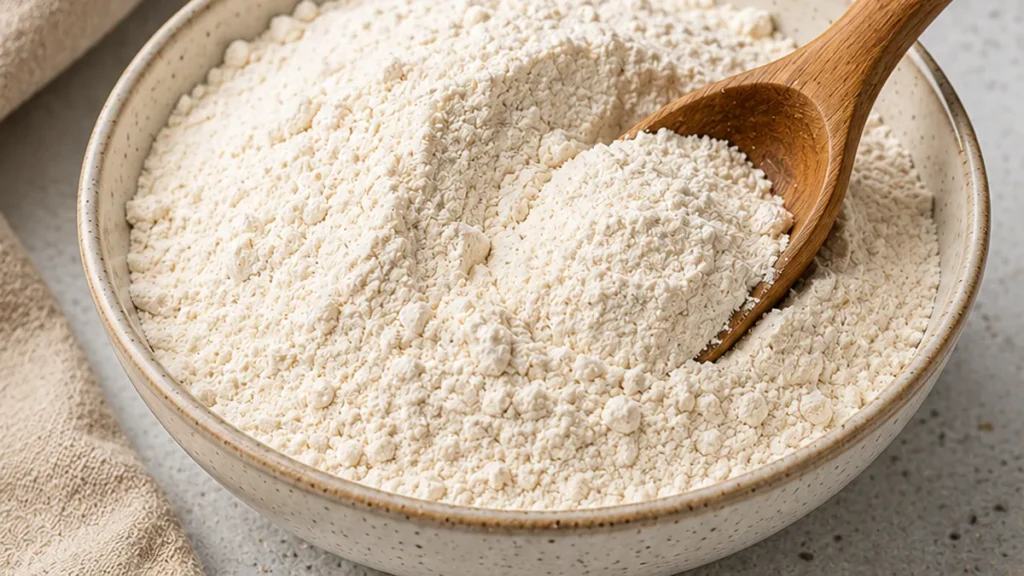
This homemade gluten-free flour blend is a foundational element for consistent baking. Achieve predictable, pleasant textures in your goods with this straightforward mix. It replaces store-bought options effectively.
Key takeaways
- This flour blend balances rice flours and starches for optimal texture.
- Xanthan gum is crucial for binding and structure in gluten-free baking.
- Accurate measurement and thorough mixing are key to success.
- Troubleshooting common issues involves checking measurements and ingredient quality.
Ultimate Gluten-Free Flour Blend for Perfect Baking
Ingredients
- 1 cup superfine white rice flour
- 1 cup cornstarch
- ¾ cup tapioca starch
- ½ cup superfine brown rice flour
- ½ cup non-fat milk powder
- 1 tbsp potato starch
- 1 tbsp xanthan gum
Instructions
- Combine all ingredients in a superfine mesh strainer and sift over a large bowl for at least 30 seconds.
- Stir the mixture gently with a whisk, then sift it a second time for maximum smoothness, ensuring no clumps remain.
- Transfer the sifted flour blend into an airtight container, pressing down gently to remove excess air.
- Seal the container tightly and store in a cool, dry place for up to 6 months.
Notes
The technique that makes it
The success of this specific flour blend hinges on the precise ratio of starches and flours, combined with the crucial role of xanthan gum. White rice flour provides a neutral base and contributes to structure, while brown rice flour adds a subtle depth and slightly chewier texture. Cornstarch and tapioca starch are vital for tenderness and lightness, preventing the final baked goods from becoming dense or gummy. Potato starch, used in a smaller quantity, further enhances tenderness and helps with moisture retention. The key to achieving a perfect texture, especially in gluten-free baking where gluten’s elastic properties are absent, is the inclusion of xanthan gum. Xanthan gum acts as a binder and emulsifier, mimicking gluten’s function by providing elasticity and structure. It helps hold the ingredients together, prevents crumbling, and contributes to a desirable mouthfeel. The superfine grind of the rice flours is also important, ensuring they incorporate smoothly into the mixture and don’t leave a gritty texture in your final products. Proper mixing is essential; whisking the ingredients thoroughly ensures the xanthan gum is evenly distributed, which is critical for its binding effectiveness.
Troubleshooting
- Problem: Baked goods are crumbly and fall apart.
Fix: Ensure you have accurately measured the xanthan gum. Too little will result in poor binding. Also, check that the blend was thoroughly mixed to distribute the xanthan gum evenly. Consider adding an extra 1/4 teaspoon of xanthan gum per cup of flour blend if your recipe is particularly delicate. - Problem: Baked goods have a gummy or dense texture.
Fix: This can occur if there’s too much starch relative to the flours, or if the xanthan gum content is too high. Double-check your measurements for the starches and xanthan gum. Ensure you are using superfine rice flours, as coarser grinds can contribute to density. - Problem: Gritty texture in baked goods.
Fix: This is often due to the rice flour not being superfine enough. Ensure you are using a superfine white rice flour. For future batches, consider sifting the blend before use, although the superfine grind should largely prevent this. - Problem: Baked goods are too dry.
Fix: While the potato starch helps with moisture, some gluten-free recipes require additional moisture. Ensure your recipe’s liquid content is appropriate. This blend is designed to absorb liquids similarly to wheat flour, but adjustments might be needed based on the specific recipe.
Substitutions
- White Rice Flour: You can substitute with superfine sweet rice flour (mochiko). The result will be a slightly chewier and more tender crumb, as sweet rice flour contains more amylopectin.
- Cornstarch: Arrowroot starch or potato starch can be substituted for cornstarch. Using arrowroot will yield a slightly crispier texture, while more potato starch might make the baked goods more tender.
- Tapioca Starch: Arrowroot starch or cornstarch can be used as substitutes. The texture might be slightly different; arrowroot can lead to a crisper result, while cornstarch is similar but may not provide quite the same level of lightness.
- Xanthan Gum: Guar gum can be used as a 1:1 substitute, though it may produce a slightly gummier texture. Psyllium husk powder (use about 1.5-2 times the amount of xanthan gum) can also work, providing structure and moisture retention, but may impart a slightly different flavor or color.
Pro tips
- Sift ingredients thoroughly for the smoothest possible flour blend.
- Ensure your container is truly airtight to keep the blend fresh.
- Use this blend as a 1:1 replacement for all-purpose flour in most recipes.
Improve your gluten-free baking with this essential flour blend. Enjoy consistently delicious results in all your favorite recipes!
More from Gluten-Free Bread & Baking →
Frequently asked questions
Can I substitute almond flour for rice flour in this gluten-free blend?
Substituting almond flour for rice flour is possible but will alter the texture. Almond flour is denser and adds moisture. You might need to adjust the liquid content in your recipe slightly. For best results, stick to the original blend or use a mix of nuts and seeds if substituting.
How should I store this homemade gluten-free flour blend?
Store your gluten-free flour blend in an airtight container in a cool, dark place, such as a pantry. For longer storage, especially if using ingredients like nut flours, refrigeration or freezing is recommended to maintain freshness and prevent rancidity. Properly stored, it can last for several months.
Can I make this gluten-free flour blend ahead of time?
Yes, absolutely! This gluten-free flour blend is designed to be made in larger batches and stored for future use. Having it ready-to-go makes gluten-free baking much more convenient. Just ensure it’s stored correctly to maintain its quality and prevent spoilage.
What is the best way to measure gluten-free flour blend?
The best way to measure gluten-free flour blends is by weight using a kitchen scale for accuracy. If measuring by volume, use the ‘spoon and level’ method: gently spoon the flour into the measuring cup and level off the excess with a straight edge. This prevents packing and ensures consistent results.