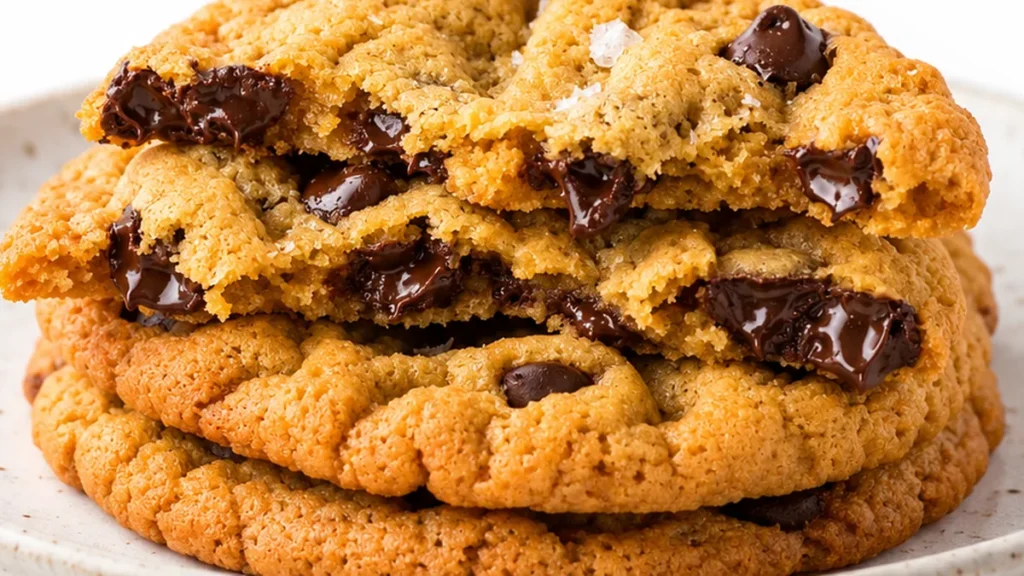
Chewy chickpea cookies are made with chickpea flour, providing a unique texture. This recipe ensures a soft and satisfying treat that is gluten-free.
Key takeaways
- Use softened butter to prevent excessive spreading.
- Add a splash of milk for moisture if cookies are too dry.
- Consider using high-quality vanilla for enhanced flavor depth.
- Chickpea flour provides a unique nutty flavor and nutritional benefits.
Chewy Chickpea Cookies: The ULTIMATE Gluten-Free Treat!
Ingredients
- 1 ¼ cup chickpea flour
- ½ tsp baking soda
- ½ tsp salt
- ½ cup butter (for dairy-free, substitute vegan butter or 1:1 of coconut oil)
- ½ cup brown sugar
- ¼ cup white sugar
- 1 egg (a flax egg works well here)
- 1 tsp vanilla
- ¾ cup chocolate chips (for dairy free, use dairy-free chocolate chips)
- flaky salt for garnish (optional)
Instructions
- Preheat oven to 350°F (177°C) and line a baking tray with parchment paper.
- In a medium bowl, whisk together chickpea flour, baking soda, and salt, and set aside.
- In a large bowl, cream butter and sugars together, then beat in the egg and vanilla until combined and lightened in color.
- Pour dry ingredients into the wet and mix until everything is combined.
- Stir in chocolate chips.
- Scoop cookie dough into medium-sized balls and place on prepared baking tray, making sure to leave some space in between the cookies. Optionally, you can press some extra chocolate chips into the tops of your cookie dough balls.
- Bake for 9-11 minutes, until the cookies are done in the middle and the edges are just beginning to turn golden brown.
- Remove from the oven and quickly use a round glass or biscuit cutter to scoop them back into a round shape while they’re still warm, then optionally garnish the cookies with some flaky salt.
Video
Notes
The Science Behind Chewy Chickpea Cookies
Chewy chickpea cookies are a delightful twist on traditional cookie recipes, relying on the unique properties of chickpea flour. Chickpea flour, or besan, is naturally gluten-free and high in protein, which contributes to the cookie’s chewy texture. The key to achieving the perfect chewiness lies in the balance of moisture and fat in the dough. Using 1¼ cups of chickpea flour provides a solid base, while the ½ cup of butter or its vegan alternatives adds richness and helps bind the ingredients together. The baking soda, combined with the acidic components from brown sugar, creates a leavening effect that gives the cookies a slight rise and airy texture.
Common Issues and How to Avoid Them
While making chewy chickpea cookies, several common issues can arise. Here are some failure-fix pairs to consider:
- Issue: Cookies spread too much during baking.
Fix: Ensure the butter is not too warm when mixed with sugars; overly warm butter can lead to excessive spreading. Aim for softened but not melted butter. - Issue: Cookies are too dry or crumbly.
Fix: Adjust the moisture content by adding a bit more fat or a splash of milk (or a non-dairy alternative) to the dough. - Issue: Cookies lack flavor depth.
Fix: Enhance the flavor by using high-quality vanilla extract or adding a pinch of cinnamon or nutmeg to the batter. - Issue: Cookies are too dense.
Fix: Ensure the chickpea flour is fresh and properly measured; too much flour can lead to density. Use a kitchen scale for accuracy.
Ingredient Swaps and Their Impact
Substituting ingredients can create variations in flavor and texture. Here are some swaps to consider:
- Chickpea flour for almond flour: This will make the cookies slightly nuttier and denser, but still gluten-free.
- Butter for coconut oil: Using coconut oil will impart a coconut flavor and can make the cookies a bit softer.
- Regular sugar for coconut sugar: This swap adds a caramel-like flavor but may alter the color and texture slightly.
- Egg for flax egg: This vegan substitute works well, but the cookies may be slightly less chewy and require a bit more baking time.
Unique Characteristics of Chewy Chickpea Cookies
One standout feature of chewy chickpea cookies is their nutritional profile. Unlike traditional cookies made with wheat flour, these cookies are rich in fiber and protein, making them a more satisfying treat. The presence of chickpeas contributes to a lower glycemic index, which means they may be a better option for those managing blood sugar levels. Additionally, the use of chickpea flour offers a unique nutty flavor that pairs wonderfully with chocolate chips, providing a delicious contrast to the sweetness of the sugars.
Understanding the Impact of Ingredient Quality on Chewy Chickpea Cookies
The quality of ingredients plays a crucial role in the final texture and flavor of chewy chickpea cookies. For instance, fresh chickpea flour, ideally milled from whole chickpeas, can enhance the nuttiness and moisture content of the cookies. Conversely, stale flour may lead to a dry texture. Additionally, the type of sugar used can affect chewiness; brown sugar, with its higher moisture content, contributes to a softer cookie compared to white sugar. Furthermore, the quality of chocolate chips, especially if they are dairy-free, can significantly influence the overall taste. Always choose high-quality, ethically sourced ingredients for the best results.
Scaling the Recipe for Different Occasions
Scaling the recipe for chewy chickpea cookies is straightforward and can be adjusted for various occasions. If you’re hosting a large gathering, doubling or tripling the batch is feasible. Ensure to maintain the same ratios of ingredients to preserve the texture and flavor. However, be mindful of baking times, as larger batches might require slightly longer baking times, so keep an eye on the cookies as they bake. Conversely, if you’re looking to make a smaller batch, halving the recipe works well, but ensure that you mix the ingredients thoroughly to achieve a consistent dough.
Choosing the Right Equipment for Optimal Results
The equipment you use can significantly affect the outcome of your chewy chickpea cookies. A stand mixer or hand mixer can ensure that the butter and sugars are creamed together adequately, which is essential for incorporating air into the dough. Using a silicone baking mat or parchment paper can help prevent sticking and promote even baking. Additionally, using a cookie scoop can help maintain uniform size and shape, ensuring that the cookies bake evenly. Lastly, an oven thermometer is invaluable; it ensures your oven is at the correct temperature, as even slight variations can lead to underbaked or overbaked cookies.
Make-Ahead Tips and Storage for Chewy Chickpea Cookies
Chewy chickpea cookies can be made ahead of time and stored for later enjoyment. After baking, allow the cookies to cool completely before storing them in an airtight container at room temperature for up to a week. For longer storage, consider freezing the cookies. Place them in a single layer on a baking sheet to freeze individually, then transfer them to a freezer-safe bag. When ready to enjoy, simply thaw at room temperature or warm briefly in the oven. If you prefer to prepare the dough in advance, you can refrigerate it for up to 3 days or freeze it for up to 3 months. Just be sure to let the dough thaw in the refrigerator before baking.
Understanding the Texture Variations in Chewy Chickpea Cookies
The texture of chewy chickpea cookies can vary significantly based on several factors, including the moisture content of the chickpea flour and the baking time. For optimal chewiness, it is crucial to monitor the baking process closely. Baking at 180°C (350°F) for 10-12 minutes usually yields a perfect chewy center. If the cookies are overbaked, they can become dry and crumbly. Conversely, underbaking may leave them too soft and doughy. A good practice is to remove the cookies from the oven when the edges are lightly golden but the centers still appear slightly underbaked. This allows for residual cooking as they cool on the baking sheet, maintaining that desired chewy texture.
Adapting Chewy Chickpea Cookies for Seasonal Ingredients
Seasonal ingredients can greatly influence the flavor and texture of chewy chickpea cookies. For instance, incorporating fresh spices or seasonal fruits like pumpkin puree in the fall or citrus zest in the winter can enhance the flavor profile. However, when adding wet ingredients like puree, it is essential to adjust the dry ingredient ratios to maintain the cookie’s structure. Generally, for every 1/4 cup of wet ingredient added, reduce the liquid fat (like butter or coconut oil) by the same amount. This balance ensures that the cookies retain their chewy characteristic without becoming overly moist or falling apart.
Scaling Up the Recipe: Tips for Large Batches of Chewy Chickpea Cookies
When scaling up the recipe for chewy chickpea cookies, it is important to maintain the ratios of ingredients to ensure consistent results. Doubling or tripling the recipe can be done easily, but pay attention to the mixing and baking times. Larger batches may require a longer mixing time to ensure that all ingredients are evenly combined. Additionally, baking in multiple trays simultaneously may necessitate rotating the trays halfway through the baking process for even cooking. It’s also advisable to chill the dough for at least 30 minutes before baking, particularly in larger batches, to prevent the cookies from spreading too much in the oven.
Understanding the Role of Chickpea Flour in Texture
Chickpea flour, also known as gram flour or besan, is a key ingredient in chewy chickpea cookies that significantly influences their texture and flavor. Unlike traditional wheat flour, chickpea flour is gluten-free. This absence of gluten means that the cookies will not have the same chewy structure as those made with wheat flour. Instead, the cookies rely on the fat content from butter and the binding properties of the egg (or flax egg) to create a satisfying chew. To achieve the desired chewy texture, it is essential to ensure that the chickpea flour is finely ground and well-sifted. This helps to incorporate air and prevent any grittiness. Additionally, the hydration level is crucial; allowing the dough to rest for about 15-30 minutes before baking can help the flour absorb moisture and improve the final texture.
How to Scale Chewy Chickpea Cookies for Different Occasions
Scaling the batch of chewy chickpea cookies is straightforward, making it easy to adjust the recipe for gatherings or personal cravings. When doubling or halving the recipe, maintain the same ratios of ingredients to preserve the intended texture and flavor. For instance, if you decide to make a larger batch, ensure that you mix the dough in a sufficiently large bowl to accommodate the increased volume. A common pitfall when scaling recipes is to overlook the baking time; larger batches may require a slightly longer baking time, while smaller batches may bake faster. Always monitor the cookies closely, checking for doneness by looking for a golden-brown edge while the center remains slightly soft. This method ensures that each cookie retains its chewy quality, regardless of the batch size.
Pro tips
- For the chewiest chickpea cookies, avoid over-baking. Pull them from the oven when the edges are set and lightly golden, but the centers still look slightly soft.
- If you’re going dairy-free, ensure your vegan butter and chocolate chips are certified dairy-free. I’ve found that some coconut oils can alter the texture slightly, so stick to vegan butter for the best result.
- Storage: Store baked chickpea cookies in an airtight container at room temperature for up to 3 days, or freeze the dough balls for up to 3 months. Bake from frozen, adding 2-3 minutes to the baking time.
Give these chickpea chocolate chip cookies a try and enjoy a wholesome, delicious gluten-free treat. They’re perfect for sharing or a quiet moment with a cup of tea!
Frequently asked questions
Can I use other flours instead of chickpea flour?
Yes, you can substitute chickpea flour with almond flour or oat flour, but keep in mind that this may alter the texture and flavor of the cookies. Almond flour will create a nuttier taste, while oat flour will give a softer texture.
How do I store leftover cookies?
Store the cookies in an airtight container at room temperature for up to five days. For longer storage, consider freezing them in a single layer, then transferring to a freezer-safe bag for up to three months.
Can I make these cookies vegan?
Absolutely! You can easily make these cookies vegan by substituting the egg with a flax egg (1 tablespoon ground flaxseed mixed with 2.5 tablespoons water) and using vegan butter or coconut oil.
What can I add to enhance the flavor of the cookies?
You can add spices like cinnamon or nutmeg, or incorporate ingredients such as chopped nuts, dried fruits, or even a sprinkle of sea salt on top before baking to enhance the flavor profile of your cookies.
More from Gluten-Free Desserts & Sweets →