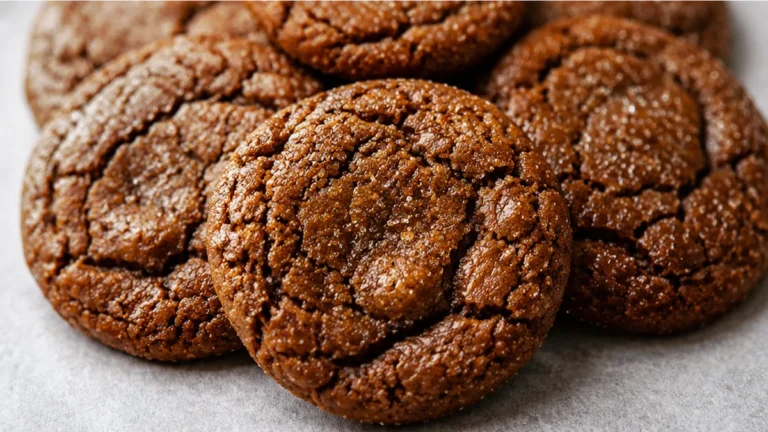
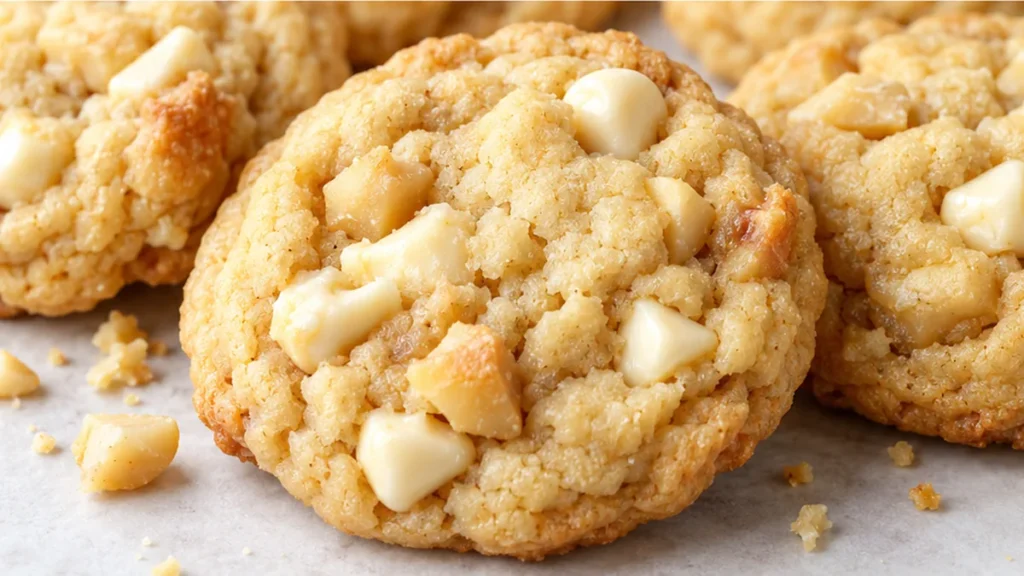
These chewy gf white chocolate macadamia cookies are a great gluten-free option. Made with oats and creamy white chocolate, they offer a satisfying texture.
Key takeaways
- Use a blend of gluten-free flours for the best texture.
- Chill the dough to prevent excessive spreading.
- Incorporate brown sugar for moisture and chewiness.
- Remove cookies from the oven while slightly underbaked for optimal texture.
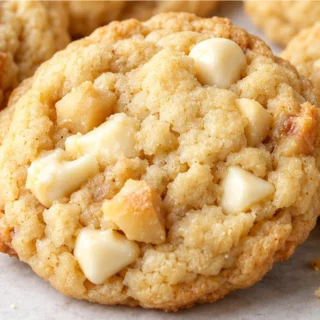
Chewy GF White Chocolate Macadamia Cookies
Ingredients
Instructions
- Preheat oven to 350°F (180°C). Position the oven rack in center of oven. Line two cookie sheets with parchment paper; set aside.
- Chop ½ cup of macadamia nuts; set aside.
- Melt 2 tablespoons of the butter. In a food processor, combine melted butter and remaining macadamia nuts. Process until the mixture forms a lumpy paste; set aside.
- In a medium bowl, cream the remaining six tablespoons of butter.
- Beat in sugars, egg, and vanilla. Continue to beat until light and fluffy.
- Beat in the macadamia nut paste.
- Add flour, baking soda, and salt and mix until combined.
- Stir in vanilla chips and the remaining 1/2 cup macadamia nuts.
Understanding the Role of Ingredients in Chewy GF White Chocolate Macadamia Cookies
The success of chewy GF white chocolate macadamia cookies hinges on the balance and quality of ingredients. For instance, gluten-free flours such as almond flour or a blend of gluten-free all-purpose flour can significantly impact texture. Almond flour tends to create a denser cookie, while a blend may yield a lighter texture. The use of xanthan gum or similar binders can also help replicate the chewiness typically provided by gluten, ensuring the cookies maintain their structure and moisture.
Common Issues and How to Resolve Them
Even the most experienced bakers can encounter issues when making chewy GF white chocolate macadamia cookies. Here are some common problems along with their solutions:
- Issue: Cookies spreading too much during baking.
Fix: Chill the dough for at least 30 minutes before baking. This helps solidify the fats, resulting in less spread. - Issue: Cookies turning out dry.
Fix: Ensure you are measuring your flour correctly. Too much flour can lead to dryness; consider using a kitchen scale for precision. - Issue: Lack of chewiness.
Fix: Incorporate brown sugar in addition to white sugar. Brown sugar adds moisture and helps create a chewy texture. - Issue: Overbaking.
Fix: Remove cookies from the oven when the edges are lightly golden but the center appears underbaked. They will continue to cook on the baking sheet.
Ingredient Swaps and Their Effects
Making substitutions can change the flavor and texture of your cookies. Here are some common swaps:
- Swap: Coconut sugar for brown sugar.
Result: A slightly drier cookie with a more caramel-like flavor. - Swap: Sunflower seed butter for macadamia nut butter.
Result: A nut-free option, but it may produce a denser cookie. - Swap: White chocolate chips for dark chocolate chips.
Result: A richer flavor with a hint of bitterness, contrasting the sweetness. - Swap: Adding a pinch of sea salt to the dough.
Result: Enhanced sweetness and flavor depth.
Unique Characteristics of Chewy GF White Chocolate Macadamia Cookies
This cookie recipe stands out due to its combination of flavors and textures. The creamy sweetness of white chocolate complements the rich, buttery notes of macadamia nuts, creating a delightful contrast. Unlike traditional cookies, the absence of gluten allows for a more tender crumb, while the right balance of fats and sugars ensures a chewy bite. This specific recipe also benefits from the addition of a touch of vanilla extract, which enhances the overall flavor profile and rounds out the sweetness.
Understanding the Impact of Ingredient Quality on Texture
The quality of the ingredients used in chewy GF white chocolate macadamia cookies significantly affects the final texture and flavor. For instance, using high-quality macadamia nuts that are fresh and properly roasted enhances the nutty flavor and contributes to a satisfying crunch. Similarly, the type of gluten-free flour blend can alter the cookie’s chewiness. A blend that includes almond flour or coconut flour can yield a denser texture, while a lighter blend may result in a more cake-like cookie. It’s essential to choose ingredients that are not only fresh but also compatible with each other to achieve the desired chewy consistency.
Batch Scaling Without Compromising Quality
When scaling the recipe for chewy GF white chocolate macadamia cookies, it’s crucial to maintain the correct ratios of ingredients to preserve texture and flavor. For instance, if doubling the recipe, ensure that the baking time is adjusted accordingly, as larger batches may require additional baking time to ensure even cooking. Moreover, consider the size of your mixing bowl; using a bowl that is too small can lead to uneven mixing. For larger batches, it might be beneficial to mix in smaller increments before combining everything to ensure an even distribution of ingredients.
Equipment Variations and Their Effects on Baking
The equipment you use can greatly influence the outcome of chewy GF white chocolate macadamia cookies. For example, using an air-bake cookie sheet can help promote even baking and prevent over-browning, while a dark metal sheet may cause the bottoms to cook faster. Additionally, the type of mixer can affect how well the ingredients are blended; a stand mixer often provides a more thorough mix compared to a hand mixer. It’s also essential to monitor the baking temperature closely, as some ovens can have hot spots that lead to uneven baking.
Seasonal Adjustments for Optimal Flavor
Seasonal changes can affect the availability and quality of ingredients for chewy GF white chocolate macadamia cookies. For example, during the summer months, fresh macadamia nuts may be more readily available and flavorful, while in winter, you may need to rely on packaged nuts. Additionally, the moisture content of ingredients like butter can vary with temperature and humidity, which can impact the dough’s consistency. Adjusting the flour or adding a bit more liquid can help maintain the desired dough texture regardless of the season.
How to Properly Store Chewy GF White Chocolate Macadamia Cookies for Maximum Freshness
To ensure that your chewy GF white chocolate macadamia cookies maintain their delightful texture and flavor, proper storage is key. Allow the cookies to cool completely on a wire rack before storing them. Once cooled, place the cookies in an airtight container. For optimal freshness, you can separate layers with parchment paper to prevent sticking. Stored this way at room temperature, they can last for about 3-5 days. If you want to keep them longer, consider freezing them. Wrap each cookie individually in plastic wrap and then place them in a freezer-safe bag. They can be frozen for up to 3 months. When ready to enjoy, simply thaw at room temperature for about 30 minutes.
Adjusting Recipe for Different Baking Equipment
The type of baking equipment you use can significantly affect the outcome of your chewy GF white chocolate macadamia cookies. For instance, if you are using a convection oven, reduce the baking temperature by about 20°C (or 25°F) to prevent over-browning. Additionally, baking sheets can vary; using dark-colored pans may lead to quicker browning compared to light-colored pans. If using silicone baking mats, note that they can slightly affect the texture, often resulting in a chewier cookie. Always monitor your cookies closely during the last few minutes of baking, as different equipment can lead to varying baking times.
Seasonal Ingredient Variations and Their Impact on Flavor
Seasonal ingredients can enhance the flavor profile of your chewy GF white chocolate macadamia cookies. For example, during the fall, consider incorporating spices like cinnamon or nutmeg to add warmth to the cookies. In the summer, you might opt for fresh macadamia nuts or even a dash of sea salt to contrast the sweetness of the white chocolate. Additionally, the quality of your chocolate can vary with seasons; high-quality chocolate tends to have a richer flavor, which can significantly elevate the overall taste of your cookies. Always choose the freshest ingredients available to ensure the best results.
Understanding the Importance of Resting the Dough
Resting the dough is crucial for achieving the ideal texture in chewy GF white chocolate macadamia cookies. This process allows the flour to hydrate fully and the flavors to meld. For best results, let the dough rest in the refrigerator for at least 30 minutes, but ideally up to 2 hours. This not only enhances the flavor but also improves the cookie’s structure by allowing the fats to solidify, which helps keep the cookies chewy rather than spread too thin during baking. A well-rested dough will yield cookies that are thicker and have a more defined shape, while also enhancing the overall chewiness.
Choosing the Right Baking Sheet for Optimal Results
The type of baking sheet you use can significantly affect the outcome of your chewy GF white chocolate macadamia cookies. Dark-colored baking sheets absorb more heat, leading to a faster browning of the cookies, which can cause them to become crispier rather than chewy. For the best results, opt for light-colored, heavy-gauge baking sheets that provide even heat distribution. Additionally, using parchment paper can help prevent sticking and promote even baking. When baking, ensure that the cookies are spaced adequately on the sheet to allow for proper air circulation, which is essential for even cooking and achieving that perfect chewy texture.
Pro tips
Pro tip: Best served immediately while hot!
Frequently asked questions
Can I use a different type of nut in this recipe?
Yes, you can substitute macadamia nuts with other nuts like walnuts or pecans. However, keep in mind that this will alter the flavor profile and texture of the cookies.
How can I make these cookies dairy-free?
To make dairy-free chewy GF white chocolate macadamia cookies, use dairy-free white chocolate chips and substitute butter with a plant-based alternative like coconut oil or vegan butter.
What is the best way to store these cookies?
Store the cookies in an airtight container at room temperature for up to a week. For longer storage, consider freezing them, which can maintain their freshness for up to three months.
Why are my cookies too crumbly?
If your cookies are crumbly, it may be due to too much flour or not enough fat. Ensure accurate measurements and consider adding a little more butter or oil to the dough.
More from Gluten-Free Desserts & Sweets →