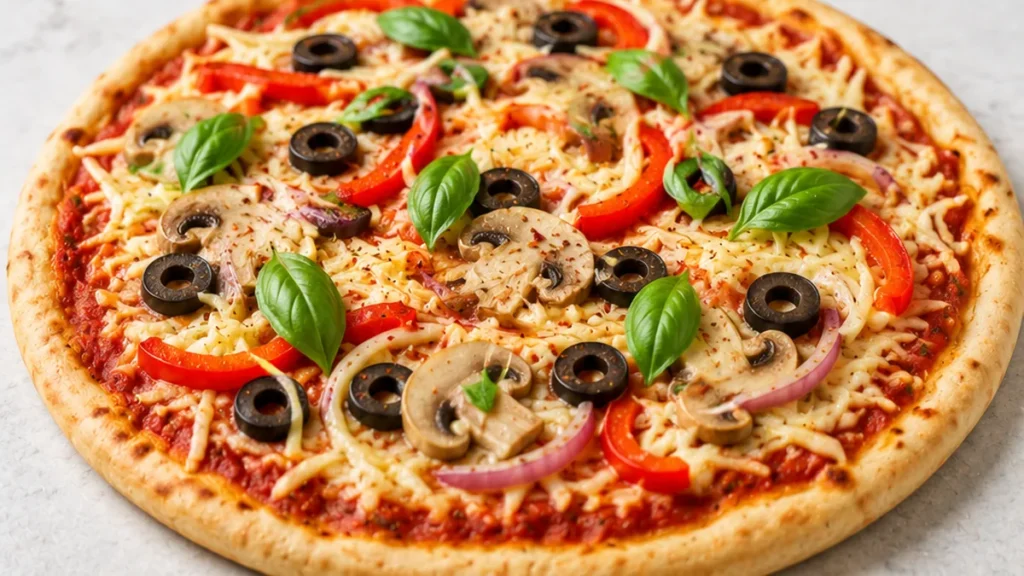
Craving a satisfying pizza without animal products? This vegan pizza recipe is your answer. It delivers a chewy, crisp crust, tangy sauce, and wonderfully melty vegan cheese.
Key takeaways
- The key to a great vegan pizza crust is proper gluten-free flour hydration and yeast activation.
- Ensure your water temperature is correct for activating the yeast.
- Don't rush the dough proofing stage for optimal texture and flavor.
- Troubleshooting common issues like a sticky dough or soggy crust involves adjusting handling and baking techniques.
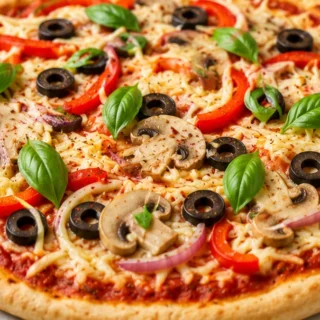
Ultimate Vegan Pizza: Cheesy & Delicious!
Ingredients
- 2 ½ cups gluten-free all-purpose flour with xanthan gum
- 2 ½ tsp instant yeast
- 1 tsp sugar
- 1 tsp salt
- 1 cup warm water (110°F)
- 2 tbsp olive oil
- ¾ cup pizza sauce (store-bought or homemade)
- 1 cup shredded vegan cheese
- Fresh basil leaves
Instructions
- In a large bowl, mix flour, yeast, sugar, and salt. Add water and olive oil and stir until a dough forms.
- Knead in a stand mixer with the dough attachment for 5–7 minutes until smooth. Adjust with 1 tbsp flour at a time if too soft, or 1 tbsp water if too dry, aiming for a soft and slightly sticky dough.
- Lightly oil the top of the dough, cover, and let rise in a warm spot for 1 hour or until doubled.
- Preheat oven to 475°F (245°C). If using a pizza stone, place it in the oven while preheating.
- Transfer the dough to lightly floured parchment paper and flatten into a 12-inch circle using your fingers.
- Spread sauce evenly over the dough and sprinkle generously with vegan cheese shreds.
- Transfer with the parchment paper to a baking sheet or preheated stone.
- Bake for 10-12 minutes or until crust is golden and cheese is melted and bubbly.
Notes
The technique that makes it
The foundation of any great pizza, including this ultimate vegan pizza, lies in the dough. For a gluten-free crust that is both chewy and holds its structure, the key is the proper hydration and yeast activation. Ensure your warm water is between 105°F and 115°F; too hot will kill the yeast, and too cool will result in a sluggish rise. The instant yeast can be mixed directly with the dry ingredients, but activating it first in the warm water with sugar for about 5-10 minutes will give you a visual cue that it’s alive and ready to work, producing a better rise. The addition of olive oil contributes to a tender crumb and helps with browning. Kneading, even for gluten-free dough, is important to develop its structure, though it will feel stickier than traditional wheat dough. Aim for a smooth, elastic ball. A good rise, typically in a warm place for at least an hour, allows the yeast to produce carbon dioxide, creating air pockets that give the crust its characteristic texture. Don’t rush this proofing stage; it’s crucial for flavor development and a light, airy crust.
Troubleshooting
- Dough is too sticky: If your gluten-free dough is unmanageably sticky, resist the urge to add too much extra flour, which can make the crust tough. Instead, lightly oil your hands and work surface, and gently shape the dough. You can also chill the dough for 15-20 minutes to make it easier to handle.
- Crust is dense or gummy: This often happens if the yeast wasn’t properly activated, the water was too hot or cold, or the dough didn’t rise sufficiently. Ensure your water temperature is correct and allow adequate time for proofing in a warm environment.
- Pizza is soggy: Overloading the pizza with wet toppings or using too much sauce can lead to a soggy crust. Pre-cook any watery vegetables and use a moderate amount of pizza sauce. Baking the crust partially before adding toppings can also help create a firmer base.
- Vegan cheese not melting well: Some vegan cheeses have different melting properties. Ensure you are using a brand known for good meltability. Covering the pizza for the last few minutes of baking can help trap steam and encourage melting.
Substitutions
- Gluten-Free Flour Blend: If you don’t have a blend with xanthan gum, you can add 1 teaspoon of xanthan gum to your favorite gluten-free all-purpose flour. The result will be a crust with similar structure and chew.
- Yeast: Active dry yeast can be used instead of instant yeast. Activate it first in the warm water with sugar for 5-10 minutes until foamy, then proceed with the recipe. The outcome will be largely the same.
- Vegan Cheese: Experiment with different types of vegan shredded cheese, such as mozzarella, cheddar, or a blend. The melting consistency and flavor profile will vary, offering different pizza experiences.
- Olive Oil: Coconut oil (melted and slightly cooled) or avocado oil can be used as alternatives to olive oil. These will provide a similar richness and contribute to crust texture.
Pro tips
- Use a pizza stone or steel for an extra crispy crust.
- Don’t overcrowd the pizza with toppings to ensure even baking.
- Let the dough rise in a slightly warm, draft-free spot.
- Experiment with different vegan cheeses and sauces!
Enjoy this homemade vegan pizza, a delightful and accessible meal for any occasion. Feel free to customize with your favorite toppings!
More from Gluten-Free Pasta & Pizza →
Frequently asked questions
Can I make the vegan pizza dough ahead of time?
Yes, you can prepare the vegan pizza dough up to 2 days in advance. Store it in an airtight container in the refrigerator. When ready to use, let it sit at room temperature for about 30 minutes to make it easier to shape. This allows the gluten to relax, resulting in a better crust.
What are good gluten-free vegan cheese substitutes for pizza?
For a cheesy, delicious vegan pizza, consider store-bought shreds like Violife, Daiya, or Miyoko’s Kitchen. For a homemade option, a cashew-based mozzarella or a nutritional yeast-based sauce can provide a rich, cheesy flavor. Ensure your chosen cheese melts well for the best texture.
How do I know when the vegan pizza is done baking?
Your vegan pizza is done when the crust is golden brown and firm to the touch, and the toppings are heated through. The vegan cheese should be melted and slightly bubbly. Check the bottom of the crust for crispiness; it should not be doughy. Adjust baking time as needed.
How should I store leftover vegan pizza?
Let any leftover vegan pizza cool completely before storing. Wrap individual slices tightly in plastic wrap or foil, or place them in an airtight container. Refrigerate for up to 3 days. Reheat in an oven or toaster oven for the best crispness, rather than a microwave.