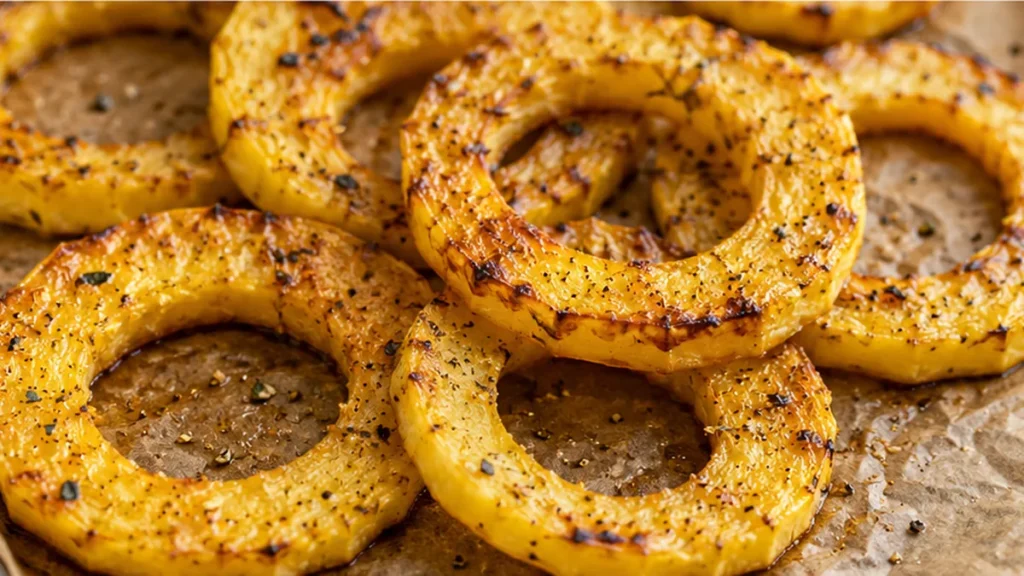
Learning how to cook spaghetti squash can be a game-changer for healthy eating, offering a versatile, low-carb alternative to pasta. This method focuses on roasting spaghetti squash into rings, a technique that simplifies both preparation and cooking, yielding perfectly tender strands every time without the common struggle of cutting a whole, raw squash lengthwise. This approach to spaghetti squash highlights its natural sweetness and provides a fantastic base for various dishes, from savory pasta bowls to light, refreshing sides. It’s an ideal recipe for anyone looking to incorporate more vegetables into their diet with minimal fuss, ensuring a delightful texture and flavor.
Key takeaways
- Cut spaghetti squash into uniform rings for even cooking.
- Ensure all cut surfaces are coated with olive oil for browning and to prevent sticking.
- Roast at the correct temperature to achieve tender strands without burning.
- Adjust cooking time based on squash size and oven calibration.
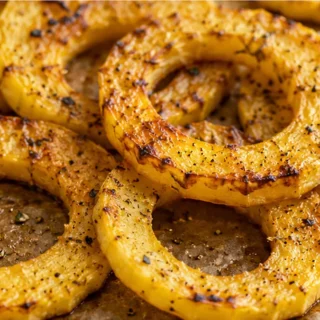
Roasted Spaghetti Squash Rings: Easy Side!
Ingredients
- 1 large spaghetti squash (~4lbs)
- extra virgin olive oil
- seasonings (salt, pepper, garlic powder, homemade seasoned salt)
- Parchment paper
- Sharp chef’s knife
- Large cutting board
Instructions
- Preheat the oven to 400 degrees and line a half sheet pan with parchment paper or nonstick-sprayed foil.
- Carefully pierce the spaghetti squash 4 or 5 times across the center with a sharp knife. Microwave for 2 minutes, flipping halfway, then cool for 5 minutes.
- Slice both ends off the squash, then cut into 1-1/2″ rings. Scrape out seeds and place rings on the prepared baking sheet.
- Drizzle rings with olive oil and seasonings, rubbing to coat both sides. Roast for 25-35 minutes, flipping halfway, until squash shreds easily with a fork.
Notes
The Science of Spaghetti Squash Rings
The key to perfectly cooked spaghetti squash rings lies in controlling moisture and ensuring even heat penetration. Unlike a whole squash, cutting it into rings exposes more surface area to the oven’s heat. This allows for faster cooking but also increases the risk of the edges drying out before the center is tender. The roasting process dehydrates the squash slightly, concentrating its natural sweetness and developing a subtle caramelized flavor through the Maillard reaction on the cut surfaces. Using olive oil is crucial; it acts as a heat conductor, promoting browning and preventing the squash from sticking to the parchment paper. Parchment paper itself is important for easy cleanup and to prevent direct contact with the baking sheet, which can sometimes lead to uneven browning or scorching.
Troubleshooting
- Problem: Squash rings are too hard in the center and not stringy.
- Fix: Ensure the rings are not too thick. Thicker rings require longer cooking times. You can also cover the baking sheet loosely with foil for the last 10-15 minutes of cooking to trap steam and help soften the interior.
- Problem: Edges are burnt and dry, while the center is undercooked.
- Fix: Reduce the oven temperature slightly (to 375°F or 190°C) and check the squash more frequently. Ensure a generous coating of olive oil on all cut surfaces.
- Problem: Squash rings are watery and mushy.
- Fix: This often happens if the squash is overcooked or if too much moisture was trapped. Ensure the squash is fully cooked but not beyond tender. Patting the cut surfaces dry before oiling can also help.
- Problem: Squash sticks to the parchment paper.
- Fix: Ensure the parchment paper is adequately coated with olive oil, especially on the edges of the rings. Using a good quality parchment paper can also make a difference.
Substitutions
- Seasonings: Instead of individual seasonings, a pre-made Italian seasoning blend or a Cajun spice mix can be used. The flavor profile will change, becoming more herbaceous or spicy, respectively.
- Olive Oil: Avocado oil or another high-heat neutral oil can be substituted. This will not significantly alter the flavor but may slightly change the browning characteristics. Butter could be used, but it may brown too quickly at roasting temperatures.
- Garlic Powder: Fresh minced garlic (about 1-2 cloves per squash) can be used, tossed with the squash before roasting. The flavor will be more pungent and fresh, and the garlic may char slightly.
- Parchment Paper: A silicone baking mat (Silpat) can be used as an alternative. It provides a non-stick surface similar to parchment paper and is reusable.
Pro tips
- For easier cutting, ensure your knife is very sharp and use a damp paper towel under your cutting board for stability.
- Don’t overcrowd the pan; give the rings space to roast evenly and brown beautifully.
- Storage tip: Leftover shredded spaghetti squash can be stored in an airtight container in the refrigerator for up to 5 days. Reheat gently in the microwave or a skillet.
This roasted spaghetti squash rings method will change how you view and prepare this wonderful vegetable. Enjoy this simple, versatile, and delicious way to cook spaghetti squash!
Frequently asked questions
How do I cut the spaghetti squash into rings?
Place the squash on a stable cutting board. Using a sharp chef’s knife, carefully cut the squash crosswise into rings, about 1-inch thick. You may need to stabilize the squash with a fork or cut it in half lengthwise first if it’s wobbly.
Can I roast spaghetti squash without cutting it into rings?
Yes, you can roast it halved or quartered. However, cutting it into rings allows for more surface area to brown and can result in more distinct, separated strands after cooking, mimicking pasta better.
What is the best temperature for roasting spaghetti squash rings?
A temperature between 400°F (200°C) and 425°F (220°C) is generally ideal for roasting spaghetti squash rings. This high heat promotes browning and caramelization on the edges while cooking the interior thoroughly.
How do I know when the spaghetti squash rings are done?
The rings are done when they are easily pierced with a fork and the strands inside are tender. The edges should show some browning or caramelization. The total cooking time will typically be between 25-40 minutes, depending on thickness and oven.
More from Gluten-Free Snacks & Sides →