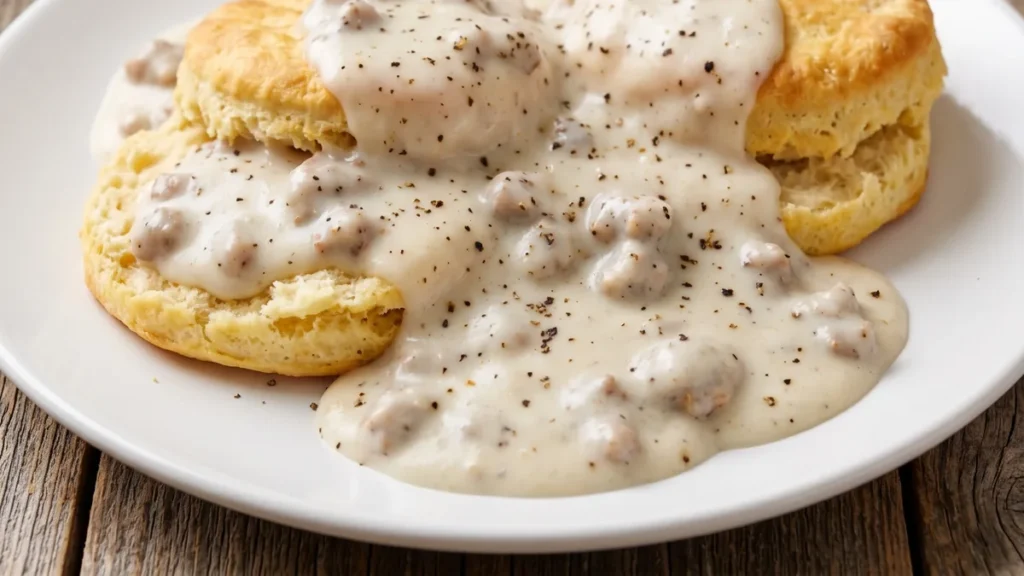
This gluten-free sausage gravy is the ultimate comfort food, perfect for anyone seeking a delicious, savory breakfast without the gluten. It’s surprisingly easy to make, requiring just a few simple ingredients and minimal prep time. Unlike traditional gravies that rely on wheat flour, this gluten-free version uses a special flour blend to achieve the same creamy, thick texture. This sausage gravy recipe is versatile enough to be served over biscuits, toast, or even roasted potatoes, making it a staple for weekend brunches or quick weeknight meals.
Key takeaways
- Properly render sausage fat and cook out the gluten-free flour for a smooth roux.
- Gradually add milk to prevent lumps and achieve a creamy consistency.
- Adjust thickness with a flour/cornstarch slurry (thinner) or extra milk (thicker).
- Experiment with different gluten-free sausages and milk alternatives for varied flavors.
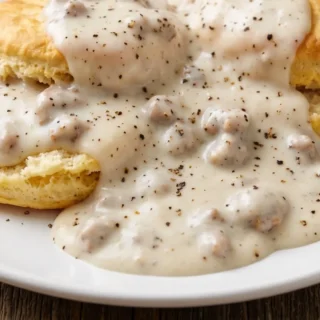
Gluten-Free Sausage Gravy Dream
Ingredients
- 1 lb gluten-free ground breakfast sausage
- 1-3 tbsp butter
- 3 tbsp gluten-free all-purpose flour
- ½ tsp black pepper
- ¼ tsp nutmeg
- ¼ tsp dried sage
- 2 ½ cups whole milk
- salt to taste
Instructions
- In a large skillet over medium heat, cook the sausage, breaking it up with a wooden spoon, until fully browned and cooked through. If the sausage rendered less than 3 tbsp of fat, add enough butter to make up the difference.
- Sprinkle the gluten-free flour, black pepper, nutmeg, and sage evenly over the sausage and stir until the flour is fully absorbed. Cook for 1–2 minutes.
- Gradually add the milk while stirring constantly, scraping up any bits from the pan. Simmer for 5–7 minutes, stirring frequently, until the gravy is thickened and smooth.
- Season with salt to taste.
- Serve hot over biscuits, toast, or roasted potatoes.
- Enjoy!
Notes
The technique that makes it
The foundation of a truly exceptional gluten-free sausage gravy lies in the proper rendering of the sausage fat and the careful creation of a roux. Start by browning the gluten-free ground breakfast sausage in a skillet over medium heat. It’s crucial to break up the sausage into small, uniform pieces as it cooks. This ensures even cooking and a pleasant texture in the final gravy. Once the sausage is fully browned, drain off most of the rendered fat, leaving behind about 1 to 2 tablespoons in the skillet. This fat is essential for building flavor and creating the roux. Next, add the butter to the skillet with the remaining sausage fat. Once the butter is melted, whisk in the gluten-free all-purpose flour. Cook this mixture, stirring constantly, for about 1 to 2 minutes. This step is vital for cooking out the raw flour taste and creating a stable roux. The roux should be a pale blonde color. Gradually whisk in the cold whole milk, a little at a time, ensuring each addition is incorporated before adding more. This slow incorporation prevents lumps and helps create a smooth, creamy gravy. Continue to cook, stirring frequently, until the gravy thickens to your desired consistency. Seasoning with black pepper, nutmeg, and sage at the beginning allows these spices to meld into the gravy as it cooks. Finally, taste and adjust with salt as needed. The nutmeg, though used in a small amount, adds a subtle warmth and complexity that complements the savory sausage and creamy base.
Troubleshooting
- Lumpy Gravy: This usually happens when the milk is added too quickly or if the roux wasn’t fully incorporated. To fix, reduce the heat to low and whisk vigorously. If lumps persist, carefully strain the gravy through a fine-mesh sieve.
- Gravy Too Thin: If your gravy hasn’t thickened enough, you can create a slurry by whisking together 1 tablespoon of gluten-free flour or cornstarch with 2 tablespoons of cold water. Whisk this slurry into the simmering gravy and cook for another 1-2 minutes until thickened.
- Gravy Too Thick: To thin out overly thick gravy, gradually whisk in more warm milk, a tablespoon at a time, until the desired consistency is reached.
- Raw Flour Taste: This indicates the roux wasn’t cooked long enough. Unfortunately, this is hard to fully correct once the milk is added. For future batches, ensure you cook the flour and fat mixture for at least 1-2 minutes before adding liquid.
Substitutions
- Sausage: For a different flavor profile, you can use bulk Italian sausage (ensure it’s gluten-free) or even plant-based sausage crumbles. The flavor will change, but the technique remains the same.
- Milk: While whole milk provides the richest flavor and texture, you can substitute with 2% milk for a slightly lighter gravy. Unsweetened almond milk or oat milk can be used for a dairy-free option, though they may result in a thinner consistency and a slightly altered flavor.
- Gluten-Free Flour: A gluten-free all-purpose flour blend that contains xanthan gum is recommended. If your blend does not contain xanthan gum, you may need to add a pinch to help with thickening. Cornstarch can also be used as a thickener, but it should be added as a slurry towards the end of cooking and will yield a glossier finish.
- Spices: Adjust the spices to your preference. A pinch of cayenne pepper can add a touch of heat, or a bit more sage can enhance the herbaceous notes.
Pro tips
- Use a good quality gluten-free all-purpose flour blend for best results.
- Ensure sausage is fully cooked before adding flour to avoid a raw flour taste.
- For a richer flavor, use whole milk and don’t skip the nutmeg and sage.
Enjoy this comforting and delicious gluten-free sausage gravy, a perfect addition to any breakfast or brunch spread. Taste the difference!
More from Gluten-Free Breakfast & Brunch →
Frequently asked questions
Can I make gluten-free sausage gravy ahead of time?
Yes, you can make this gluten-free sausage gravy ahead of time. Store it in an airtight container in the refrigerator for up to 3 days. Reheat gently on the stovetop over low heat, whisking constantly to ensure a smooth consistency. You may need to add a splash of milk or water to thin it out to your desired texture.
What kind of sausage is best for gluten-free sausage gravy?
For the best flavor and texture, use a good quality bulk pork sausage. Look for one that is not too lean, as the fat is essential for rendering and creating the roux. Sage-flavored or a mild Italian sausage works wonderfully. Avoid pre-cooked sausage links, as they often have a casing that can affect the gravy’s texture.
How do I thicken gluten-free sausage gravy if it’s too thin?
If your gluten-free sausage gravy is too thin, you can thicken it by creating a slurry. In a small bowl, whisk together 1-2 tablespoons of cornstarch or gluten-free all-purpose flour with an equal amount of cold water or milk until smooth. Gradually whisk this slurry into the simmering gravy until it reaches your desired thickness. Cook for another minute to remove any raw flour taste.
What can I serve with gluten-free sausage gravy besides biscuits?
This gluten-free sausage gravy is incredibly versatile. Serve it over roasted potatoes or hash browns for a hearty breakfast. It’s also delicious spooned over grilled chicken or pork chops for dinner. For a lighter option, try it on top of steamed vegetables like broccoli or cauliflower. It even makes a great base for a gluten-free shepherd’s pie.