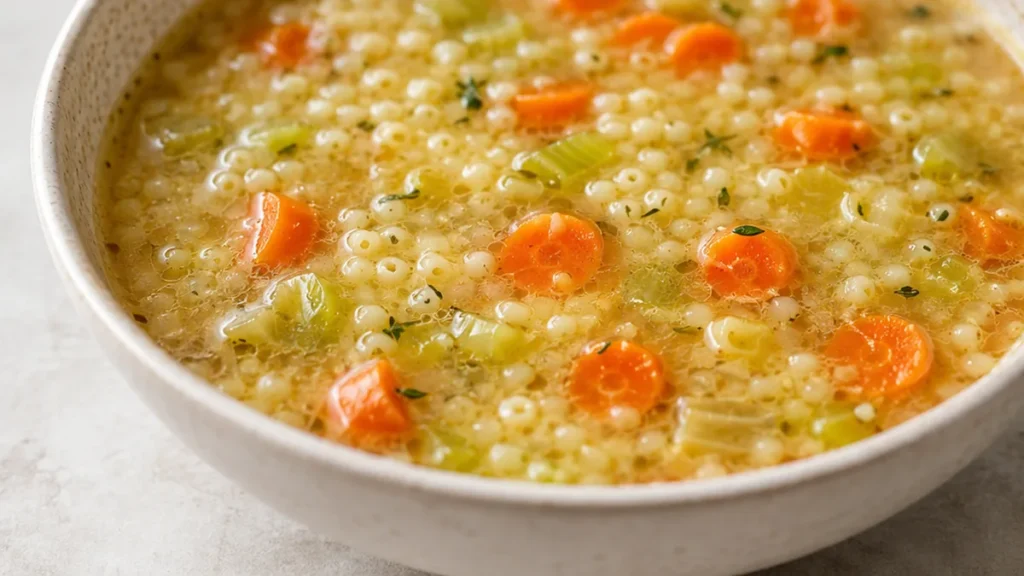
Pastina soup is often associated with nostalgic comfort, a gentle hug in a bowl that warms from the inside out. This recipe elevates that classic feeling, transforming simple ingredients into a deeply flavorful and surprisingly sophisticated dish. The secret lies in simmering the vegetables to perfect tenderness before pureeing them into a velvety base, creating a richness that belies its simplicity. The parmesan rind adds real depth to the broth; it is a small detail that makes a difference. This pastina soup is perfect for a light yet satisfying dinner, a soothing remedy on a cold day, or a nourishing meal when you need something easy on the stomach. It’s a versatile dish that appeals to all ages, bringing warmth and flavor to your table.
Key takeaways
- Infuse the broth deeply with aromatics and a parmesan rind for maximum flavor.
- Cook the pastina directly in the broth until just tender to allow it to absorb flavor.
- Finish with fresh lemon juice to balance richness and brighten the soup.
- Season generously with salt and pepper throughout the cooking process.
Cozy Pastina Soup: Your Ultimate Comfort Bowl
Ingredients
- 8 cups chicken stock or bone broth
- 2 small-medium sized carrots (peeled then roughly chopped)
- 2 ribs celery (roughly chopped)
- 1 large shallot OR small yellow onion (peeled then roughly chopped)
- 2 cloves garlic (peeled then smashed)
- 2-3 sprigs fresh thyme
- 1 bay leaf
- 1 parmesan cheese rind
- drizzle extra virgin olive oil
- salt and pepper
- 1 cup pastina pasta
- 1/2 fresh lemon
- freshly grated parmesan cheese for serving
- freshly cracked black pepper for serving
Instructions
- To a large soup pot or Dutch oven add the chicken stock or bone broth, carrots, celery, onion/shallots, garlic, fresh thyme, bay leaf, parmesan cheese rind, extra virgin olive oil, salt, and pepper. Place a lid on top then turn the heat to high to bring the liquid to a boil. Once boiling, turn the heat down to low then simmer with the lid on for 20-30 minutes or until the vegetables are very tender.
- Remove the thyme stems, bay leaf, and parmesan cheese rind then transfer the cooked vegetables into a blender. Add a ladleful of broth then blend until the vegetables are very, very smooth. Note: be sure to crack the lid of the blender open to allow steam to escape. Pour some or all of the pureed vegetables back into the soup then stir to combine. Alternatively you can use an immersion blender to puree the vegetables in the pot.
- Add a squeeze of fresh lemon juice “,” the soup shouldn taste lemony, just brightened “,” then taste and add additional salt and pepper to taste. Place a lid on top to keep the soup warm while you cook the pasta.
- Cook the pastina pasta in a pot of salted, boiling water according to package directions then drain and divide between bowls. Scoop the soup over the cooked pasta then serve with freshly grated parmesan cheese and freshly cracked black pepper.
Notes
The Technique That Makes It: Flavor Infusion and Pasta Hydration
The magic of this simple pastina soup lies in two key areas: deep flavor infusion from the aromatics and the parmesan rind, and the perfect hydration of the pastina. We start by gently simmering the chicken stock (or bone broth) with foundational aromatics like carrots, celery, shallot (or onion), and garlic. This low-and-slow approach allows their flavors to meld and deepen without becoming harsh. The addition of fresh thyme, a bay leaf, and crucially, a parmesan cheese rind, elevates the broth from basic to complex. The rind, often discarded, is a treasure trove of umami and savory notes that dissolve slowly into the liquid, enriching its profile significantly. This simmering process, ideally for at least 20-30 minutes, is essential for extracting maximum flavor.
The second critical element is the pastina itself. Pastina, meaning ‘little flour’ in Italian, refers to tiny pasta shapes. Cooking it directly in the flavorful broth ensures each tiny piece absorbs the savory liquid, becoming a flavor delivery system rather than just a neutral filler. It’s crucial to add the pastina towards the end of the cooking time, typically only 7-10 minutes depending on the specific shape, to achieve a tender but not mushy texture. Overcooking pastina leads to a gummy, unpleasant consistency. The final squeeze of lemon juice is not just for brightness; its acidity helps to cut through the richness of the broth and cheese, balancing the overall flavor profile and making the soup feel lighter and more refreshing.
Troubleshooting
- Problem: Broth tastes bland. Fix: Ensure you simmered the aromatics and parmesan rind for sufficient time (at least 20 minutes) to extract flavors. Add more salt, or consider a splash of soy sauce or fish sauce for extra umami.
- Problem: Pastina is mushy or gummy. Fix: You likely overcooked the pasta. Add pastina later in the cooking process, adhering to the package directions for al dente, and stir occasionally to prevent sticking.
- Problem: Soup is too thin. Fix: While this is a broth-based soup, you can thicken it slightly by mashing some of the cooked carrots against the side of the pot, or by adding a small amount of cornstarch slurry (1 tsp cornstarch mixed with 2 tsp cold water) and simmering for another minute.
- Problem: Soup lacks depth. Fix: Ensure you used a good quality stock or broth. The parmesan rind is key for umami; if you don’t have one, consider adding a tablespoon of nutritional yeast or a dash of Worcestershire sauce.
Substitutions
- Chicken Stock/Bone Broth: Vegetable broth can be used for a vegetarian option. The flavor will be lighter, so consider adding more herbs or a pinch of smoked paprika for depth.
- Shallot/Yellow Onion: A white onion or even leeks (white and light green parts only) can be substituted. Each will impart a slightly different aromatic profile.
- Parmesan Rind: If unavailable, a tablespoon of nutritional yeast or a teaspoon of miso paste can add a comparable umami boost, though the flavor won’t be identical.
- Pastina: Any very small pasta shape like orzo, ditalini, or acini di pepe can be used. Adjust cooking time according to package directions.
Pro tips
- For an extra rich broth, use homemade chicken bone broth. The collagen adds body and a deeper flavor.
- When blending the hot soup, fill the blender only halfway, secure the lid, and hold it firmly with a towel while blending on low, gradually increasing speed. This prevents steam buildup and potential splashes.
- Don’t skip the lemon juice! It brightens the soup without making it taste overtly lemony, enhancing all the other flavors. Just a small squeeze brightens the entire dish.
- Leftover pastina soup can be stored in an airtight container in the refrigerator for up to 3 days. Store the cooked pastina separately from the broth to prevent it from getting too mushy.
This Pastina Soup recipe offers a delightful blend of simplicity and profound flavor. Experiment with different small pasta shapes if pastina isn’t available, or add a touch of fresh herbs like parsley at the end for an extra burst of freshness. Enjoy this comforting classic!
Frequently asked questions
Can I make this soup ahead of time?
Yes, you can make the broth base ahead of time and store it in the refrigerator for up to 3 days. Add the pastina and cook it just before serving to prevent it from becoming mushy. Reheat the broth gently before adding the pasta.
What kind of pastina is best?
Many tiny pasta shapes work well, such as acini di pepe, orzo, stelline (little stars), or ditalini. Choose a shape that cooks quickly, typically within 7-10 minutes, to avoid overcooking.
Is the parmesan rind essential?
While not strictly essential, the parmesan rind adds a significant depth of savory flavor (umami) to the broth that is difficult to replicate otherwise. If you omit it, consider adding nutritional yeast or a touch of miso for a similar savory note.
Can I add vegetables to this soup?
Absolutely. You can add other finely diced vegetables like peas, corn, or spinach during the last few minutes of cooking. Ensure they are cut small enough to cook quickly and complement the tiny pastina.
More from Gluten-Free Dinners & Mains →