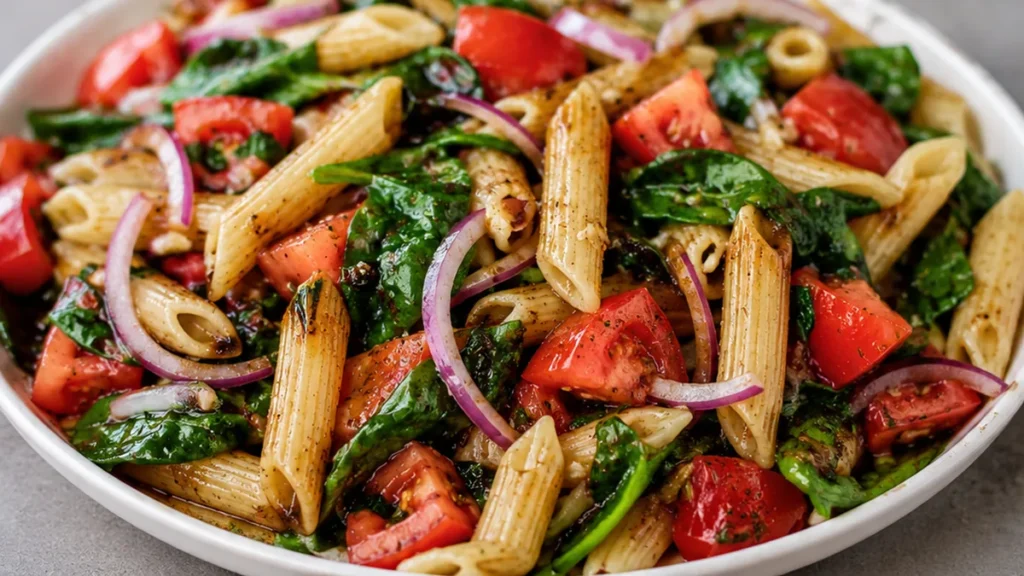
Pasta Fresca is the quintessential fresh, vibrant dish perfect for busy weeknights, capturing the essence of simple ingredients handled with care. This recipe for pasta fresca emphasizes fresh, quality produce and a quick cooking method to deliver maximum flavor with minimal effort. It’s a fantastic way to enjoy a light yet satisfying meal that comes together in less than 30 minutes. Pasta fresca is a good answer for a hectic weeknight when you need something quick and nourishing. The way the fresh tomatoes release their juices to form a light sauce with the balsamic vinaigrette, combined with the quick wilt of spinach, makes this dish incredibly satisfying without being heavy. It’s a testament to how humble ingredients can create something truly spectacular.
Key takeaways
- Cook tomatoes down to form sauce base
- Manage heat to prevent burning garlic and onions
- Add pasta cooking water or more vinaigrette if sauce is too dry
- Spinach wilts quickly, add at the end
Fresh & Flavorful Pasta Fresca
Ingredients
- 12 oz gluten free penne pasta
- 2 tablespoons extra virgin olive oil
- 1 small or 1/2 large red onion (thinly sliced)
- salt and pepper
- 6 cloves garlic (pressed or minced)
- 1 lb vine-ripened tomatoes OR Roma tomatoes (seeded then chopped)
- 5 oz baby spinach (roughly chopped)
- 1/4 cup + 2 Tablespoons Balsamic Vinaigrette
- shredded parmesan cheese or crumbled feta cheese (to taste)
Instructions
- Bring a large pot of water to a boil then season generously with salt and add penne. Cook until al dente then drain pasta and set aside. Keep the cooking pot out as you
- When the pasta is halfway done cooking, heat extra virgin olive oil in a large, 12
- Add garlic then saute until very fragrant and light golden brown, 1-2 minutes, being very careful to not let it burn. Add tomatoes then saute until they begin to soften, 1 minute, using the juices to help scrape up any brown bits from the bottom of the skillet.
- Add baby spinach then saute until it begins to wilt, 1 minute
- Place the pasta cooking pot back over low heat then add Balsamic Vinaigrette, drained pasta, and spinach mixture then stir until the dish is heated through and spinach is tender. Scoop into bowls then top with parmesan or feta cheese.
Notes
The technique that makes it
The success of this Pasta Fresca hinges on two key elements: proper tomato breakdown and achieving the right sauce consistency. Unlike traditional pasta where starch release is maximized by cooking pasta directly in sauce, this recipe uses gluten-free penne, which behaves differently. The key is to allow the chopped tomatoes to cook down and release their juices, creating a natural base for the sauce. Sautéing the onions and garlic first builds an aromatic foundation. When the tomatoes are added, the heat should be managed to encourage them to soften and burst, releasing pectin and water. This liquid, combined with the balsamic vinaigrette, will form the emulsion that coats the pasta. Avoid high heat once the tomatoes are in, as this can cause them to scorch rather than break down. The final addition of spinach wilts quickly, adding moisture and a fresh element without overcooking. The gluten-free pasta, cooked separately, should be added to this sauce base and tossed gently to coat, allowing it to absorb some of the sauce’s flavor without becoming mushy.
Troubleshooting
- Problem: Sauce is too watery. Fix: Simmer the sauce uncovered for a few extra minutes after adding the tomatoes, allowing excess moisture to evaporate before adding the pasta.
- Problem: Sauce is too dry or sticky. Fix: Add a splash of the pasta cooking water (if you reserved some) or a little more balsamic vinaigrette to loosen the sauce and help it coat the pasta.
- Problem: Garlic is burnt and bitter. Fix: Ensure the garlic is added in the last minute of sautéing the onions, or add it with the tomatoes to prevent it from cooking too quickly and burning.
- Problem: Tomatoes are still firm and not breaking down. Fix: Reduce the heat slightly and cover the pan for a few minutes after adding the tomatoes to help them soften and release their juices more effectively.
Substitutions
- Tomatoes: Cherry or grape tomatoes can be used. Halve them instead of chopping. They will break down similarly but may require slightly less cooking time.
- Onion: Shallots can be substituted for red onion. Use 2-3 shallots, thinly sliced. They offer a milder, slightly sweeter flavor profile.
- Spinach: Arugula can be used for a peppery bite. Add it at the very end, as it wilts even faster than spinach.
- Balsamic Vinaigrette: A good quality balsamic vinegar can be used, but you may need to adjust the quantity and add a pinch of sugar to balance the acidity, as vinaigrettes often contain oil and sweetener.
Pro tips
– Don’t overcook your pasta! Al dente is key for this dish to prevent it from becoming mushy when tossed with the sauce. – To ensure your spinach doesn’t get soggy, add it last and cook just until it begins to wilt. If your pasta is still cooking, remove the skillet from heat to prevent overcooking the spinach. – If you’re using feta cheese, ensure it’s crumbled fresh for the best texture and tangy flavor that complements the tomatoes and balsamic beautifully.
This Pasta Fresca recipe is a delightful celebration of fresh flavors and quick cooking. Try it tonight for a meal that’s both satisfying and light, perfect for any occasion. Don’t forget to customize with your favorite cheese or a sprinkle of fresh herbs!
Frequently asked questions
Can I use regular wheat pasta instead of gluten-free?
Yes, you can substitute regular wheat pasta like penne or rotini. Cook it according to package directions and reserve some pasta water before draining. The gluten in wheat pasta will release more starch, potentially making the sauce slightly thicker, so the reserved water can help adjust consistency if needed.
My tomatoes aren’t breaking down. What should I do?
Ensure you are using ripe tomatoes, as they break down more easily. Reduce the heat slightly after adding them and consider covering the pan for a few minutes. This gentle steaming helps soften the tomatoes and encourages them to release their juices, forming the sauce base.
Is it okay to add the spinach earlier?
It’s best to add the spinach towards the very end of cooking. It wilts very quickly and adding it too early can result in overcooked, mushy greens. Adding it just before tossing with the pasta ensures it retains some freshness and vibrant color.
What kind of balsamic vinaigrette works best?
A standard store-bought or homemade balsamic vinaigrette works well. Look for one with a good balance of acidity and sweetness. If your vinaigrette is very sharp, you might need slightly more, or a tiny pinch of sugar added to the sauce to mellow the flavor.
More from Gluten-Free Pasta & Pizza →