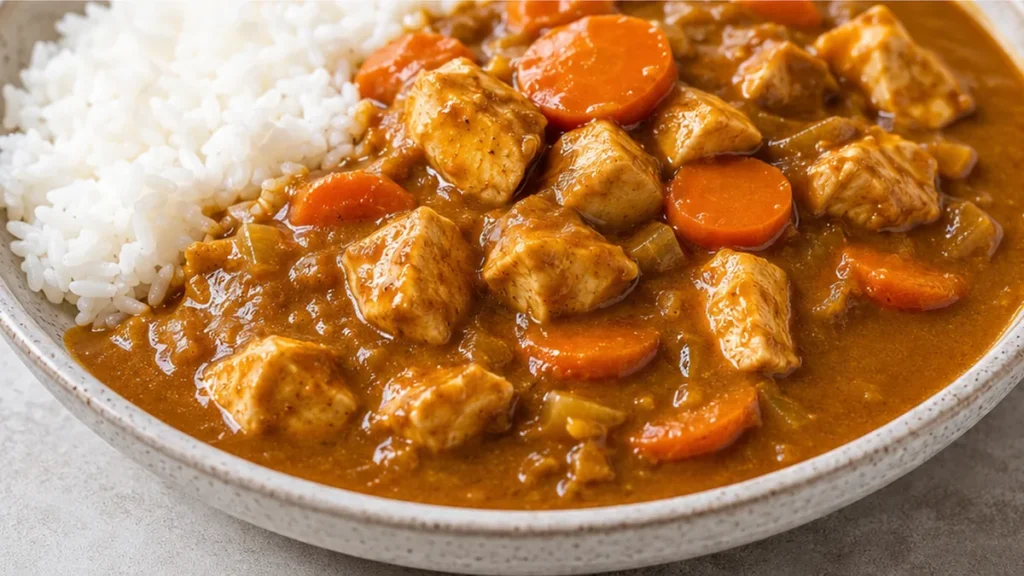
The secret to a truly satisfying Japanese curry lies in balancing the deep umami with aromatic spices, even when making it gluten-free. This Japanese curry recipe focuses on achieving that rich flavor profile without traditional wheat flour, making it accessible for everyone. A gluten-free roux can be tricky: getting the right color without burning the rice flour takes care. Low and slow is the key here. This recipe uses a rice flour-based roux and a careful blend of spices to deliver that authentic taste and creamy texture, perfect for a cozy dinner.
Key takeaways
- The roux is essential for thickening and flavor.
- Proper spice blooming enhances aroma.
- Control cooking temperature to avoid burning.
- Adjust seasoning to suit personal taste.

Gluten-Free Japanese Curry in 30 Mins
Ingredients
- 2 tbsp unsalted butter
- 3 tbsp rice flour
- ¾ tbsp Japanese curry powder
- ¾ tbsp garam masala
- ½ tsp cayenne pepper powder, optional
- 2 tbsp vegetable oil
- 1 pound boneless, skinless chicken breast, cut into 1 ½ inch cubes
- 1 tsp freshly grated ginger
- 3 cloves garlic, finely minced
- 3 small carrots, cut into ½” thick half moon discs
Instructions
- Preheat a small saucepan over low heat. Add butter and melt completely. Add rice flour and combine. Keep stirring until the paste is getting golden brown.
- Add curry powder, garam masala and cayenne pepper powder. Mix well and cook for 15-20 seconds.
- Turn off the heat and transfer the roux into a medium bowl. Set aside.
- In a dutch oven, heat vegetable oil over medium to high heat. Cook the chicken breast until the sides are getting browned.
- Turn the heat to low and add ginger and garlic. Cook until fragrant.
- Add carrots and chicken broth. Turn the heat to medium and cook until they begin to boil.
- Once they boil, turn the heat into low and let them simmer for 5-10 minutes or until 50% cooked.
- Take 1 ladle of the cooking liquid from the dutch oven, pour into the roux, add gluten-free soy sauce and stir until the roux is fully dissolved.
Video
Notes
The technique that makes it
To achieve the rich and comforting flavor of Japanese curry, the key technique lies in the proper use of the roux, which is created by combining butter and rice flour. This roux serves as a thickening agent and flavor base for the curry. Cooking the butter until it bubbles and then adding the rice flour allows the starches to gelatinize, creating a smooth texture. The spices, including Japanese curry powder and garam masala, should be added to the roux to bloom their flavors, releasing their essential oils and enhancing the overall aroma of the dish. Additionally, maintaining the right cooking temperature is crucial; too high can scorch the roux, while too low can prevent proper flavor development.
Troubleshooting
- Issue: The curry is too thick.
Fix: Gradually add more liquid (water or broth) to reach your desired consistency, stirring continuously to integrate. - Issue: The flavor is bland.
Fix: Add a pinch of salt or a splash of soy sauce to enhance the umami and overall flavor profile. - Issue: The chicken is tough.
Fix: Ensure you are not overcooking the chicken. Cook just until it is no longer pink and tender, about 5-7 minutes. - Issue: The curry lacks depth.
Fix: Incorporate a splash of apple cider vinegar or a dash of sugar to balance the flavors and add complexity.
Substitutions
- Rice flour: Use cornstarch for a gluten-free option, although it may yield a slightly different texture.
- Chicken breast: Substitute with firm tofu for a vegetarian version, ensuring it is pressed to remove excess moisture.
- Vegetable oil: Can be replaced with coconut oil for a subtle tropical flavor.
- Carrots: Sweet potatoes can be used instead, providing a sweeter and creamier texture when cooked.
Pro tips
- For the roux, stir constantly to prevent burning and ensure an even golden brown color. Don’t rush this step.
- To ensure your chicken breast is fully cooked and safe, aim for an internal temperature of 165°F (74°C). Use a meat thermometer for accuracy.
- This curry can be stored in an airtight container in the refrigerator for up to 3 days. Reheat gently on the stove with a splash of water or broth to maintain consistency.
This gluten-free Japanese curry offers a comforting and flavorful meal that’s perfect for any occasion. Experiment with different vegetables or add a touch of honey for extra sweetness. Enjoy this delightful dish!
Frequently asked questions
Can I make this curry vegetarian?
Yes, you can easily make this curry vegetarian by substituting the chicken with firm tofu or chickpeas. Just ensure to adjust the cooking time accordingly to ensure the tofu is heated through or the chickpeas are tender.
How can I store leftovers?
Leftover Japanese curry can be stored in an airtight container in the refrigerator for up to 3 days. You can also freeze it for up to 3 months. Reheat thoroughly before serving.
What can I serve with Japanese curry?
Japanese curry is often served over steamed rice, but you can also pair it with naan, bread, or even a side of pickled vegetables for added flavor contrast.
Is Japanese curry spicy?
Japanese curry is generally mild compared to other curry types. However, you can adjust the spice level by adding cayenne pepper or using a spicier curry powder if you prefer more heat.
More from Gluten-Free Dinners & Mains →