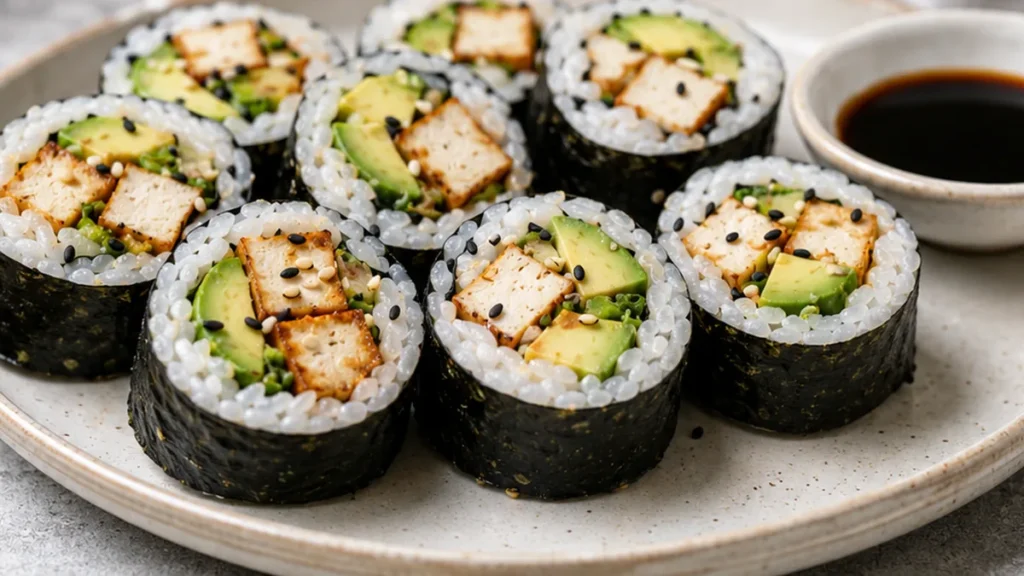
The art of making perfect gluten-free sushi at home relies heavily on mastering the rice, ensuring it’s seasoned just right and sticky enough to hold its shape. This gluten-free sushi recipe makes it achievable for everyone, bringing the joy of rolling your own flavorful creations right to your kitchen. I’ve found that using quality Japanese short-grain rice makes all the difference for that authentic texture. This recipe guides you through both vegan and shrimp options, allowing for versatility to suit various tastes and dietary preferences.
Key takeaways
- Properly rinse and cook sushi rice for optimal stickiness.
- Seasoning with vinegar and sugar enhances flavor and binding.
- Use a sharp, wet knife to slice rolls cleanly.
- Lightly toast nori for improved texture and flavor.
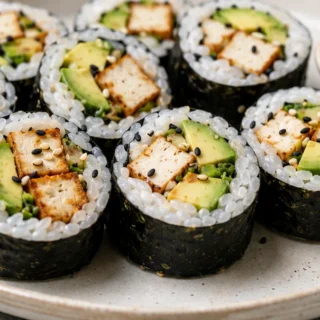
Gluten-Free Sushi Rolls Recipe
Ingredients
- 1 cup sushi rice, Japanese short grain rice
- 1 1/2 cups water
- 3 tbsp unseasoned rice vinegar
- 1/2 tsp superfine sugar
- 2 tsp tamari sauce
- 6 nori sheets
- 2 carrots, boiled and cut into long strips
- 1 avocado, cut into thin slices
- 1 cucumber, cut into long strips
- 1/2 cup toasted tofu
- 6 shrimp tempura
Instructions
- Cook 1 cup of sushi rice with 1 1/2 cups of water in a rice cooker until tender.
- In a bowl, mix the cooked rice with 3 tbsp rice vinegar, 1/2 tsp superfine sugar, and 2 tsp tamari sauce. Cover with a clean kitchen towel for 10 minutes.
- For vegan sushi: Place a nori sheet on a sushi bamboo mat. Spread 1/4 cup of seasoned sushi rice over 3/4 of the nori. Arrange carrot, avocado, cucumber, and toasted tofu strips. Lightly brush the far end of the nori with water, then tuck and roll tightly using the mat. Gently press to shape, brush with sesame oil, and slice into 6 pieces.
- For shrimp sushi: Place a nori sheet on a sushi bamboo mat. Spread 1/4 cup of seasoned sushi rice over 3/4 of the nori. Arrange carrot, avocado, cucumber, and 6 shrimp tempura. Lightly brush the far end of the nori with water, then tuck and roll tightly using the mat. Gently press to shape, brush with sesame oil, and slice into 6 pieces.
- Sprinkle all sushi rolls with sesame seeds and serve immediately with extra tamari sauce for dipping.
Notes
– If your nori sheets feel brittle, lightly mist them with water before adding rice to make them more pliable.
– When rolling, I always ensure a tight, even press with the bamboo mat to prevent the rolls from falling apart when sliced.
– Store leftover sushi rolls tightly wrapped in plastic in the refrigerator for up to 1 day. Note that the nori may soften over time. Nutrition information is an estimate, calculated automatically. Values vary with brands, substitutions and portion sizes.
The Technique That Makes It
Creating gluten-free sushi rolls hinges on mastering the sushi rice preparation. The rice must be rinsed thoroughly to remove excess starch, which helps achieve the desired sticky texture. The ratio of rice to water is crucial; using 1 cup of sushi rice to 1.5 cups of water ensures proper hydration. After cooking, the rice should be seasoned with a mixture of unseasoned rice vinegar, superfine sugar, and tamari sauce, which enhances flavor and aids in binding the rice together.
Troubleshooting
- Problem: Sushi rice is too dry.
Fix: Ensure you use the correct water-to-rice ratio and let the rice steam after cooking for an additional 10 minutes with the lid on. - Problem: Rolls fall apart when slicing.
Fix: Make sure the rice is sticky enough and that you are using a sharp, wet knife to slice through the rolls. - Problem: Nori sheets are too tough or chewy.
Fix: Lightly toast the nori before rolling to enhance flavor and make it more pliable. - Problem: The flavor is bland.
Fix: Adjust the seasoning by adding more tamari or a pinch of salt to the rice mixture.
Substitutions
- Rice: Use quinoa instead of sushi rice for a different texture, but be aware it won’t have the same stickiness.
- Tofu: Substitute with grilled chicken or shrimp if you prefer a non-vegetarian option.
- Vegetables: Replace carrots with bell peppers or radishes for a crunchy alternative.
- Nori sheets: Use rice paper for a different wrapping method, which will change the texture and flavor profile.
Pro tips
- For perfectly sticky rice, avoid over-mixing once the vinegar mixture is added; gently fold it in.
- If your nori sheets feel brittle, lightly mist them with water before adding rice to make them more pliable.
- When rolling, I always ensure a tight, even press with the bamboo mat to prevent the rolls from falling apart when sliced.
- Store leftover sushi rolls tightly wrapped in plastic in the refrigerator for up to 1 day. Note that the nori may soften over time.
Experiment with different fillings like mango or smoked salmon to customize these gluten-free sushi rolls. Enjoy the process of creating your own fresh and delicious sushi at home!
Frequently asked questions
Can I use regular rice instead of sushi rice?
Regular rice does not have the same sticky quality as sushi rice, which is essential for forming rolls. If you need a gluten-free option, consider using short-grain brown rice as an alternative, but the texture will differ.
How do I store leftover sushi rolls?
Leftover sushi rolls can be stored in an airtight container in the refrigerator for up to 24 hours. However, the rice may dry out, so it’s best to consume them fresh.
What can I use instead of shrimp tempura?
If you prefer a different protein, consider using grilled chicken, tofu, or even crab meat for a variation. Just ensure that the substitute is cooked and seasoned appropriately.
Is there a vegan alternative for the shrimp tempura?
Yes, you can use crispy fried vegetables like sweet potato or zucchini as a vegan substitute for shrimp tempura, adding a delightful crunch to your sushi rolls.
More from Gluten-Free Dinners & Mains →