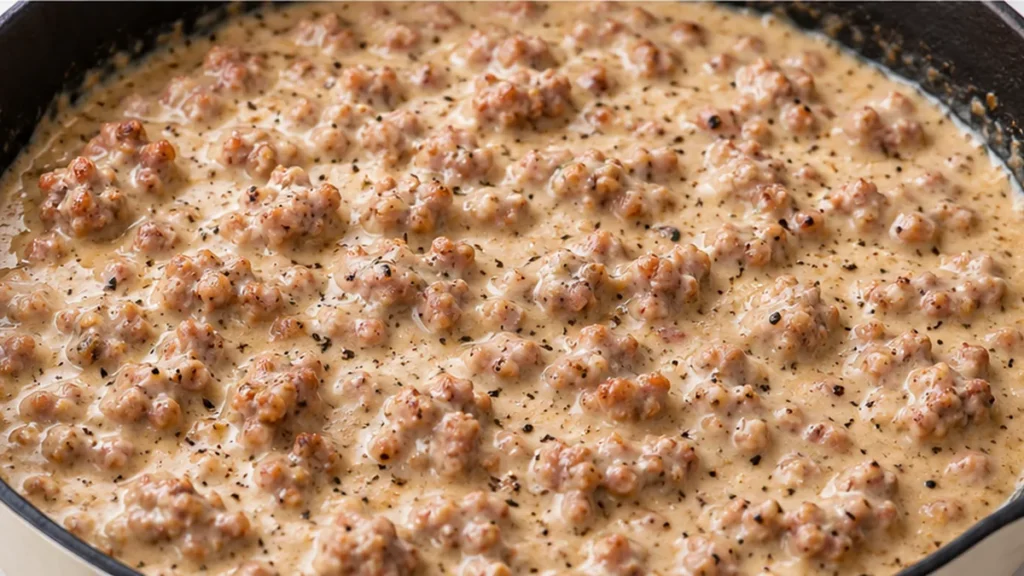
Gluten free sausage gravy recipe offers a simple and hearty option for breakfast or brunch. Made with turkey sausage, it’s perfect for a comforting meal.
Key takeaways
- Properly brown the sausage for rich flavor.
- Use a 1:1 fat to flour ratio for ideal gravy consistency.
- Substituting gluten-free flour is essential for texture.
- Season well to enhance the overall flavor profile.
Gluten-Free Sausage Gravy Recipe
Ingredients
Instructions
- In a large skillet over medium heat, cook the sausage until fully browned.
- Sprinkle the gluten-free flour, black pepper, nutmeg, and sage over the sausage and stir until absorbed.
- Gradually add the milk while stirring constantly, scraping up bits from the pan.
- Simmer for 5–7 minutes, stirring frequently, until the gravy thickens.
- Season with salt to taste and serve hot over biscuits or potatoes.
Understanding the Base of Sausage Gravy
The foundation of a great gluten-free sausage gravy lies in the quality of the sausage and the technique used to create the gravy base. The key to achieving a rich flavor is the Maillard reaction, which occurs when the sausage is browned properly. This process not only enhances the flavor but also contributes to the color of the gravy. Aim for a cooking temperature of around 190°C (375°F) to properly brown the sausage, ensuring a crispy texture while rendering enough fat for the gravy.
Common Issues and Their Solutions
Many home cooks encounter issues while preparing sausage gravy. Here are some common problems and their solutions:
- Gravy is too thin: This can occur if there isn’t enough fat or flour. A good rule of thumb is to use a ratio of 1:1 for fat to flour. If your gravy is too thin, add a slurry of cornstarch and water to thicken it up.
- Gravy is too thick: If your gravy is overly thick, gradually whisk in more milk until you reach your desired consistency. This allows for better control over the thickness.
- Gravy lacks flavor: Ensure you season properly with salt and pepper, and consider adding a splash of Worcestershire sauce for depth. Fresh herbs like thyme can also elevate the flavor profile.
- Sausage is undercooked: Always ensure the sausage is browned and reaches an internal temperature of at least 74°C (165°F) to ensure food safety.
Ingredient Swaps and Their Effects
When making gluten-free sausage gravy, substitutions can be made without compromising flavor. Here are some effective swaps:
- Gluten-free flour for all-purpose flour: This swap is essential for gluten-free gravy. Use a blend of rice flour and tapioca starch for a smooth texture.
- Plant-based sausage for traditional sausage: This can be a great option for a vegetarian or vegan version. The flavor will differ, but spices can be adjusted to mimic traditional sausage.
- Heavy cream instead of milk: Using heavy cream will yield a richer and creamier gravy. However, this will increase the calorie content significantly.
- Chicken broth instead of milk: This will create a lighter gravy but may alter the traditional flavor profile. Adding a touch of cream can help balance this.
Unique Characteristics of Gluten-Free Sausage Gravy
What sets gluten-free sausage gravy apart from its traditional counterpart is the flour used to thicken it. Gluten-free flour can sometimes result in a different texture, often requiring more liquid to achieve the desired consistency. This dish typically pairs well with biscuits or can be served over rice or potatoes, making it versatile for various dietary needs. Additionally, gluten-free sausage gravy is often more forgiving in terms of seasoning since the spices can shine through more distinctly without the gluten masking them.
Understanding the Impact of Ingredient Quality on Flavor
The quality of the ingredients used in your gluten-free sausage gravy can significantly affect the final flavor profile. For instance, the type of sausage you choose plays a crucial role; fresh, high-quality sausage will yield a richer and more robust flavor compared to pre-packaged options. Look for sausages that are minimally processed and contain natural spices, as these will enhance the overall taste. Additionally, the fat content in the sausage is important—higher fat content can lead to a creamier gravy. The choice of gluten-free flour can also impact the texture and flavor; some flours may impart a nuttier taste or alter the thickness of the gravy. For best results, use a blend that mimics the properties of all-purpose flour.
Scaling the Recipe for Special Occasions
When planning to serve gluten-free sausage gravy for a larger group, scaling the recipe can be straightforward, but there are a few considerations. As a general rule, you can multiply the ingredient amounts by the number of servings desired. However, be mindful of the cooking vessel size; using a pot that is too small can lead to uneven cooking and splattering. Additionally, when doubling or tripling the recipe, keep an eye on the cooking time, as larger quantities may take longer to heat through. Adjust the seasoning gradually, tasting as you go to ensure the flavors remain balanced. This approach will help maintain the integrity of the dish, ensuring it remains delicious no matter the size of your gathering.
Optimal Equipment for Perfect Texture
The equipment you use can significantly influence the texture of your gluten-free sausage gravy. A heavy-bottomed skillet or saucepan is ideal for even heat distribution, which helps prevent scorching and allows for proper browning of the sausage. A whisk is essential for breaking up any lumps in the gravy, especially when incorporating the gluten-free flour. For a creamier texture, consider using an immersion blender to smooth out the gravy after cooking. If you prefer a chunkier consistency, simply stir gently to maintain some sausage pieces intact. Additionally, using a lid can help control the thickness of the gravy; covering the pot can trap steam and thicken the sauce more quickly.
Pairing Suggestions for a Complete Meal
Gluten-free sausage gravy is a versatile dish that pairs well with various sides to create a satisfying meal. Traditional accompaniments include biscuits or gluten-free bread, which are perfect for soaking up the rich gravy. For a heartier breakfast, consider serving it alongside scrambled eggs or a vegetable frittata. If you’re looking for something lighter, roasted vegetables or a fresh salad can balance the richness of the gravy. Additionally, consider adding a splash of hot sauce or a sprinkle of fresh herbs, like parsley or chives, to enhance the flavor profile and add a pop of color to your dish. The key is to create a balanced plate that complements the savory notes of the sausage gravy.
How to Properly Store and Reheat Gluten-Free Sausage Gravy
Storing gluten-free sausage gravy requires careful attention to maintain its texture and flavor. After cooking, allow the gravy to cool to room temperature before transferring it to an airtight container. It can be stored in the refrigerator for up to three days. For longer storage, consider freezing the gravy. When freezing, use a freezer-safe container, leaving some space at the top for expansion. Properly stored, it can last for up to three months in the freezer.
When reheating, avoid using high heat, which can cause the gravy to separate. Instead, reheat gently on the stovetop over low heat, stirring frequently until warmed through. If the gravy appears too thick after refrigeration or freezing, add a splash of milk or broth to restore its creamy consistency.
Scaling the Recipe for Larger Gatherings
Scaling your gluten-free sausage gravy recipe is straightforward, but it’s essential to maintain the right proportions for optimal flavor and texture. For every additional serving, increase the amount of sausage and gluten-free flour proportionally. A common ratio is 1 tablespoon of gluten-free flour for every cup of liquid added. Ensure to adjust the spices as well; a good rule of thumb is to add about 1/4 teaspoon of salt and pepper for every additional serving to keep the flavor balanced.
When preparing a larger batch, consider using a larger pot to prevent overcrowding, which can lead to uneven cooking. Additionally, if you’re making a significant quantity, it might be beneficial to prepare the sausage in batches to ensure even browning and flavor development. Always taste and adjust seasoning as you scale up, as larger quantities may require slight modifications to achieve the desired taste.
Understanding the Best Practices for Making Gluten-Free Sausage Gravy Ahead of Time
Preparing gluten-free sausage gravy in advance can enhance its flavor and convenience. When making it ahead of time, the key is to ensure proper storage and reheating. After cooking, allow the gravy to cool to room temperature before transferring it to an airtight container. It can be refrigerated for up to three days or frozen for up to three months. When reheating, use low heat to avoid separating the fat and liquid. Stir frequently and add a splash of milk or broth to restore its creamy consistency. This method allows the spices and flavors to meld, creating an even richer taste.
Adjusting Seasoning and Texture When Scaling the Recipe
Scaling a gluten-free sausage gravy recipe requires careful attention to seasoning and texture. When doubling or halving the recipe, maintain the same ratios of sausage to liquid for a balanced flavor. However, taste adjustments may be necessary, as the intensity of spices can vary based on batch size. For instance, if doubling, consider adding slightly less than double the seasoning initially, then adjust to taste. Additionally, when increasing the batch size, the gravy may thicken differently; adding a bit more liquid gradually can help achieve the desired consistency. Monitor the gravy closely as it cooks, especially if using different brands of gluten-free flour, which can absorb moisture differently.
Pro tips
Pro tip: Best served immediately while hot!
Frequently asked questions
Can I use any type of sausage for this recipe?
Yes, you can use any type of sausage, but for the best flavor, choose a sausage with a good fat content and spices that you enjoy. Gluten-free options are also available.
What can I serve with gluten-free sausage gravy?
This gravy pairs well with gluten-free biscuits, rice, or even mashed potatoes. It’s a versatile dish that can complement various sides.
How can I make this recipe dairy-free?
To make gluten-free sausage gravy dairy-free, substitute milk with a plant-based milk like almond or oat milk and use a dairy-free butter alternative for the roux.
Can I make this gravy ahead of time?
Yes, you can make gluten-free sausage gravy ahead of time. Store it in an airtight container in the refrigerator for up to three days, and reheat gently on the stove.
More from Gluten-Free Breakfast & Brunch →