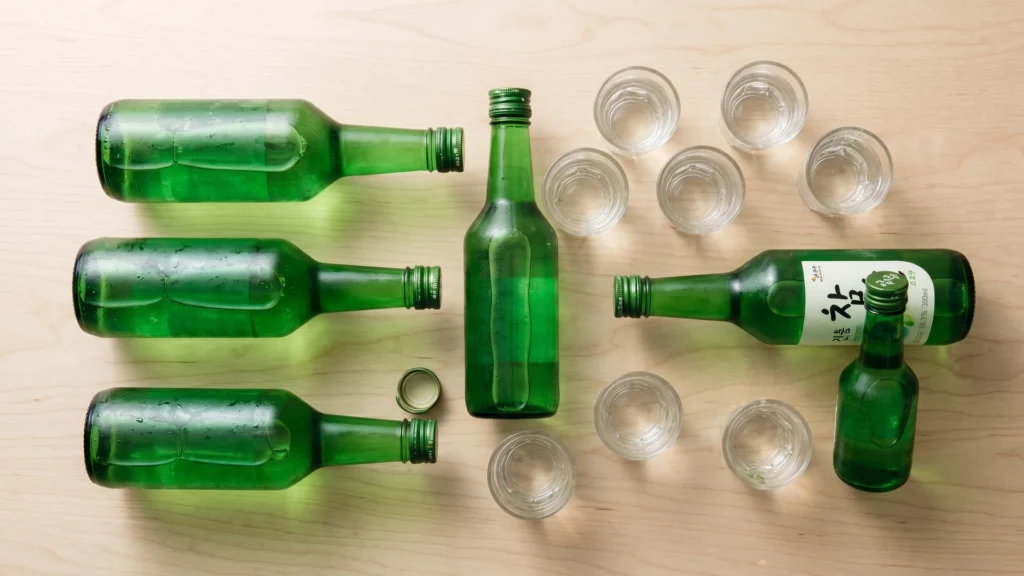
Is soju gluten free? The honest answer is: it depends entirely on what the soju is made from and how it is finished. Traditional soju distilled from rice is gluten free, and so is soju made from sweet potatoes, tapioca, or cassava, since none of those starches contain gluten. The complication is that most modern, mass-market soju, including the big green-bottle brands you see at Korean restaurants, is not made from rice at all. It is made from a neutral spirit distilled from a mix of starches that can include wheat or barley, then diluted and sweetened. Distillation removes gluten protein, which makes the resulting spirit technically gluten free by most standards, but added flavorings and the cross-contact concerns of grain-based production mean some people with celiac disease still approach these brands with caution. This guide breaks down exactly what is in your glass, which sojus are safest, and how to drink with confidence.
Soju sits in an awkward spot for the gluten-free drinker because it looks simple but hides real variation. A clear, slightly sweet spirit gives no visual clue about its base grain, and labels rarely spell out the source. Knowing how soju is made is what lets you make a smart call instead of a nervous guess.
The Short Answer
Pure rice soju is gluten free. Modern diluted soju is usually made from a neutral spirit that may include wheat or barley, but because it is distilled, it contains little to no gluten protein and meets the common gluten-free threshold. For most people with gluten sensitivity, distilled soju is fine. For people with celiac disease who react to trace gluten or to added flavorings, the safest path is to choose a soju explicitly distilled from rice or another naturally gluten-free starch, or one labeled gluten free. The two real risk points are not the alcohol itself but the additives and the cross-contact, so those are where your attention belongs.
What Soju Is Actually Made From
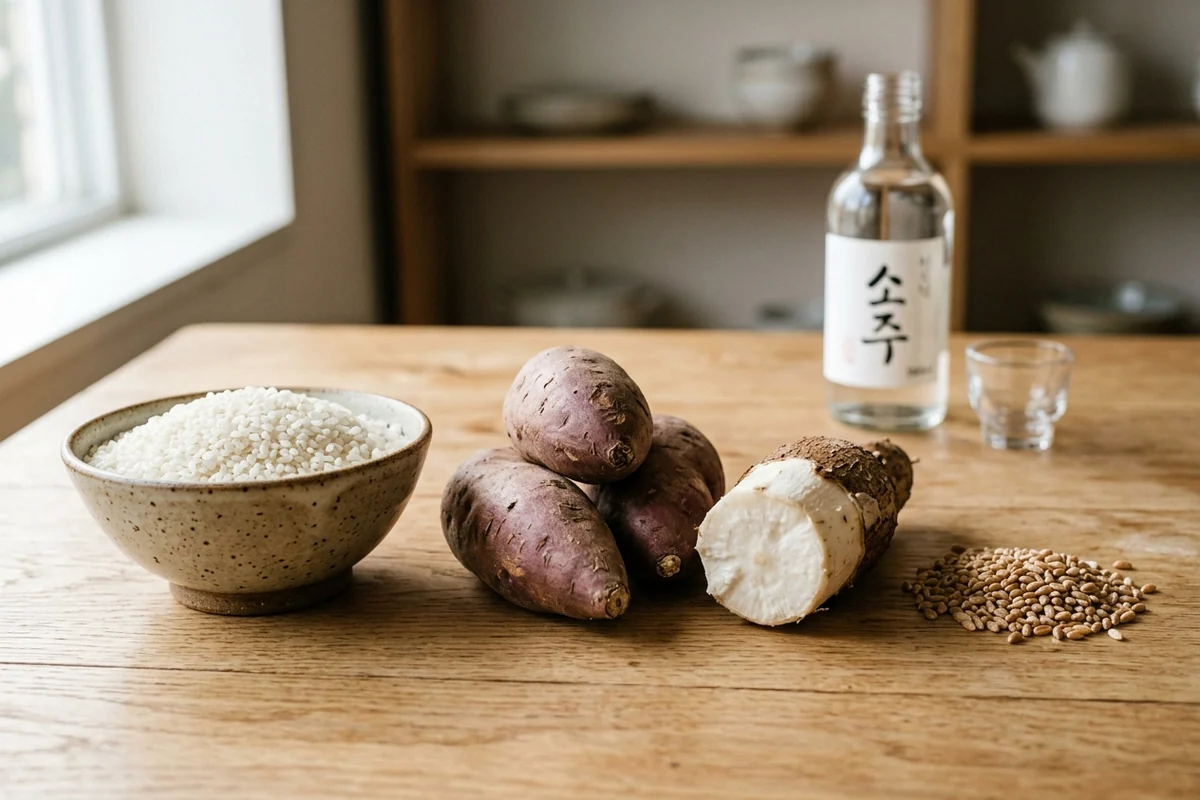
Soju is a clear Korean distilled spirit, usually bottled between 16 and 25 percent alcohol, which is lower than most Western spirits. Historically, soju was distilled from rice, and traditional or premium soju still is. During the twentieth century, when rice was scarce in Korea, producers switched to distilling from cheaper starches, and that practice stuck for the mass market. Modern everyday soju is typically a diluted spirit: a highly distilled neutral alcohol made from a blend of starches such as tapioca, sweet potato, rice, wheat, or barley, which is then cut with water and sweetened to a smooth, mildly sweet finish. The base starch blend varies by brand and even by batch, and it is rarely printed plainly on the label. This is the heart of the gluten question, because a soju distilled in part from wheat or barley started with a gluten-containing grain, even though distillation changes what ends up in the bottle.
Does Distillation Remove Gluten?
Distillation is the key concept for every gluten-free drinker. Gluten is a protein, and protein does not carry over into the vapor during distillation, so a properly distilled spirit, even one made from wheat or barley, contains no measurable gluten in the alcohol itself. By this logic, distilled soju made from grain is gluten free in the same way that most whiskey and grain vodka are considered gluten free. Major celiac organizations generally accept distilled spirits as safe even when made from gluten grains, because the distillation step removes the gluten protein. The catch is what happens after distillation. Anything added back to the spirit, flavorings, sweeteners, or colorings, was not distilled and can reintroduce gluten. With soju, the post-distillation additives are exactly where a careful drinker should look, since the spirit may be clean while a flavoring is not.
The Real Risks: Additives and Flavored Soju
The clearest soju risk is flavored varieties. The peach, grape, green apple, yogurt, and other fruit-flavored sojus that have become hugely popular are made by adding flavorings and sweeteners to the base spirit after distillation, and those additives are not guaranteed gluten free. A flavoring could be carried in a base that includes barley malt or another gluten source, which would reintroduce gluten that distillation had removed. Plain, unflavored soju is the safer choice for this reason, since it skips the post-distillation flavoring step. The second risk is added barley malt or malt-derived ingredients used for flavor or smoothness in some products, which is a direct gluten source that has nothing to do with the distillation of the base. The third, more subtle risk is cross-contact during bottling and handling at facilities that also process gluten-containing products, which matters most for people who react to trace amounts. None of these is a reason to assume all soju is unsafe, but together they explain why flavored soju deserves more caution than plain, and why label confirmation matters.
Rice Soju and Naturally Gluten-Free Options
The most reassuring soju for a gluten-free drinker is one distilled from rice or another naturally gluten-free starch, with no grain in the base at all. Traditional and premium sojus are more likely to be rice-based, and some craft and imported brands now market rice soju specifically, which sidesteps the wheat-and-barley question entirely. Soju made from sweet potato, tapioca, or cassava is likewise gluten free at the source. A growing number of brands also produce soju that is explicitly labeled gluten free, and some flavored sojus are formulated to be gluten free and say so on the bottle. When a product tells you plainly that it is rice-based or gluten free, you have removed the guesswork. The practical move is to favor these clearly-sourced options when you can find them, especially if you have celiac disease and prefer not to rely on the distillation argument alone.
How to Read a Soju Bottle and Ask the Right Questions
Soju labels are often less informative than wine or beer labels, so a short strategy helps. First, look for any explicit gluten-free statement, which is the strongest assurance when present. Second, check whether the base is identified: a bottle that says rice soju or lists rice, sweet potato, or tapioca as the source is safer than one that lists no base or names wheat or barley. Third, treat flavored soju as a separate, higher-risk category and prefer plain unflavored soju unless the flavored version is specifically labeled gluten free. Fourth, when the label is silent, which is common, the safest move is to choose a brand known to be rice-based or to contact the producer, since base starches vary and are not always disclosed. At a restaurant, you can ask which soju they pour and whether a plain rice-based option is available. These steps will not make every bottle transparent, but they let you steer toward the safer end of the range every time.
Soju in Cooking and Cocktails
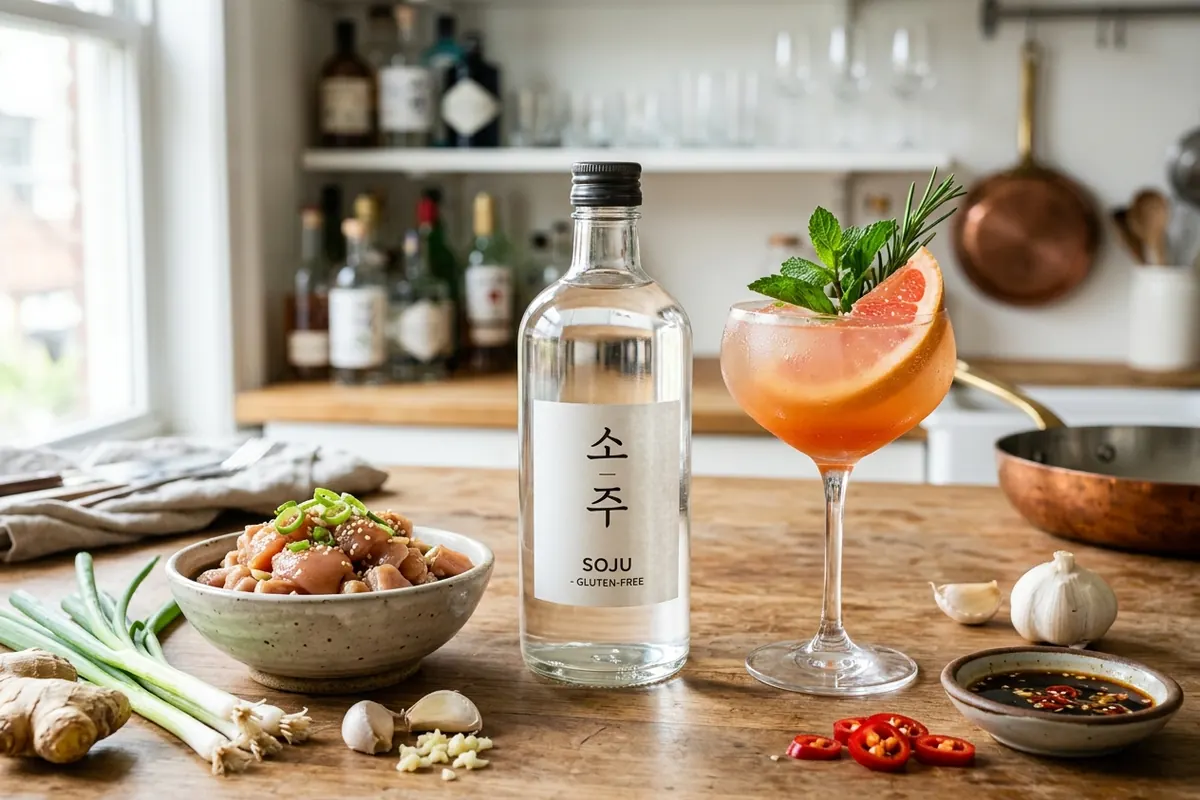
Soju is not just a sipping spirit; it shows up in marinades, sauces, and cocktails, and the gluten rules carry over. In cooking, plain soju used to deglaze a pan or build a marinade behaves like any distilled spirit, with the same distillation logic applying, though a flavored soju brings its additives along. In cocktails, the soju itself follows the rules above, but the mixers matter just as much, since a beer-based mixer, a malt-flavored syrup, or a non-gluten-free garnish can introduce gluten that the soju did not. The popular soju-and-beer combination known as somaek is, by definition, not gluten free, because the beer component is brewed from barley. When you are mixing at home for a gluten-free crowd, start from a plain rice-based or gluten-free-labeled soju and pair it with gluten-free mixers, and the whole drink stays safe. If you also cook with other rice-based products and want to understand how distillation and fermentation affect gluten, our companion guide on whether sake is gluten free walks through the same logic for Japan’s rice wine, which is a useful comparison since sake is fermented rather than distilled.
Soju vs. Other Drinks: Where It Lands
It helps to place soju among other drinks so you know how cautious to be. Compared to beer, soju is far safer, since beer is brewed from barley and is gluten-containing by default unless specifically made gluten free or gluten-removed. Compared to wine, soju is roughly comparable, since wine is naturally gluten free and soju is gluten free when rice-based or properly distilled. Compared to grain spirits like whiskey and vodka, soju follows the same distillation rule, with the added wrinkle that flavored soju is more common and adds post-distillation risk. The overall placement is that plain distilled soju is in the safe-for-most camp alongside vodka and whiskey, rice soju is squarely safe, and flavored soju is the one category that warrants real label scrutiny. Knowing this lets you relax about a plain pour while staying alert to the sweet, fruity bottles. For broader confidence around which pantry and party items clear the bar, our overview of gluten-free desserts pairs naturally with a gluten-free drink for a fully safe table. Detailed guidance on alcohol and the gluten-free diet from Cook’s Illustrated and cocktail technique from Bon Appetit are dependable references when you want to go deeper.
Celiac-Specific Guidance
People with celiac disease have a stricter calculus than people with mild sensitivity, so a few points are worth stating plainly. The mainstream celiac position is that distilled spirits are safe even when made from gluten grains, because distillation removes the gluten protein, and many people with celiac disease drink distilled soju without issue. That said, some individuals report reacting to spirits distilled from gluten grains, whether from trace gluten, added flavorings, or a sensitivity that is not fully explained, and for those people a rice-based or labeled gluten-free soju removes the variable entirely. Added flavorings are the most concrete celiac concern, since they are not distilled and can carry gluten, so plain soju is the safer default. If you are newly diagnosed or highly reactive, start with a clearly rice-based or gluten-free-labeled plain soju, see how you tolerate it, and avoid flavored varieties unless they state gluten free. This conservative approach respects the distillation science while accounting for the real-world variation that celiac drinkers experience.
A Closer Look at Soju Production
To really settle the gluten question, it helps to understand how a bottle of everyday soju is actually built, because the production method explains both the risk and the reassurance. Mass-market soju begins with a base spirit called neutral or rectified alcohol. Producers take an inexpensive starch source, ferment it, and then distill it repeatedly through a continuous column still until the alcohol is extremely pure and nearly flavorless, typically around 95 percent. This repeated, high-proof distillation is far more thorough than a single pot distillation, which is one reason the finished neutral spirit is so consistently free of the original grain’s proteins. That neutral spirit is then diluted with treated water down to the 16 to 25 percent range that soju is sold at, and a small amount of sweetener and sometimes other flavor agents are blended in for the characteristic smooth, slightly sweet finish. The starch source for that neutral spirit is chosen on cost and availability, which is why it varies and may include tapioca, sweet potato, rice, or, in some cases, wheat or barley. Because the gluten protein is left behind during the intensive distillation, the spirit that reaches your glass carries essentially none of it, which is the basis for considering plain soju gluten free even when grain was involved.
The part that production reveals most clearly is why flavored soju is the genuine concern. The flavoring and the bulk of the sweetening are added after distillation, so they bypass the step that strips gluten. A fruit flavoring compound, a syrup, or a flavor base could be carried in or processed alongside a gluten-containing ingredient, and nothing about the later blending removes it. This is also why a plain soju from a producer that uses food-grade flavor-free sweeteners is lower risk than a heavily flavored novelty bottle from the same brand. Understanding this two-stage structure, a clean distilled base followed by post-distillation additions, lets you predict which sojus deserve caution without needing a chemistry background. It also explains why the advice across reputable sources lands in the same place: plain soju is broadly fine, rice soju is best, and flavored soju is the category to confirm. If you keep that production picture in mind, every soju label and restaurant menu becomes easier to read, because you know exactly which stage of the process introduces the only real risk.
Frequently Asked Questions
Is plain soju gluten free?
Plain soju is gluten free if it is distilled from rice or another gluten-free starch, and it is generally considered gluten free even when distilled from wheat or barley, because distillation removes the gluten protein. Most people with gluten sensitivity tolerate plain distilled soju. For the strictest safety, choose a rice-based or explicitly gluten-free-labeled plain soju.
Is flavored soju gluten free?
Not necessarily. Flavored sojus, such as peach, grape, and green apple, have flavorings and sweeteners added after distillation, and those additives are not guaranteed gluten free. Flavored soju is the highest-risk category, so prefer plain unflavored soju unless the flavored bottle specifically states it is gluten free on the label.
Is Jinro soju gluten free?
Mass-market sojus like the major green-bottle brands are typically diluted spirits whose base may include wheat or barley, distilled to remove gluten protein. They are generally considered gluten free by the distillation standard, but the exact base starch varies and is not always disclosed. If you have celiac disease and want certainty, choose a soju labeled rice-based or gluten free.
Does distillation remove gluten from soju?
Yes. Gluten is a protein that does not carry into the vapor during distillation, so a properly distilled spirit contains no measurable gluten in the alcohol itself, even when made from wheat or barley. The remaining risk in soju comes from flavorings and sweeteners added after distillation, not from the distilled spirit.
Can celiacs drink soju?
Many people with celiac disease drink distilled soju without problems, since distillation removes gluten. To be safest, choose a plain soju that is rice-based or labeled gluten free, and avoid flavored varieties unless they state gluten free, since added flavorings are the most concrete gluten concern for celiac drinkers.
Is soju safer than beer for a gluten-free diet?
Yes, by a wide margin. Beer is brewed from barley and contains gluten by default unless specifically made gluten free. Soju is distilled, which removes gluten protein, and rice-based soju has no gluten grain at all. The one exception is the soju-and-beer mix called somaek, which is not gluten free because of the beer component.
Bottom Line
So, is soju gluten free? Rice soju is, plainly and reliably. Plain distilled soju made from a grain blend is gluten free by the distillation standard that celiac organizations accept, and most gluten-free drinkers tolerate it fine. The real caution belongs to flavored soju, where post-distillation additives can reintroduce gluten, and to the soju-beer mix, which is never safe. Favor plain soju that is rice-based or labeled gluten free, treat the sweet fruity bottles as a category that needs label confirmation, and skip somaek. With those rules, soju becomes one more drink you can enjoy without turning a night out into a guessing game.