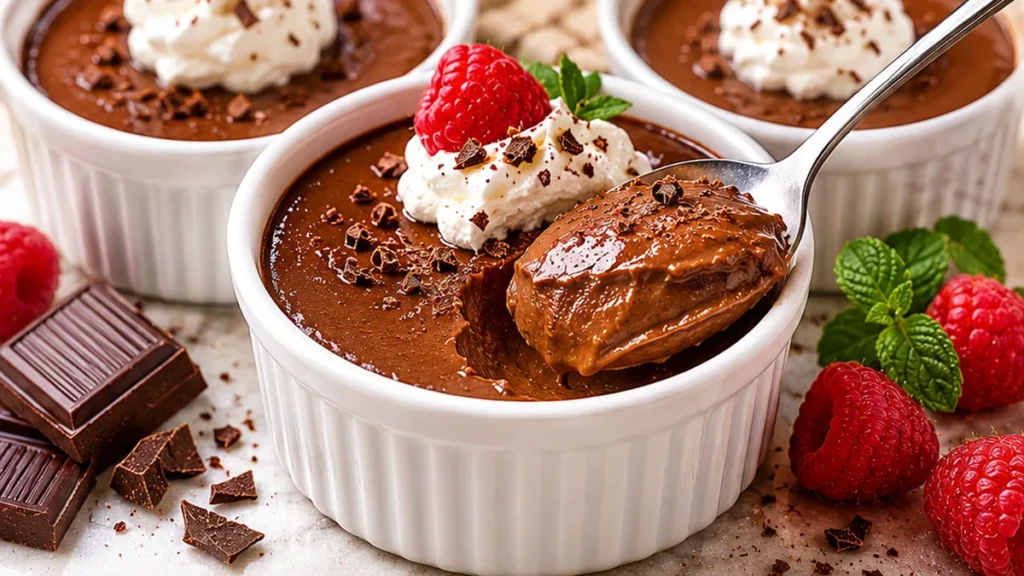
Indulge in the luxurious simplicity of homemade chocolate pots de crème. This classic French dessert is renowned for its incredibly smooth texture and deep, rich chocolate flavor. Unlike a traditional mousse or pudding, pots de crème are baked gently in a water bath, ensuring a custardy, melt-in-your-mouth consistency. Our recipe focuses on high-quality bittersweet chocolate and simple ingredients to create a truly decadent treat. Whether you’re a seasoned baker or a beginner looking for an impressive dessert, these chocolate pots are sure to delight.
Key takeaways
- Finely chop chocolate for smooth melting.
- Temper egg yolks gently to prevent scrambling.
- Cook custard slowly until it coats the back of a spoon; do not boil.
- Strain before chilling for ultimate silkiness.
Melt-in-Your-Mouth Chocolate Pots De Crème!
Ingredients
- 6 ounces (170g) high-quality bittersweet chocolate bar, finely chopped
- 1 cup (240ml) whole milk
- 1 ½ cups (350ml) heavy cream
- 5 large egg yolks
- ½ cup (100g) granulated sugar
- ½ teaspoon espresso powder
- ¼ teaspoon salt
- 2 teaspoons vanilla extract
Instructions
- Preheat oven to 325°F (160°C). Arrange six ramekins in a large baking dish.
- Warm milk, heavy cream, and chopped chocolate in a saucepan over medium-low heat, stirring until chocolate is fully melted and mixture is hot.
- Whisk egg yolks, sugar, and salt in a bowl until smooth. Temper eggs by slowly whisking in about ½ cup of the warm chocolate mixture.
- Pour tempered egg mixture back into the saucepan with remaining chocolate. Whisk in espresso powder and vanilla extract until slightly thickened, coating the back of a spoon.
- Divide custard evenly among ramekins. Place baking dish in oven, then carefully add water to the dish until it reaches halfway up the sides of the ramekins.
- Bake for 50-60 minutes, until centers are just set but slightly wobbly.
- Remove ramekins from water bath, cool completely on a wire rack, then refrigerate for at least 2 hours until fully chilled.
Notes
The technique that makes it
The trick to truly melt-in-your-mouth chocolate pots de crème lies in a delicate balance of ingredients and a precise cooking method. The key is gentle, even cooking to create a silky-smooth custard that sets without curdling or becoming rubbery. We achieve this by tempering the egg yolks with a warm dairy mixture. First, the bittersweet chocolate is finely chopped to ensure it melts completely and smoothly when the warm cream and milk are added. The espresso powder, though subtle, enhances the chocolate’s depth of flavor without imparting a coffee taste. Salt balances the sweetness and further intensifies the chocolate. The mixture of whole milk and heavy cream provides the ideal fat content for richness and a luxurious texture. When the warm dairy is slowly whisked into the egg yolks (tempering), it gradually raises the temperature of the yolks, preventing them from scrambling. This tempered mixture is then gently heated over a double boiler or in a low oven (around 300-325°F or 150-160°C) until it thickens enough to coat the back of a spoon. Avoid boiling at all costs, as this will cause the proteins in the egg yolks to seize and curdle, resulting in a grainy texture. Straining the custard before pouring it into ramekins ensures any tiny bits of cooked egg or undissolved chocolate are removed, guaranteeing ultimate smoothness. Finally, the slow chilling process allows the custard to set fully and the flavors to meld.
Troubleshooting
- Problem: Grainy or Curdled Texture
Fix: This usually happens from overheating. Ensure you are cooking the custard gently over low heat or in a low oven, and avoid boiling. If it’s slightly grainy, try straining it through a fine-mesh sieve again before chilling. - Problem: Custard is too thin and won’t set
Fix: This indicates insufficient cooking or too many egg yolks relative to the liquid. Ensure the custard coats the back of a spoon. If it’s still too thin after chilling for the recommended time, you may need to gently reheat it and cook a little longer, being careful not to scramble the eggs. - Problem: Watery layer on top
Fix: This can occur if the pots de crème are overbaked or if condensation forms during cooling. Try covering the ramekins with foil during the final stages of baking or cooling. Ensure they are not baked directly in a water bath if using the oven method, as this can sometimes lead to excess moisture. - Problem: Chocolate not fully melted or smooth
Fix: Ensure the chocolate is chopped very finely. If it’s not melting smoothly into the warm dairy, gently warm the mixture over low heat, stirring constantly, until fully incorporated. Straining will remove any small lumps.
Substitutions
- Chocolate: You can substitute the bittersweet chocolate with high-quality semi-sweet chocolate. The result will be a slightly sweeter pot de crème. For a darker, more intense flavor, use a chocolate with a higher cocoa percentage (70% or more). Milk chocolate is generally not recommended as it contains more sugar and less cocoa solids, leading to an overly sweet and potentially unset custard.
- Dairy: While whole milk and heavy cream provide the ideal richness, you can use a combination of 1 cup (240ml) half-and-half and 1 ½ cups (350ml) whole milk for a slightly less rich but still creamy result. Using only milk will yield a thinner, less luxurious texture. Non-dairy alternatives like full-fat coconut milk (canned) can be used, but will impart a coconut flavor and may affect the final texture.
- Sugar: Granulated sugar can be replaced with light brown sugar for a subtle caramel note. The sweetness level can be adjusted slightly to personal preference, but be mindful that sugar contributes to the custard’s structure.
- Espresso Powder: Omit if you don’t have it; the chocolate flavor will still be excellent. You could also use a tiny pinch of instant coffee granules dissolved in the warm dairy, but be cautious as it can be more potent than espresso powder.
Pro tips
- For an even richer flavor, use a chocolate with 70% cacao content.
- Ensure your water bath is only halfway up the ramekins to prevent overcooking.
- Chill for at least 2 hours for the perfect set texture.
Enjoy these exquisite chocolate pots de crème as an elegant end to any meal. Experiment with toppings like fresh berries or a dollop of whipped cream!
More from Gluten-Free Desserts & Sweets →
Frequently asked questions
Why are my chocolate pots de crème grainy?
A grainy texture typically results from overheating the custard, which causes the egg proteins to coagulate unevenly. Always cook the mixture gently over low heat or in a low oven (around 300-325°F/150-160°C), stirring constantly, and never allow it to boil.
How do I fix pots de crème that didn’t set?
If your pots de crème are too thin, they likely weren’t cooked long enough. Gently reheat the mixture, stirring constantly, until it thickens enough to coat the back of a spoon. Ensure you are using the correct ratio of ingredients, especially the egg yolks to dairy.
Can I make chocolate pots de crème ahead of time?
Yes, chocolate pots de crème are ideal for making ahead. They need to chill for at least 4 hours, but are best made a day in advance. This allows the flavors to meld and the custard to set completely, ensuring the best texture.
What is the best chocolate to use?
Use high-quality bittersweet or semi-sweet chocolate bars, finely chopped. The higher the cocoa percentage (60-70%), the more intense the chocolate flavor. Avoid chocolate chips, as they often contain stabilizers that prevent smooth melting.