The key to a truly refreshing apple cider sangria lies in allowing the flavors to meld perfectly through adequate chilling time. This recipe offers a delightful blend of autumnal notes, making it an ideal beverage for any fall gathering or a relaxed evening. Crafting this apple cider sangria is straightforward, designed for ease without compromising on taste. The combination of dry white wine with hard apple cider creates a bright, effervescent base, beautifully complemented by fresh fruit and a hint of spice. Letting the fruit infuse for at least four hours deepens the apple cider sangria’s character.
Key takeaways
- Chill all ingredients thoroughly before mixing.
- Infuse fruit in wine for 2-4 hours only to prevent mushiness.
- Add hard apple cider just before serving to preserve carbonation.
- Stir gently to maintain the drink’s sparkle.
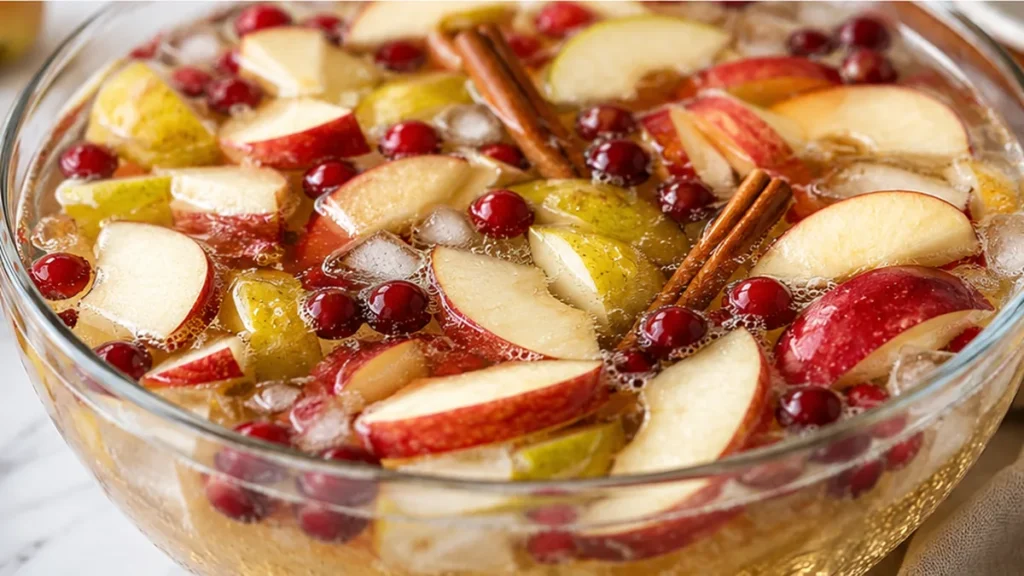
Fall’s Favorite: Sparkling Apple Cider Sangria
Ingredients
- 1 bottle (750ml) dry white wine, such as Pinot Grigio or Sauvignon Blanc
- 2 red apples, 1 sliced and 1 reserved for serving
- 2 pears, 1 sliced and 1 reserved for serving
- 1 cinnamon stick, plus more for serving (optional)
- 2 , 12 oz cans hard apple cider
- 1/4 cup fresh cranberries, for garnish
Instructions
- To a large drink pitcher, add the wine, 1 sliced pear, 1 sliced apple, and the cinnamon stick.
- Chill the mixture in the refrigerator for at least 4 hours, or up to overnight, to allow the flavors to meld.
- When ready to serve, slowly stream the hard apple cider into the pitcher and stir gently to combine all ingredients.
- Pour the sangria into glasses filled with ice, then garnish with the reserved fruit slices and additional cinnamon sticks, if desired, before serving immediately.
Notes
The Technique Behind the Sparkle: Infusion and Carbonation
The success of this apple cider sangria hinges on two primary techniques: proper fruit infusion and the preservation of carbonation. Unlike traditional sangria that often involves extended maceration, this recipe benefits from a shorter infusion period to allow the fresh fruit flavors to meld without becoming overly soft or releasing too much pectin, which can cloud the drink. The key is to let the sliced apples and pears steep in the white wine for at least 2 hours, but no more than 4 hours, in the refrigerator. This controlled steeping extracts the aromatic compounds from the fruit, subtly sweetening and flavoring the wine base. The addition of hard apple cider at the end is crucial. It provides both the apple essence and the essential carbonation. To maintain this sparkle, the cider should be added just before serving, and the sangria should be stirred gently to avoid agitating the dissolved carbon dioxide. Over-stirring will result in a flat, unappetizing drink. The cinnamon stick, added during the infusion, imparts a warm, spiced note that complements the fruit and wine, enhancing the autumnal profile without overpowering the delicate flavors.
Troubleshooting
- Problem: Sangria is too sweet. Fix: Add a splash more dry white wine or a squeeze of fresh lemon juice to balance the sweetness.
- Problem: Fruit is mushy and unappealing. Fix: Reduce the infusion time. Fruit should be added to the wine for no more than 4 hours in the refrigerator.
- Problem: Sangria is flat. Fix: Ensure the hard apple cider is well-chilled and add it just before serving. Stir very gently, only enough to combine.
- Problem: Flavors are muddled. Fix: Use fresh, firm apples and pears. Ensure the white wine is crisp and not overly oaked, which can compete with the fruit.
Substitutions
- White Wine: Substitute with a dry rosé for a slightly fruitier, pinker sangria. The flavor profile will be similar but with a berry undertone.
- Apples and Pears: Use crisp apples like Honeycrisp or Fuji, and Bosc or Anjou pears for optimal texture and flavor. Avoid mealy varieties.
- Hard Apple Cider: If hard cider is unavailable, use a good quality non-alcoholic apple cider and top up each glass with a splash of sparkling water or club soda for fizz. The apple flavor will be less intense.
- Cranberries: Fresh pomegranate seeds can be used as a visually appealing and tart garnish instead of cranberries.
Pro tips
- For the best flavor, use a dry white wine like Pinot Grigio or Sauvignon Blanc; avoid overly sweet varieties.
- Don’t skip the chilling time! It allows the fruit and cinnamon stick to infuse their flavors into the wine, creating a more complex sangria.
- To prevent a diluted drink, chill all ingredients thoroughly before mixing and serving. You can also freeze extra fruit slices to use as ice cubes.
This easy-to-make apple cider sangria is a fantastic way to celebrate the flavors of fall. Experiment with different apple varieties or a touch of brandy for an extra kick. Enjoy!
Frequently asked questions
What kind of white wine works best?
A dry white wine with crisp acidity, such as Pinot Grigio or Sauvignon Blanc, is ideal. These wines complement the fruit flavors without adding excessive sweetness or oakiness, allowing the apple and pear notes to shine through.
How long should the fruit infuse?
The sliced apples and pears should infuse in the white wine for a minimum of 2 hours and a maximum of 4 hours in the refrigerator. This timeframe extracts sufficient flavor without the fruit becoming overly soft or releasing too much pectin.
Can I make this sangria ahead of time?
You can prepare the wine and fruit base up to 4 hours in advance. However, add the hard apple cider and stir just before serving to ensure the sangria remains bubbly and refreshing.
What if I don’t have hard apple cider?
You can substitute with a good quality non-alcoholic apple cider. To achieve carbonation, top off each individual serving with a splash of sparkling water or club soda. The apple flavor will be slightly less pronounced.
More from Gluten-Free Snacks & Sides →