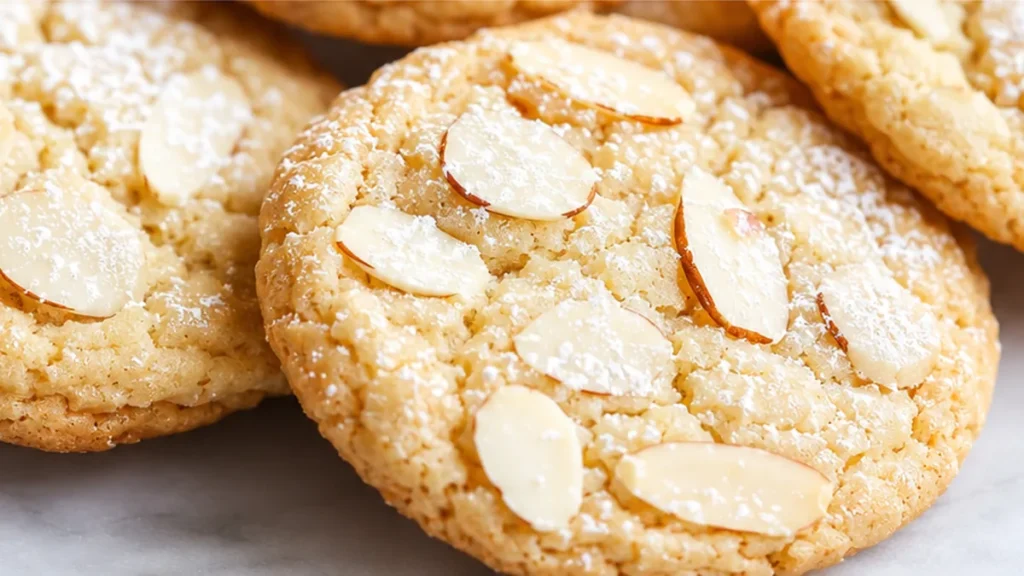
The secret to truly chewy almond cookies lies in a specific balance of ingredients and a precise baking time, ensuring a delightful texture without drying out. This almond cookies recipe, using finely ground blanched almond flour, delivers a wonderfully soft interior with a delicate, crackled exterior, making it a standout treat. These almond cookies are naturally gluten-free and come together quickly with minimal effort, making them ideal for both seasoned bakers and beginners. Room temperature egg whites help achieve a cohesive dough texture.
Key takeaways
- The chewiness comes from the high fat and moisture content of almond flour combined with minimal mixing.
- Ensure ingredients, especially egg whites, are cold to prevent excessive spreading.
- Do not overbake; cookies will firm up as they cool, so aim for a slightly soft center.
- Properly measure almond flour by weight for consistent results.
Chewy Almond Cookies: Your New Favorite!
Ingredients
- 2 ½ cups (250 g) finely ground blanched almond flour
- ½ cup (100 g) granulated sugar
- ½ cup (60 g) powdered sugar, for the dough
- ¼ cup (30 g) powdered sugar, for rolling
- 2 large egg whites (about 60–65 g), straight from the shell
- 1-1 ½ teaspoons almond extract
- ½ teaspoon vanilla extract
- ¼ teaspoon salt
- ¾ cup sliced almonds, for coating
Instructions
- Preheat the oven to 325°F (160°C) and line a small baking tray with baking paper for immediate use.
- In a medium bowl, thoroughly mix the almond flour, granulated sugar, powdered sugar (for the dough), and salt until evenly combined.
- Add the egg whites, almond extract, and vanilla extract, then stir with a spatula until a thick, paste-like dough forms that holds its shape.
- Prepare for rolling by placing the remaining powdered sugar (for rolling) in one small bowl and the sliced almonds in another.
- Scoop the dough into 6 equal portions per tray (about 1 tablespoon each), roll lightly in powdered sugar, then gently press into the sliced almonds to coat.
- Arrange the cookies on the prepared tray, spacing them about 2 inches (5 cm) apart, ensuring not to flatten them.
- Bake for 14–16 minutes, until the tops are cracked and matte and the bottoms are just beginning to turn a pale golden brown.
- Remove from the oven and let cool on the tray for 10 minutes before carefully transferring to a wire rack to cool completely.
- Enjoy your delicious chewy almond cookies!
Notes
The technique that makes it
The success of these chewy almond cookies hinges on the careful balance of moisture and fat provided by the almond flour and the precise incorporation of the egg whites. Almond flour, being naturally moist and fatty compared to wheat flour, requires a different approach to achieve a chewy texture. The recipe relies on the powdered sugar acting as a binder and contributing to the cookie’s structure as it melts during baking. The egg whites, when whisked lightly and combined with the extracts and salt, form the base of the dough. It’s crucial not to overmix once the almond flour and sugars are added, as this can develop toughness. The key to chewiness here is the relatively low flour-to-fat ratio and the absence of leavening agents like baking soda or powder, which would promote spreading and crisping. The final coating in sliced almonds adds a delightful textural contrast and visual appeal, ensuring each bite offers both softness and a slight crunch.
Troubleshooting
- Cookies spread too much: This can happen if the dough is too warm or if the almond flour is too finely ground, leading to a higher fat content. Ensure your ingredients, especially the egg whites, are cold. If the dough becomes too soft, chill it for 15-30 minutes before shaping and rolling.
- Cookies are dry and crumbly: This often indicates too much almond flour or not enough moisture. Double-check your measurements for almond flour and egg whites. Ensure you are using finely ground blanched almond flour, as coarser or unblanched varieties absorb more liquid.
- Cookies are too hard/crisp: Overbaking is the most common culprit. Almond flour cookies bake faster than traditional ones. Watch them closely; they should be lightly golden on the edges and still appear slightly soft in the center when removed from the oven. They will firm up as they cool.
- Almond coating falls off: The dough might be too dry, or the cookies weren’t pressed firmly enough into the sliced almonds. Ensure the dough is cohesive enough to hold the almonds. Gently press each shaped cookie into the sliced almonds before baking.
Substitutions
- For almond extract: Use an equal amount of vanilla extract for a different but still pleasant flavor profile. The cookies will not have the distinct almond taste.
- For sliced almonds: Chopped pecans or walnuts can be used for coating, offering a different nutty flavor and texture. The visual appearance will change.
- For granulated sugar: While not ideal for texture, a finely ground caster sugar could be used in a pinch, but it may slightly alter the chewiness. Avoid brown sugar as its moisture content will change the dough significantly.
- For egg whites: If absolutely necessary, a paste made from 1 tablespoon of aquafaba mixed with 1 teaspoon of neutral oil could be attempted, but results for texture and binding may vary considerably.
Pro tips
- For the chewiest almond cookies, avoid overbaking. Pull them from the oven when the edges are just set and the centers still look slightly soft.
- Ensure your almond flour is finely ground and blanched for the best texture and color. Coarser flours can result in a drier, crumblier cookie.
- Storage: Store almond cookies in an airtight container at room temperature for up to 3-4 days, or freeze for up to 2 months. Thaw at room temperature.
These almond cookies are a fantastic addition to any dessert table or a simple, satisfying snack. Experiment with different extracts for unique flavor variations. Enjoy!
Frequently asked questions
Why are my almond cookies spreading too much?
Excessive spreading is often due to a dough that is too warm or an imbalance in the wet-to-dry ingredients. Ensure your egg whites are cold and chill the dough if it feels too soft before shaping and baking.
How can I make my almond cookies chewier?
Chewiness is achieved by the natural fats and moisture in almond flour and avoiding overmixing. The recipe’s lack of chemical leaveners also contributes. Ensure you are not overbaking, as they firm up upon cooling.
Can I use regular flour instead of almond flour?
No, this recipe is specifically designed for almond flour. Substituting with regular wheat flour will drastically change the texture, moisture content, and baking properties, likely resulting in a completely different cookie.
My cookies are dry and crumbly, what went wrong?
Dryness usually indicates too much almond flour or insufficient moisture. Double-check your flour and egg white measurements. Using finely ground, blanched almond flour is essential for the correct texture and moisture absorption.
More from Gluten-Free Desserts & Sweets →